By 2026, it is not going to be enough to have fixed product pictures. Online shopper insights and impatience are growing at an ever-increasing rate. They desire to know how a jacket fits their shoulders, how a dress fits their knees, or whether a color matches their skin color.
This is the main problem of the present fashion eCommerce. And it goes without saying why Fashion Brands should have Virtual Try-On API solutions more than ever. Brands with a forward-thinking perspective are fast integrating the virtual try-on API, an AI-based technology that enables customers to see the clothes on their body and then buy them. In the absence of this experience, users are left to guess, and this uncertainty directly affects sales.
Why Traditional eCommerce is Failing Fashion Brands
Fashion retail was among the earliest sectors to go online at scale, yet it remains the category with the highest returns in the e-commerce industry. The online fashion turnover rates regularly range between 30 and 50 percent, and the overwhelming percentages are due to issues related to fit and appearance that could have been avoided with a superior shopping experience.
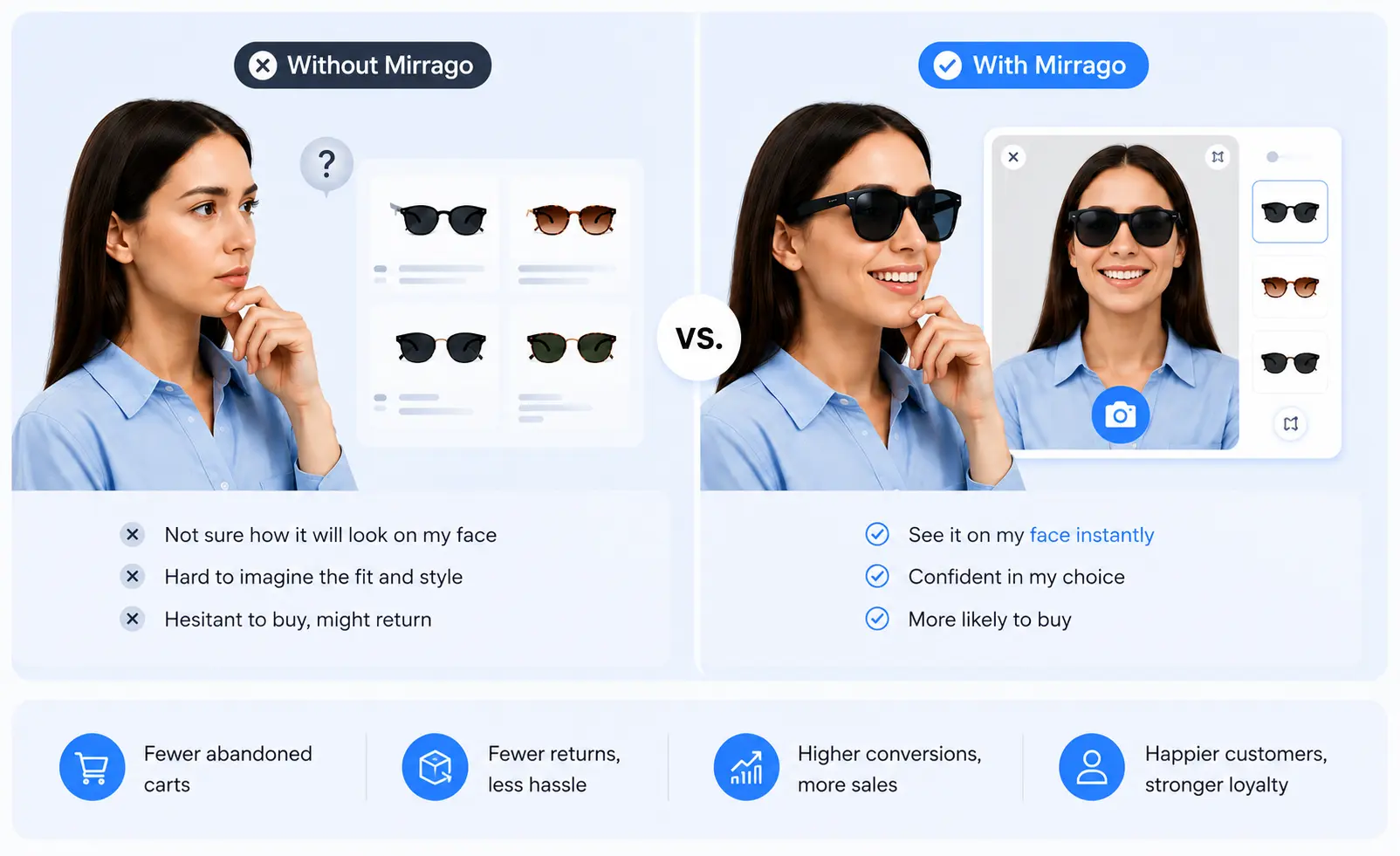
The returns are not alone; there is the question of buyer confidence. Even beautifully styled flat product photography cannot answer the most important questions: Will this fit my body? Will this suit me at all? In cases where the shopper is unable to answer such questions, they will drop the cart or purchase a variety of sizes, intending to give most of them away.
The Cost of Not Solving It
The economic cost is soon added up. Each returned product imposes costs on reverse logistics, re-stocking work, and the possibility that the product might not sell at retail price. The lifetime value of your customers will decrease when customers associate your brand name with bad purchases. And with the experience gap between competitors narrowing with AI-driven tools, stationary brands experience a gradual yet definite loss of market share.
The early adopters' competitive window is now open- but it will not remain open indefinitely. The first movers are already too far ahead to follow.
Understanding Virtual Fitting Room API Technology
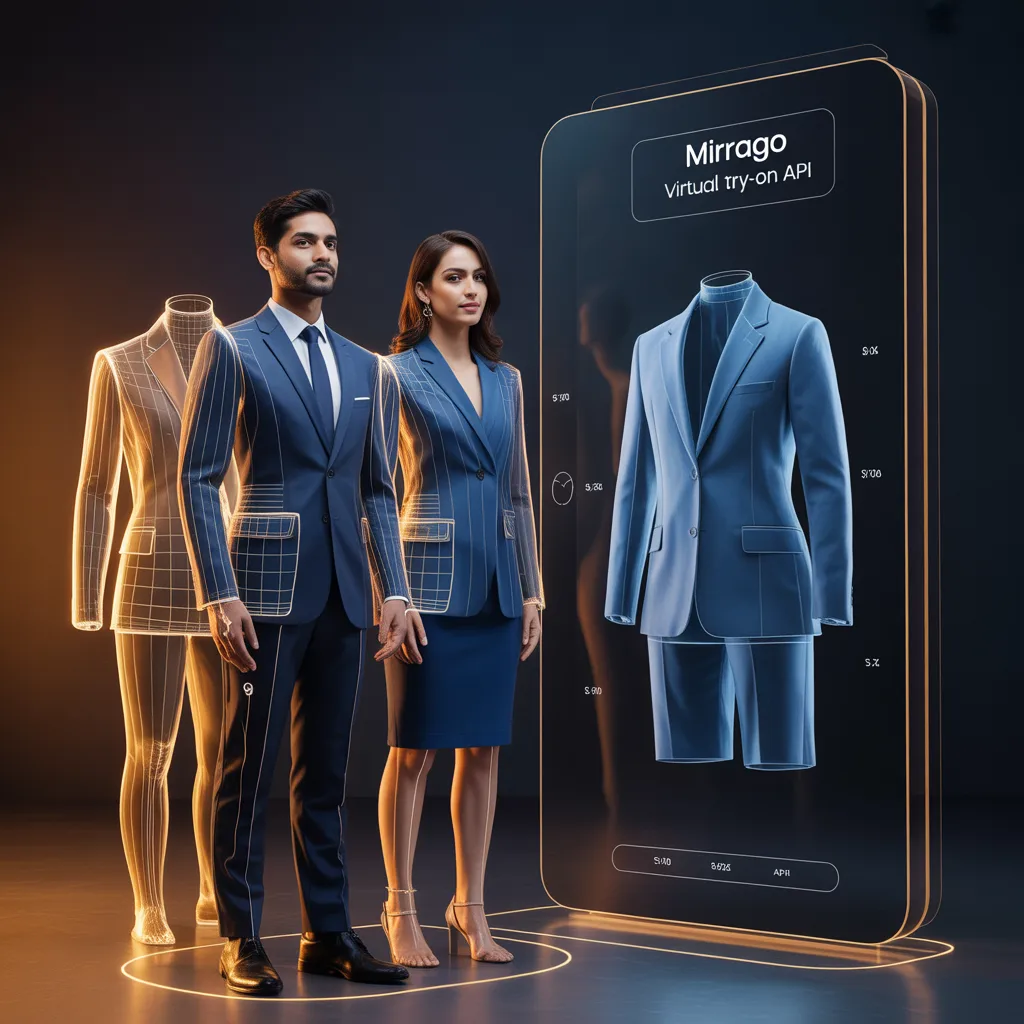
A virtual fitting room API is a cloud-based interface that plugs into your existing eCommerce infrastructure, whether that's Shopify, WooCommerce, or a fully custom stack, and enables realistic, AI-generated try-on experiences for your customers.
Unlike awkward legacy solutions that required expensive in-store hardware or custom app builds, modern virtual fitting room APIs are designed for rapid integration. Developers connect them to product catalogs, user-facing interfaces, and analytics pipelines through standard API calls, without rebuilding their entire tech stack
How the AI Try-On API for Fashion Works
Image Upload / Avatar Creation
The user uploads a photo or builds an avatar that reflects their body type and proportions — the foundation of a personalized experience.
Body Mapping + Fabric Simulation
The AI recognizes body pose, proportions, and reference points, and simulates the interactions of the chosen garment with the geometry of the body, the way it would drape, stretch, and respond.
Real-Time Rendering
The outcome is rendered in real time, and the user gets to see a realistic, precise preview of him/herself in the selected outfit, including fabric texture and fall.
5 Key Benefits of Virtual Try-On API Integration
Increase Conversion Rates
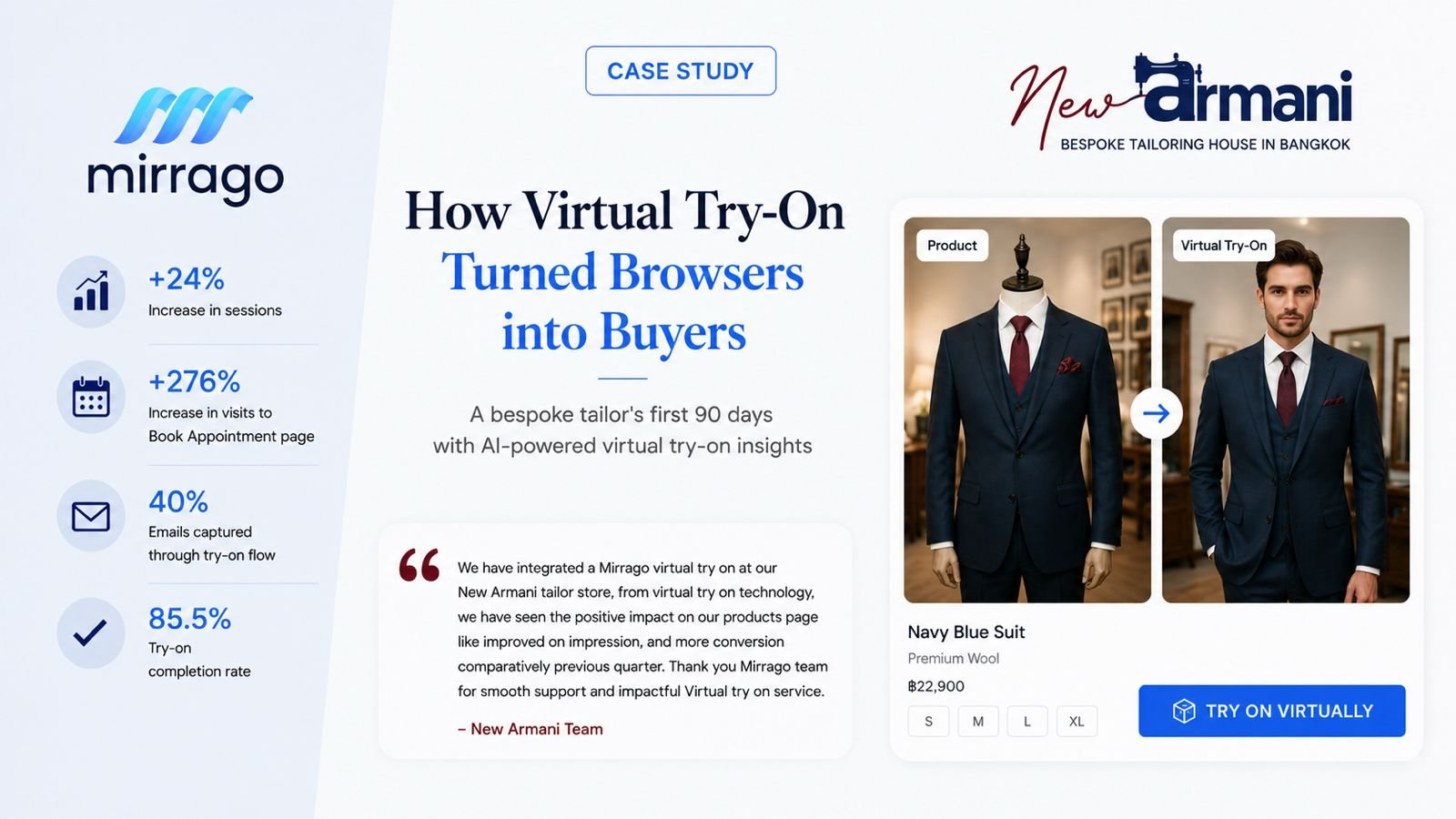
When customers can view a garment on a body, which is similar to their own, confusion disappears. Virtual try-on tools have demonstrated up to 28% improvements in conversion rates, which is significant and multiples greatly as the brand grows
Reduce Return Rates
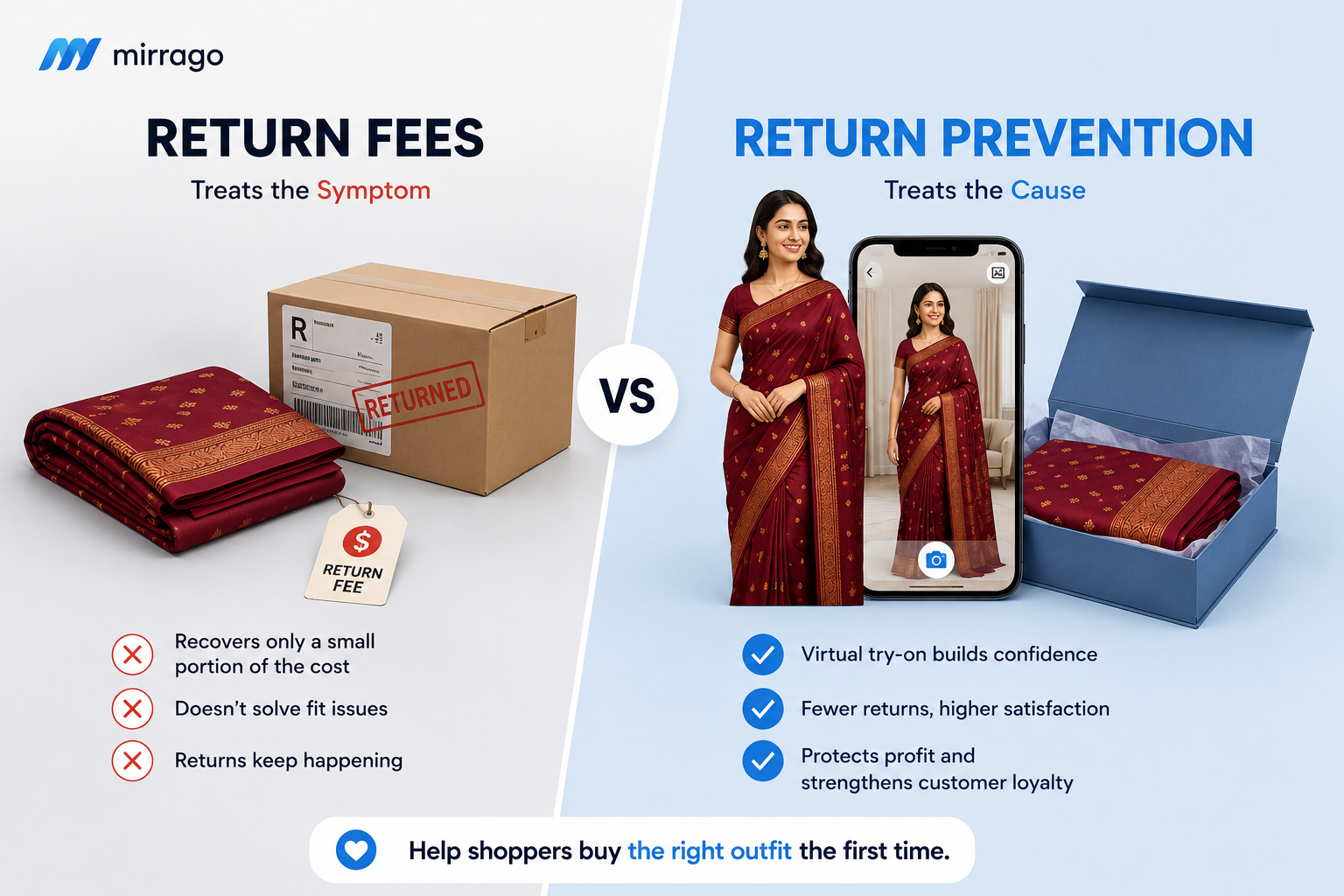
Fit clarity is the single biggest driver of return reduction. When buyers understand how something will look on them, they make more informed decisions. Industry data consistently shows a 30–40% reduction in returns among brands with robust try-on experiences.
Boost User Engagement
Product pages with virtual try-on functionality see dramatically higher dwell times — in some cases, 2 to 3 times longer than standard pages. More time with a product means a higher likelihood of purchase and stronger brand recall.
Personalization at Scale
Every try-on interaction generates data: which items users explore, which combinations they build, and which styles they return to. This powers smarter AI recommendations and style analytics that make genuine personalization scalable across even large catalogs.
Competitive Advantage in 2026
Until recently, virtual try-on was reserved for enterprise-level brands with deep tech budgets. API-first architecture has changed that. In 2026, brands of every size can access the same sophisticated AI infrastructure — the window for early movers is open now.
Technical Advantages of AI Try-On API for Fashion
For developers and CTOs evaluating the build-vs-buy decision, the case for integrating an established virtual try-on API is straightforward. Modern APIs are built on plug-and-play architectures with clear documentation, scalable cloud inference, and native compatibility across web and mobile environments.
Faster Feature launch
Integration timelines that might take months in a custom ML build can collapse to days with a well-designed API.
Scalable Cloud Inference
No infrastructure scaling headaches. The API handles compute demand as your traffic grows.
Mobile + Web Compatible
Native compatibility across iOS, Android, React, and headless commerce setups out of the box.
Improves UX Metrics
Directly moves retention and LTV — the KPIs that product managers are measured on.
Why Choose Mirrago API for Virtual Try-On
Mirrago API is built specifically for fashion brands that want a production-ready, AI-powered try-on solution without the infrastructure overhead. Its full-body try-on engine delivers real-time rendering with a privacy-first architecture, and no biometric data is stored — and is designed to be inclusive across a wide range of body types and proportions.
Advanced fabric rendering with realistic texture simulation
Accurate body pose detection across diverse body types
Real-time analytics dashboard for try-on performance
Privacy-first: no biometric data stored or shared
2026 roadmap: AR live try-on via device camera
Deep integrations with major commerce platforms
Simple Integration Workflow in Mirrago API
Getting started follows a clear, developer-friendly path. There's no machine learning expertise required on your end, just a product catalog, a user interface, and the API docs.
Access API Documentation
Full docs, sandbox environment, and code samples to get your team up to speed quickly.
Upload Your Product Catalog
Connect your existing product imagery — the AI handles garment mapping automatically.
Enable User Image / Avatar Input
Add the try-on UI to your product pages with pre-built components or your own custom design.
Render the Try-On Experience
The API handles all rendering computation — results appear in real time for your users.
Optimize with Analytics
Use the built-in analytics layer to identify what's working and where to improve the experience.
What's Next Beyond Virtual Try-On?
Virtual try-on is the entry point, not the destination. The near future of AI in fashion eCommerce is rapidly expanding, and brands that build the capability infrastructure now will be best positioned to adopt each innovation as it matures.
AR Live Try-On
See garments on yourself in real time through your device camera; no photo upload required.
AI Stylists
Personalized outfit curation based on occasion, preferences, and past behavior — at scale.
Predictive Sizing
Recommends the right size from body measurements alone, eliminating fit-related returns.
Social Shopping
Friends try on and review outfits together in shared sessions, turning discovery into a social experience.
Conclusion
The math is simple: higher conversion rates, lower return rates, stronger engagement, and a better customer experience. Virtual try-on API integration delivers on all four simultaneously, and in 2026, it is rapidly becoming table stakes rather than a differentiator.
Brands that hesitate lose ground not just to big enterprise competitors, but to agile D2C players who moved early and made the experience gap too wide to close. The technology is accessible. The ROI is proven. The only variable left is timing.
In 2026, fashion brands that fail to adopt virtual try-on API integration risk falling behind AI-driven competitors who have already made the experience gap too wide to close."
GET START TODAY
Start Building with Mirrago API TodayJoin our waitlist for 1 month of free access.
Transform your eCommerce into a virtual fitting room. Join the brands already building the next generation of fashion experiences.