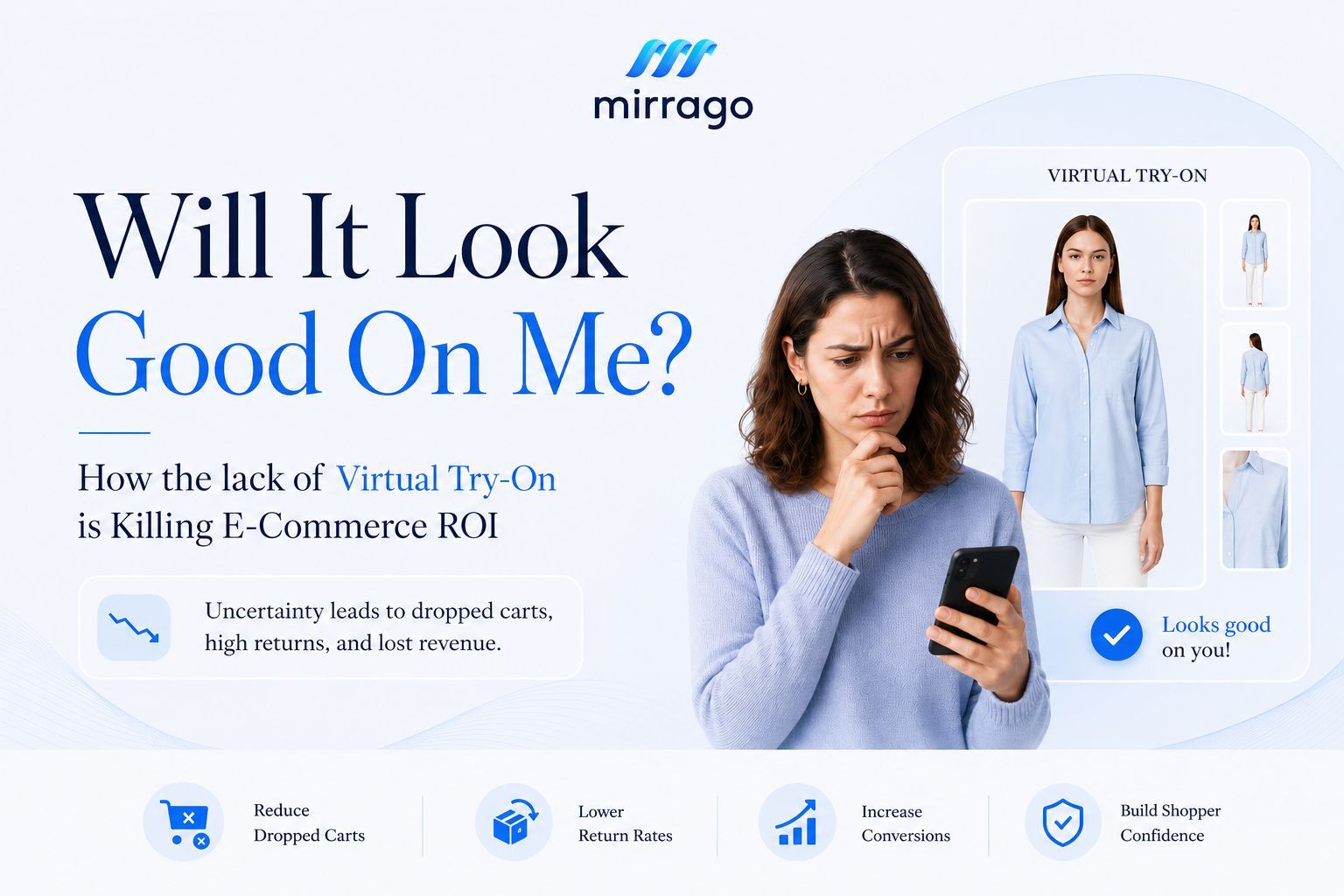
One of the biggest drawbacks of online shopping is that customers can't really see how something will look or fit before ordering. A perfectly photographed product on a model may not give the same confidence when a customer asks, "But will this really look good on me?" That hesitation costs fashion brands millions every year in abandoned carts, low conversion rates, and high return costs.
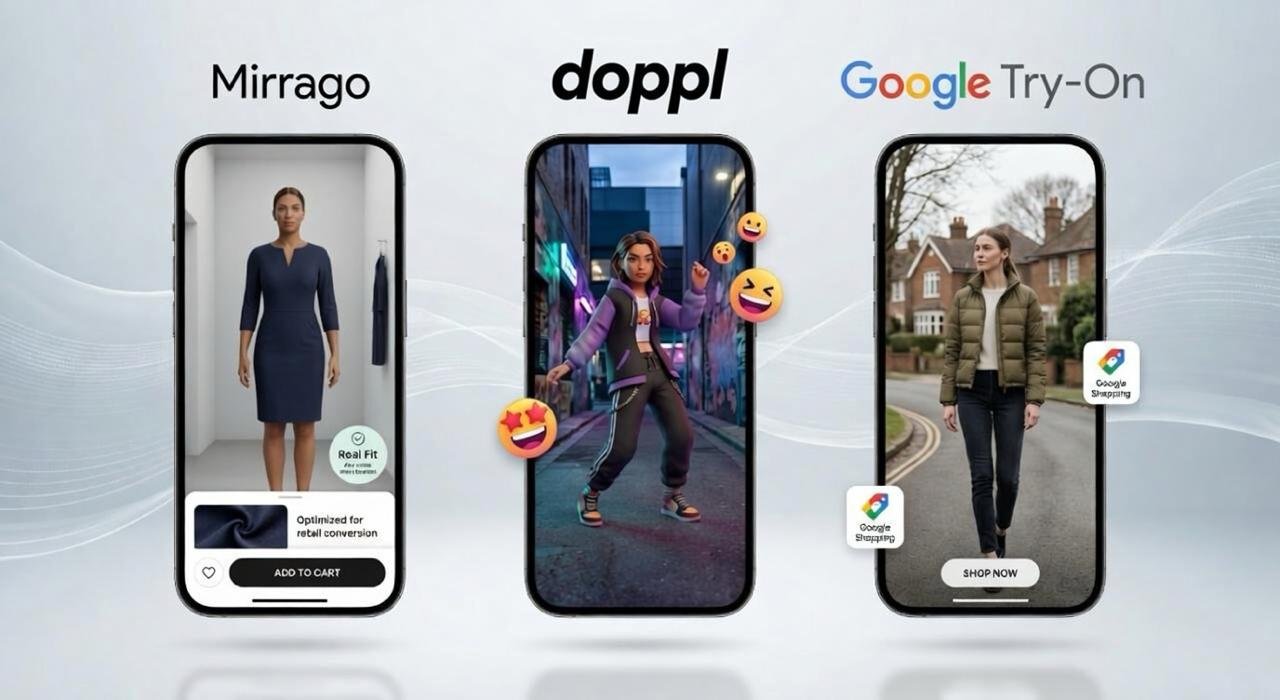
AI virtual try-on is the answer that has rapidly moved from experimental novelty to essential commerce infrastructure. In 2026, there are tools like Mirrago, Doppl, Google Shopping Try-On, and many more, but we have compared only three tools because these are unique and industry-leading tools.
In 2026, Virtual Try-On isn't a feature anymore. It's a baseline expectation.
But these tools are not built for the same purpose. Some are built for serious shopping. Some are built for entertainment and social sharing. Some are built for search discovery. For fashion retailers, picking the wrong platform can affect customer trust, engagement, and long-term sales.
In this honest comparison, we'll break down what each platform does well, where it falls short, and which one actually delivers the best experience in 2026 for both e-commerce brands and shoppers.
Why Virtual Try-On Matters in Fashion eCommerce
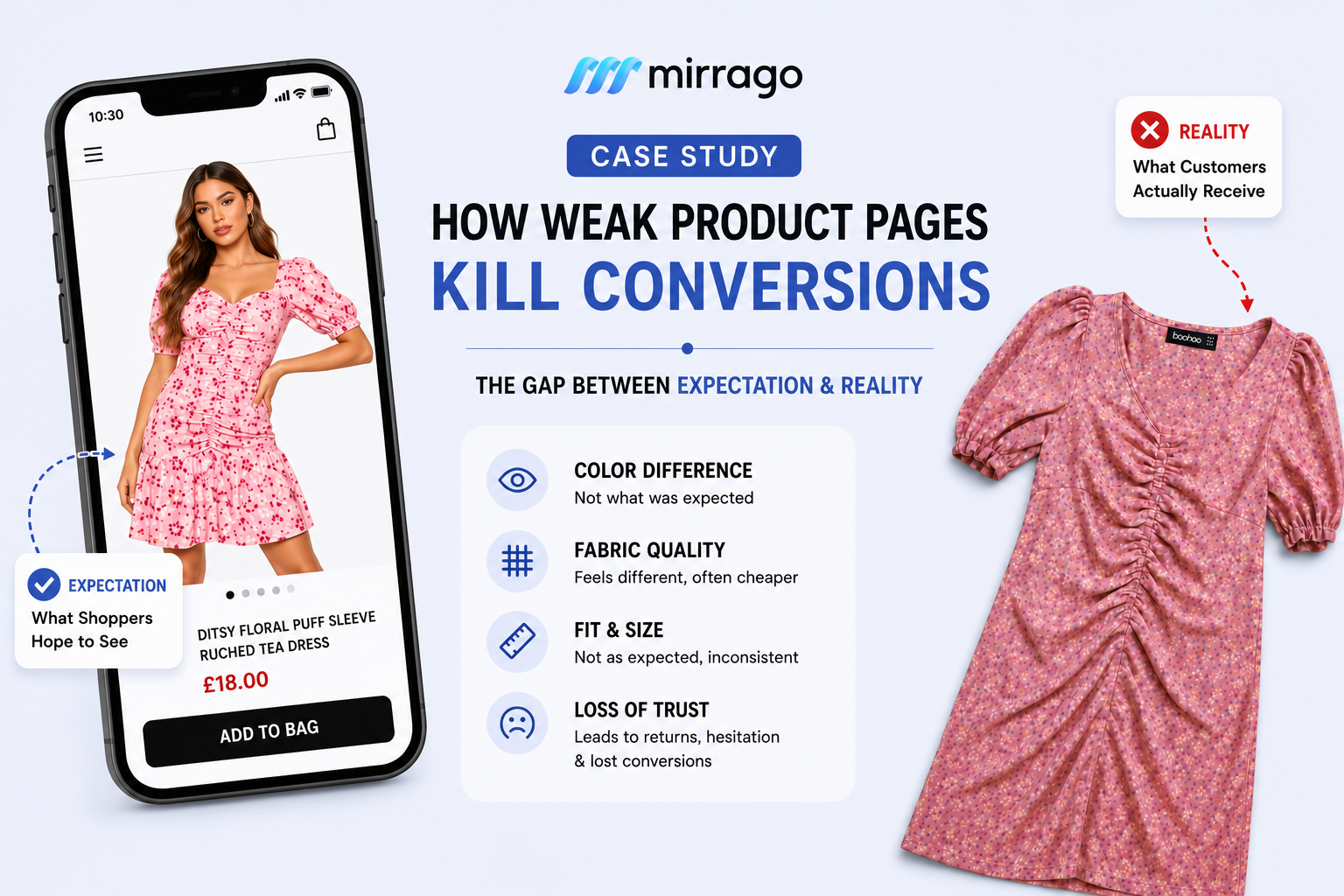
Despite the rapid growth of online fashion over the past decade, one problem still hurts both shoppers and sellers: uncertainty. Customers can't touch the fabric, feel the weight, or imagine how a garment will sit on their own body. Even with high-quality product photography, hesitation creeps in just before checkout, and that hesitation is where carts get abandoned.
A shopper who has just spotted a great outfit on their phone might genuinely want to buy it, but a lack of confidence in the fit kills the conversion. That's where virtual try-on for fashion comes in, not as a futuristic gimmick, but as a practical tool that removes uncertainty from the buying decision.
How AI Try-On Is Changing Online Fashion Shopping
Virtual try-on is no longer an experimental add-on. It has become a serious conversion and engagement tool.
Today's shoppers expect the following:
Personalised shopping experiences
Interactive product visualisation
Mobile-friendly browsing
Inclusive representation across body types
Faster confidence before checkout tools
Gen Z shoppers in particular prefer interactive, visual experiences over static product pages. Where users once had to mentally picture themselves in a jacket or dress, they now expect AI-generated previews that are personalised to them.
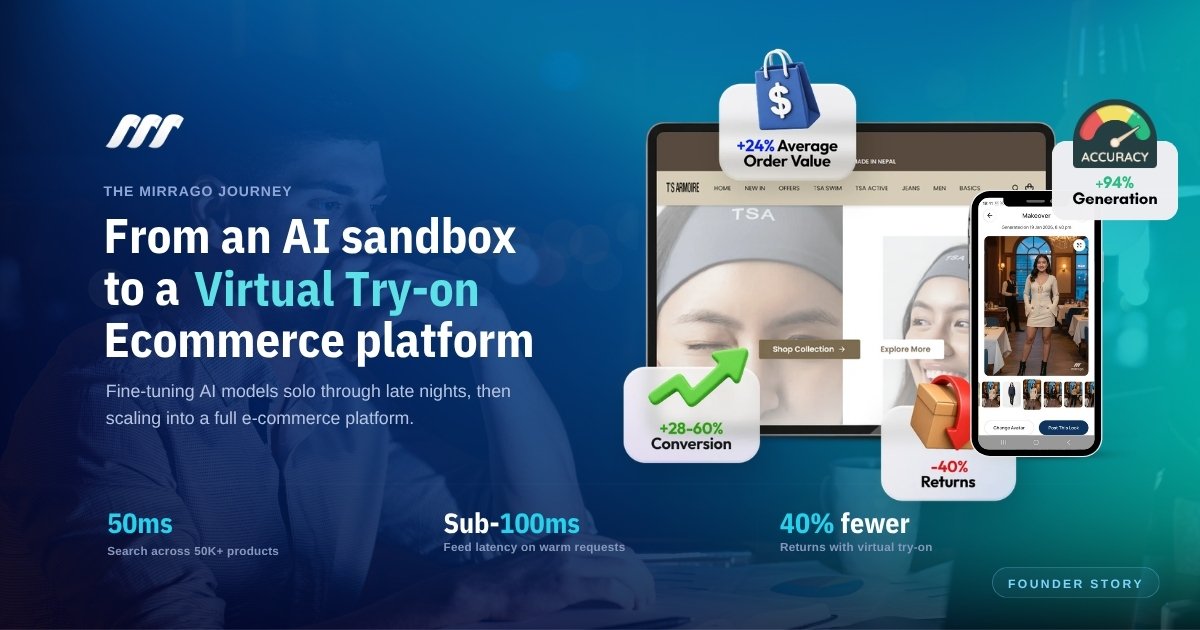
For fashion retailers, the impact is measurable. Brands investing in virtual try-on are seeing:
Lower return rates
Higher customer confidence
Stronger conversion rates
More engagement time per session
Better personalisation at scale
And the demand for inclusivity is rising fast. If a platform doesn't represent different body types, skin tones, and styles realistically, it loses customer trust quickly. On the surface, most virtual try-on tools look alike. But once you look closely at realism, integration, personalisation, and scalability, the differences become massive.
What is Mirrago Virtual Try on?
Mirrago is a virtual try-on platform built for both shoppers and businesses, and that's what makes it different from anything else in the market.
For shoppers (B2C): The Mirrago app is free to download on iOS and Android. Users can upload their own photo or pick from AI-generated avatars, then try on clothes from collaborating brands directly inside the app. They can also upload their own outfit photos from social media, a friend's wardrobe, or anywhere else, and see how those looks would appear on them. Every saved look can go into a personal digital wardrobe, so users can curate their style and revisit favourites anytime. Mirrago provides 5 free try-ons per day. For more try-ons, users can refer their friends or watch an ad as well.
For businesses (B2B), Mirrago offers a Shopify app (coming soon), a WordPress plugin, and a developer API, so brands can plug virtual try-on directly into their own websites. Customers don't need to download anything; try-on works natively inside the brand's product page, with the brand's UX and branding fully intact.
This dual approach means Mirrago serves both sides of the shopping experience:
A shopper browsing a brand's e-commerce store can try on a product without leaving the site
The same shopper can download the Mirrago app and try outfits from any collaborating brand or upload their own
Brands get a try-on experience inside their store and exposure to the wider Mirrago app audience
Key Features of Mirrago
AI-powered virtual try-on with realistic visualisation
Native Shopify app, WordPress plugin, and developer API
Free consumer app on iOS and Android
Try on from any collaborating brand directly inside the app
Upload your own outfits and avatars
Personal digital wardrobe for saving looks
Strong body inclusivity across types, sizes, and skin tones
Conversion-focused analytics for retailers
Strict data protection—Mirrago never shares user data without explicit permission
Mobile-first design
Scalable for both small boutiques and enterprise brands
Mirrago positions itself as a platform for real commerce outcomes, not just entertainment, while still giving shoppers the playful experimentation Doppl is known for.
What is Doppl?
Doppl is Google Labs' standalone consumer try-on app, launched in mid-2025. It's an experimental, AI-powered fashion app aimed at individual shoppers—not retailers.
Users upload a full-body photo or pick from AI-generated models, then superimpose tops, bottoms, and dresses onto their digital self. The clothes can come from anywhere: Google Shopping, a screenshot of an Instagram post, a friend's outfit photo, or even a thrift store find. Doppl also generates short AI videos that show how the outfit would move on the user, adding a more dynamic feel than static images.
The app is currently US-only, available to users aged 18+ with a Google account, and as a Google Labs product, it's still officially experimental. Doppl's positioning is closer to a social fashion experience than a shopping platform. It emphasises creativity, sharing, and self-expression, particularly with Gen Z users who enjoy experimenting with looks and posting them.
That makes it fun. But it's important to understand what Doppl isn't:
Doppl is not a B2B platform: brands can't integrate it into their websites
Doppl is not focused on conversion, analytics, or return reduction
Doppl is not built for niche or bespoke apparel like tailoring, ethnic wear, or occasion wear
Doppl doesn't give brands any data, control, or customer relationships
Best Use Cases for Doppl
Social fashion experimentation
Avatar-based outfit styling
Gen Z engagement and content creation
Trying on thrift store finds or Instagram outfits
Pure entertainment-focused interactions
For shoppers who want to play with style, Doppl is a creative space. For retailers looking to drive measurable revenue, it doesn't offer a path.
What is Google Shopping Try-On?
Google Shopping Try-On takes the third angle: accessibility through search.
When a shopper searches for clothing on Google Shopping, eligible products show a "try-on" option that overlays the item onto an AI-generated model or the user's uploaded photo. The shopper never leaves Google. After trying it on, they're sent to the merchant's website to complete the purchase.
The biggest advantage here is reach. Millions of people already use Google to discover products, so try-on becomes a natural extension of an existing habit. There's no app to download and no new platform to learn.
How Google Try-On Works
Activates inside Google Shopping product listings
AI-generated clothing previews on model bodies or user photos
Limited to products already in Google Merchant Center
Currently available primarily in the US
Sends shoppers back to the merchant's website to buy
This sounds powerful, and for product discovery, it is. But for brands, the limitations are significant:
Brands don't choose whether their products get try-on—Google decides eligibility
Google owns the customer experience entirely
Brands get zero customer data or relationship from the try-on interaction
Customization is non-existent at the retailer level
After try-on, customers go through Google's funnel before reaching the brand
For everyday product discovery, Google Try-On is convenient. For brands that want to own their customer journey, it's a billboard, not a storefront.
Mirrago vs Doppl vs Google Try-On: Feature Comparison
Feature | Mirrago | Doppl | Google Try-On |
Serves shoppers (B2C) | Yes — free app with digital wardrobe | Yes — free app | Yes — inside search |
Serves brands (B2B) | Yes — Shopify, WordPress, API | No | No (Google controls eligibility) |
Accuracy & realism | Strong, conversion-grade visualization | Stylized, experimental quality | Good, but generic |
Try outfits from anywhere | Yes — own photos + own outfits + brand catalogue | Yes — upload anything | No — limited to Google catalogue |
Digital wardrobe | Yes | Save looks only | No |
Body inclusivity | Strong, multiple body types and skin tones | Moderate, avatar-focused | Limited customization |
eCommerce integration | Native plugin, app, and API | None | Google Merchant Center only |
Privacy & data control | Full data protection, no sharing without consent | Inside Google's ecosystem | Inside Google's ecosystem |
Brand customization | High — brand UX preserved | None | Minimal |
Mobile experience | Optimized for mobile commerce | Engaging mobile-first design | Inside Google Shopping mobile |
AI personalization | Strong, retail and lifestyle focus | Strong avatar identity focus | Simple AI suggestions |
Scalability for retailers | Built for a small retailer to an enterprise | Not designed for retail | Tied to Google Shopping reach |
Conversion optimization | Direct conversion path inside brand site | Engagement-focused, not commerce | Drives traffic, not conversions |
Availability | Global | US only | US-first, limited markets |
Maturity | Production, live with paying brands | Experimental (Google Labs) | Generally available, evolving |
Which Virtual Try-On Platform Is Best for Fashion Brands?
Not every fashion retailer needs the same kind of try-on experience. A luxury tailor and a Gen Z streetwear startup have very different priorities.
Mirrago for Fashion eCommerce Brands
Mirrago works best for brands focused on:
Conversion optimization on their own website
Reducing returns through better fit confidence
Personalized shopping experiences
Scaling from boutique to enterprise
Mobile commerce as a primary channel
Owning the customer relationship and data
Reaching shoppers both inside their store and through the Mirrago consumer app
The platform feels grounded in real commerce growth, not short-term engagement metrics. Luxury tailoring brands, ethnic wear retailers, and premium fashion stores particularly benefit from Mirrago's realism—areas where Google Try-On and Doppl tend to struggle.
Doppl for Social Engagement
Doppl is more suitable for:
Community-focused campaigns aimed at younger users
Gen Z self-expression and content creation
Viral social fashion experimentation
Entertainment-first brand activations
For brands looking for retail analytics, scalable conversion infrastructure, or any direct integration, Doppl simply isn't the right fit.
Google Try-On for Search Discovery
Google Try-On performs well for:
Search visibility on Google Shopping
Product discovery for casual browsers
Reaching users already inside the Google ecosystem
Its biggest advantage is reach — but reach without ownership. For retailers who want control over the customer journey, branding, and data, a dedicated platform like Mirrago will serve them better.
Which Platform Is Best for Shoppers?
Shoppers evaluate try-on tools very differently from retailers. Most just want an experience that feels:
Easy
Fast
Realistic
Inclusive
Mobile-friendly
Trustworthy with their data
For Realistic Shopping Confidence: Mirrago
Mirrago gives shoppers a practical experience focused on real purchase decisions. Users can try clothes from any collaborating brand inside the app or while browsing those brands' websites, upload their own photos and outfits, and build a digital wardrobe over time. For shoppers worried about sizing, fit, or outfit visualization, this is the most complete experience available.
For Fun and Self-Expression: Doppl
Doppl appeals to users who enjoy creativity, experimentation, and digital identity play. The experience is social, fun, and engaging — and for many Gen Z users, the entertainment value itself is the appeal.
For Simplicity and Search: Google Try-On
Google Try-On is the easiest entry point for casual shoppers who already use Google Shopping. There's no app to download, no learning curve, and try-on appears naturally inside the search experience. For simple browsing, it's the lowest-friction option.
Final Verdict: Which AI Virtual Try-On Tool Wins in 2026?
At first glance, these three platforms look similar. They're not. Their priorities are fundamentally different.
The right choice depends on whether the goal is retail conversion, entertainment, or product discovery, and on whether the user is a shopper, a brand, or both.
The future of fashion eCommerce belongs to brands that combine great products with confident shopping experiences. Virtual try-on is the bridge between "I like it" and "I'm buying it."
Doppl is fun. Google Try-On is convenient. But neither gives brands control over the customer journey, the data, or the conversion. Neither lets shoppers move between trying on a brand's products on its own website and exploring outfits from across the wider fashion world inside a single app.
Mirrago is the only platform built to do both.
For fashion retailers — from luxury tailors to high-volume Shopify stores — Mirrago delivers virtual try-on directly inside the store's own experience while also reaching shoppers through the free Mirrago app. For shoppers, it offers a serious commerce-grade try-on for real purchases and a creative space for experimentation, all with strict data protection.
Ready to see what Mirrago can do for your brand?
Book a Mirrago demo and find out how AI-powered virtual try-on can reduce returns, build buyer confidence, and grow your fashion eCommerce business in 2026.