
Why Boohoo Product Pages Are Losing Customer Trust
As you're browsing Boohoo's product page for clothes online, one product catches your eye. Photos are terrific, color is just right, fit is just as you've been looking for. So you go and purchase it.
As soon as you open the package, you realize something isn't quite right. The color is different, the fabric is not as soft as shown in the pictures, and the fit is not as expected. This isn't like what the product page said.
Once it happens, it's simply a bad buy. But when it keeps happening with the same brand, you begin to lose faith. The next time you're shopping, you hesitate or look somewhere else.
It's an issue Boohoo has encountered many times. There is one complaint among thousands of customer reviews in various forms: the product page sets expectations that are not met by the product delivered. It isn't just an isolated issue. It happens all the time and takes away customer confidence and, therefore, future sales.
The Gap Between What's Shown and What's Shipped
It's built around cheap fashion and frequent changes of clothes at Boohoo. The product page is the store where they can't physically see or touch the clothes before purchasing. It's what people use to determine whether or not they want something ordered.
But for many customers, that's where the problem begins.
Across independent reviews, the same experience comes up again and again. The issue isn't just late deliveries or difficult returns. It's that the product they receive doesn't look or feel like the one they saw online.
A Fashion Giant Built Entirely on the Product Page
Boohoo, based in the United Kingdom, was launched online-only in 2006 and now ships to customers around the world. It has no physical stores to fall back on. No fitting room and no in-person quality check before an order ships.
That makes the product page the single most important sales tool in the business. Every image, every description, every size chart carries the full weight of the buying decision. There's no second layer of reassurance before the order ships.
What the Numbers and Reviews Reveal
Independent UX research backs up what customers are describing anecdotally.
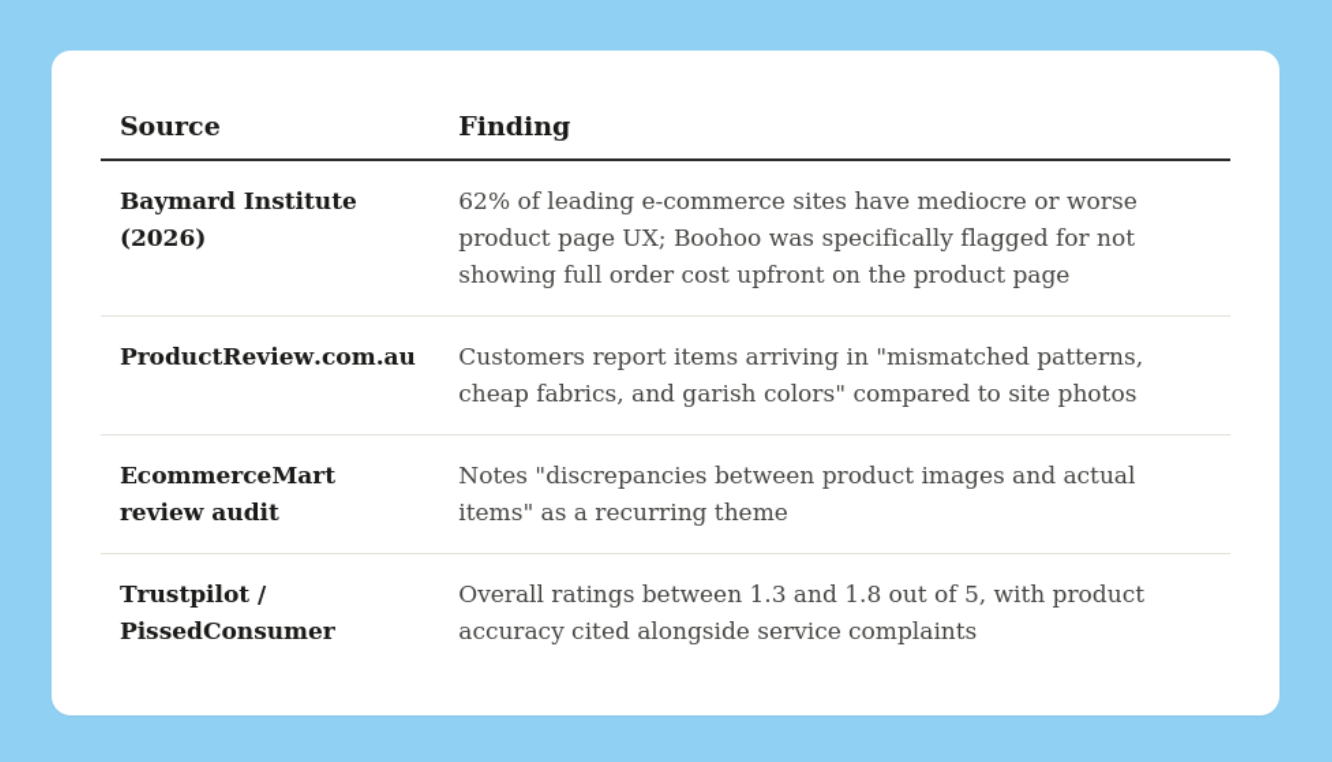
This isn't a single unhappy shopper. It's a pattern showing up across multiple, unconnected review platforms over multiple years.
Why the Picture Never Matches the Package
Fast fashion runs on speed. New styles are photographed, listed, and pushed live within strict production schedules, sometimes even before the final fabric batch is settled on.
Additionally, the visual style, from lighting to styling and photo editing, can enhance a garment beyond what it actually looks like in real life. The product could be shot with studio lights and styled with pins and clips kept out of frame, and then it looks completely different once it's hanging at home.
There's no indication this is intentional. It seems to be more of a side effect of running too quickly and not catching every mismatch in time.
The Real Price of a Broken First Impression
The cost isn't just a single return. It's what happens on the next visit.
First-time buyers hesitate. A bad experience with one item makes shoppers question every other listing on the site.
Returning customers browse more cautiously. They zoom in further, read more reviews, and second-guess more listings — all of which slows down the path to purchase.
Trust erodes even when the price stays attractive. Low prices pull people back to the site. Mismatched expectations push them back off it.
Conversion isn't lost only through refunds. It's lost through the quiet hesitation of a shopper who almost buys, then closes the tab.
This hesitation shows up in the bigger numbers, too. Boohoo core Youth Brands division, which includes Boohoo itself, saw gross merchandise value fall 41% in the first half of the 2026 financial year, as the company deliberately cut unprofitable lines and customer numbers continued to decline. Trust and page mismatch are not the only reasons behind that drop, but a growing body of customer reviews suggests they are part of the picture.
This Isn't Bad Luck; It's a Pattern
A single negative review doesn't say much. Every retailer has orders that go wrong. But when the same complaints appear over and over, they become difficult to ignore.
That's what stands out with Boohoo. Across Trustpilot, ProductReview, independent UX audits, and social media, customers describe many of the same frustrations. Different people, different orders, but remarkably similar experiences.
When a pattern repeats over several years and across thousands of reviews, it's no longer just a customer service issue. It points to a problem that the business has the opportunity and responsibility to fix.
Conclusion: A Cheap Price Can't Fix a Broken Promise
Price may be what brings shoppers to Boohoo, but it's not what keeps them coming back. Every purchase begins with a simple expectation: the product arriving at the door should match what was shown online.
For many customers, that expectation isn't being met.
Across years of reviews, the same concerns keep surfacing—differences in color, fabric, fit, and overall quality. On their own, these might seem like isolated complaints. Together, they point to a larger problem: a growing gap between what customers are promised and what they actually receive.
In fashion e-commerce, trust is built one order at a time. And once it's lost, discounts alone rarely win it back. Until the experience matches the promise, even the lowest price may not be enough to convince customers to take another chance.