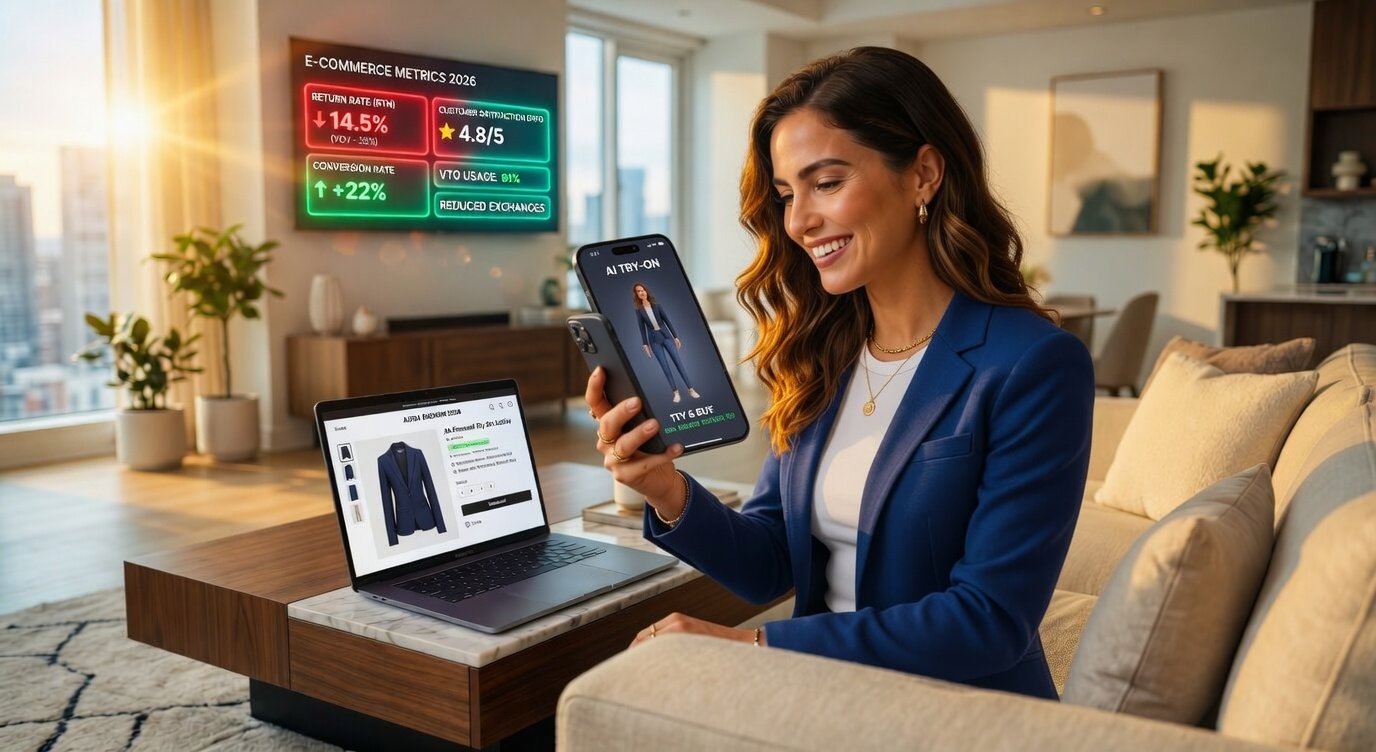
Fashion brands are actively looking for ways to reduce fashion return rates as returns continue to impact profits and customer experience in online shopping. In 2026, one of the most effective solutions is AI-powered virtual try-on technology.
Brands using virtual try-on solutions are reporting return rate reductions of up to 48% by helping customers make more confident purchase decisions before checkout. From better sizing confidence to improved product visualization, AI try-on reduces returns by minimizing uncertainty in fashion eCommerce.
This guide explains how virtual try-on reduces fashion return rates, why it matters in 2026, and how platforms like Mirrago are helping fashion stores boost customer confidence and reduce costly returns.
Why Fashion Return Rates Are So High in eCommerce
One of the top-performing return rates in the e-commerce industry is fashion. The clothes are unlike household or electronic goods, where the personal fit, style, and visual perception are much more involved.
If a customer can't taste, smell, feel, or otherwise experience the product before purchasing, the likelihood of their mistaking it for something else is much greater
The biggest reasons fashion products get returned include:
Wrong sizing:
Poor fit expectations
Different appearance in real life
Uncertainty about style
Customers ordering multiple sizes
Low confidence during checkout
According to industry reports, sizing-related concerns remain one of the leading causes of online fashion returns. This creates serious problems for brands trying to scale profitably.
High fashion return rates create several business challenges:
Increased shipping costs
Reverse logistics expenses
Inventory management problems
Reduced profit margins
Delayed revenue recovery
Environmental waste
Lower customer satisfaction
This is exactly why brands are actively searching for ways to reduce fashion return rates without damaging the customer experience.
How Virtual Try-On Reduces Fashion Return Rates
The reason AI try-on reduces returns is connected directly to customer confidence. When shoppers feel more certain about a purchase, they are less likely to return it later.
Here is how virtual try-on reduces fashion return rates in real business scenarios.
Better Size Confidence
One of the most common reasons customers return clothing is incorrect sizing.
Traditional size charts can be confusing, as there are differences in sizing between brands. Customers can wear different sizes due to fabric, fit style, or country standards.
Virtual try-on helps by:
Giving customers realistic fitting previews
Improving understanding of garment proportions
Reducing sizing uncertainty
Helping users select the right option faster
When customers feel confident about sizing, they avoid ordering multiple variants “just to test.
This directly helps brands reduce fashion return rates significantly.
Reduced Expectation Mismatch
One of the other big problems in the e-commerce fashion domain is the discrepancy between the product promise and the actual product.
People can get attracted by the image of a product online, but can be disappointed when it reaches them. Often, expectations are not realistic due to lighting, styling, or body differences.
AI-powered virtual try-on solves this problem by:
Showing more realistic previews
Helping customers imagine real-world appearance
Improving product visualization
Creating accurate style expectations
As a result, customers receive products that better match what they expected during purchase. This is one reason why virtual try-on returns 2026 strategies are becoming critical for modern fashion brands.
Fewer “Try-and-Return” Purchases
Many shoppers intentionally order multiple sizes with the plan to return unwanted items later. This behavior increases operational costs for brands and creates unnecessary inventory movement.
Virtual try-on technology reduces this by:
Helping customers make informed decisions
Increasing confidence in a single purchase
Lowering uncertainty during checkout
Minimizing bulk return behavior
For brands with high-volume orders, even a small reduction in return activity can create major profit improvements.
Improved Customer Confidence
Trust is a significant factor in the online shopping experience. If a customer hesitates, they will leave the shopping cart or buy things that they may regret.
AI virtual try-on improves confidence by:
Providing interactive shopping experiences
Offering personalized visualization
Helping users feel more secure during checkout
Making online shopping feel closer to in-store experiences
When customers trust their buying decisions, return rates naturally decrease.
This makes AI try-on reduce returns, one of the most valuable advantages of modern fashion technology.
Real Business Impact of Reduced Returns
Reducing returns does much more than lower shipping costs. It improves the entire operational structure of a fashion business. Brands implementing fashion e-commerce returns solutions powered by AI often experience improvements in multiple business areas.
Benefits include:
Lower Operational Costs
Handling returns requires packaging, shipping, inspection, and inventory processing. Fewer returns reduce these expenses immediately.
Better Profit Margins
Lower return rates protect revenue and improve overall profitability.
Faster Inventory Management
Returned items often delay stock movement. Reduced returns improve inventory flow.
Improved Sustainability
Fewer return shipments mean lower carbon emissions and less packaging waste.
Higher Customer Satisfaction
If the customers receive something they really enjoy, they will be more inclined to return for their next purchase.
Increased Conversion Rates
Customers who believe in the buying process are more inclined to make purchases.
This is why many experts believe virtual try-on returns in 2026 optimization will become standard across fashion eCommerce.
Why Fashion Brands Are Prioritizing Virtual Try-On in 2026
Consumer expectations are changing rapidly.
Modern shoppers expect:
Personalized shopping
Interactive experiences
Faster decision-making
Mobile-first experiences
AI-powered convenience
Traditional product galleries are no longer enough for many online buyers.
Fashion brands that fail to modernize may struggle to compete against stores offering immersive shopping experiences.
Virtual try-on is becoming essential because it helps brands:
Reduce fashion return rates
Improve customer trust
Increase conversion rates
Create premium shopping experiences
Build stronger customer loyalty
The combination of AI commerce and fashion personalization is transforming how consumers shop online.
How Mirrago Helps Fashion Brands Reduce Returns
Mirrago is supporting fashion brands in modernising their e-commerce shopping experience by creating virtual try-on technology powered by AI for e-commerce growth.
The platform aims to deliver a solution to bolster customers' confidence in brands and curtail high return rates.
Key benefits of Mirrago include:
AI-powered virtual try-on experiences
Easy eCommerce integration
Improved customer engagement
Faster buying decisions
Better product visualization
Reduced return uncertainty
Enhanced mobile shopping experience
The Mirrago return rate optimization process not only enhances customer satisfaction but also boosts the efficiency of the retail business, particularly for fashion brands facing high return rates.
With increased competition in online shopping, having appealing, interactive shopping experiences will be a huge benefit to brands.
Is Virtual Try-On Worth It for Fashion Stores?
For many fashion businesses, returns are no longer just a customer service issue; they are a profitability issue.
If your brand struggles with:
High return rates
Low conversion rates
Cart abandonment
Sizing complaints
Customer uncertainty
Rising logistics costs
Then, implementing a fashion e-commerce returns solution powered by AI can create a measurable business impact.
Conclusion:
Technology is now offering a scalable solution to one of the biggest e-commerce challenges: Fashion returns.
Businesses leveraging virtual try-on technology are already seeing tangible business results from increased customer confidence and conversions, as well as improved business efficiency. Most importantly, they are successfully working on reducing the rate of fashion returns by assisting customers in making intelligent buying decisions before they check out.
With the rise of AI shopping experiences, early adopters of virtual try-on will stay one step ahead in the dynamic fashion eCommerce market.
When you want to cut down on high return rates and enhance customer satisfaction, it's time to look into AI solutions.
CTA
Ready to Reduce Fashion Return Rates?
Discover how Mirrago
Helps fashion brands improve customer confidence and reduce returns with advanced virtual try-on technology.