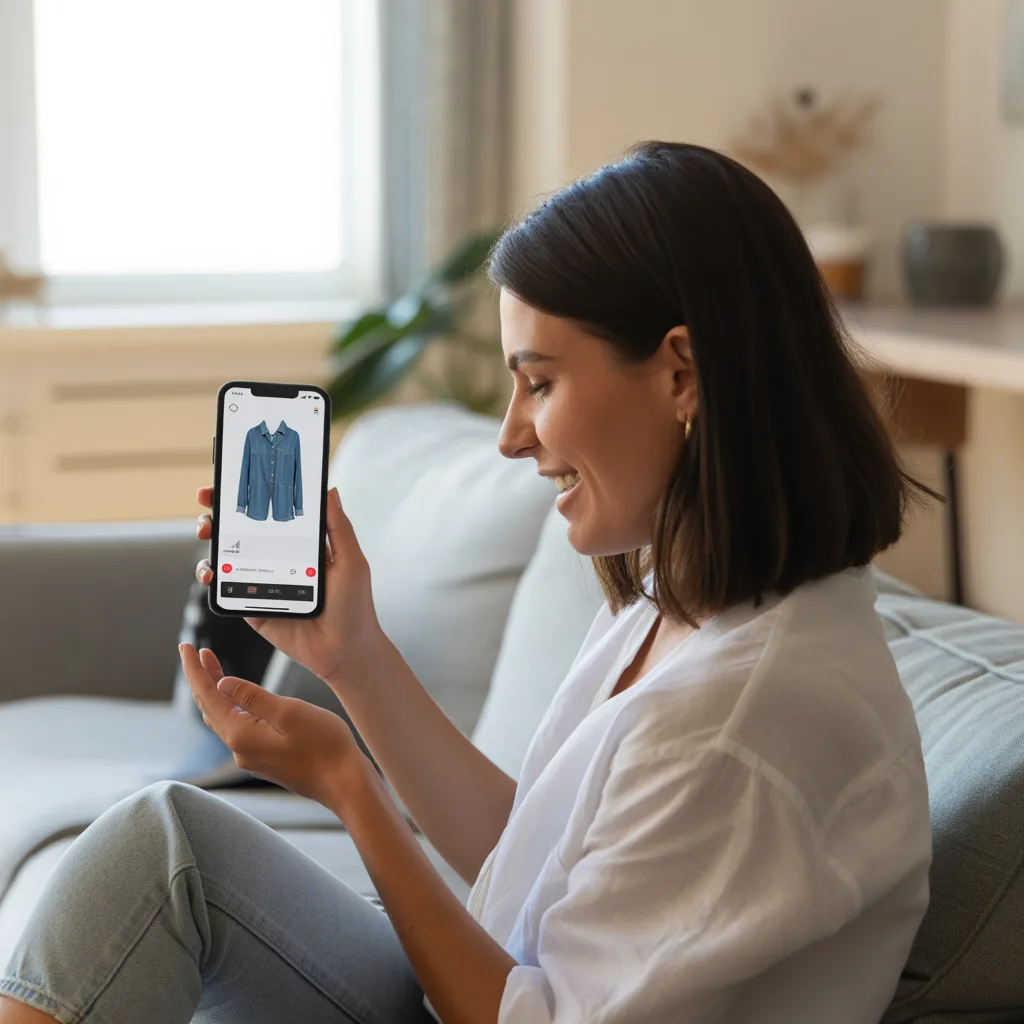
Virtual try-on is no longer a ‘future trend' in e-commerce. It is one of the most impactful conversion-generation technologies that fashion houses, boutique shops, and online fashion companies can use to their benefit.
Customers are now looking to see how clothes look on them before buying. This is driving both Shopify and WooCommerce stores to move towards AI-powered virtual fitting room technology at an accelerated pace.
Modern platforms like Mirrago are making this possible for independent brands without requiring enterprise-level budgets or complex development teams.
There is one crucial question every store owner must ask when deciding to make this change
Which platform gets better results for virtual try-on: Shopify or WooCommerce?
There is no simple answer with regard to the question of 1 is better. Each platform has its own positive attributes, depending on the nature of your business, technical requirements, and growth objectives.
Let's take a look at Shopify vs WooCommerce side by side in this guide from the point of view of:
Fashion boutiques
Growing eCommerce brands
Independent clothing stores
Multi-product fashion retailers
DTC apparel businesses
We will check how easy it is to integrate it, how good the AI virtual try-on is, how effective it is at conversions, how fast the store runs, how scalable it is, how customizable it is, the cost involved, and the overall user experience, so you can make the right call for your store.
Why Virtual Try-On Matters More
Online fashion shopping still faces one major challenge: customers cannot physically try products before buying.
That single problem creates a chain reaction of issues for store owners:
High return rates are eating into margins
Cart abandonment at the final decision stage
Low buyer confidence around sizing and fit
Size confusion leading to multiple purchases and returns
Decision fatigue is causing shoppers to leave without buying
AI-powered virtual try-on directly addresses this by visualizing the product on your body to help you make more informed choices. Realistic body mapping, fabric rendering, and size visualization with generative AI help shoppers visualize outfits before they even reach the checkout counter. The outcome is more than just a pretty face. The impact on the business is tangible.Stronger customer confidence at the point of purchase
Higher conversion rates across collections
Fewer returns due to fit or style dissatisfaction
Improved brand trust and repeat purchase behavior
According to Mirrago's platform data, virtual try-on experiences can help reduce returns by up to 40% while meaningfully improving customer engagement. That is why fashion brands are now evaluating not only which virtual try-on tool to use, but which eCommerce platform supports it best.
Shopify Virtual Try-On
Why Shopify Is Popular for AI Commerce
Shopify remains one of the most popular eCommerce platforms for fashion brands because of its simplicity, speed, and ecosystem maturity. For virtual try-on specifically, Shopify brings a set of strong, practical advantages:
Faster plugin installation with minimal configuration
A large and well-supported app ecosystem
Easier ongoing maintenance with no server management
Strong mobile optimization is built into every theme
Built-in hosting, SSL, and security handled automatically
Reliable scalability as your store grows
Shopify is generally the preferred platform for most boutique owners because of its speed in the rollout of new features without having to deal with servers, hosting problems, or technical infrastructure. The platform should not be in your way or keep you from selling.
Advantages of Shopify for Virtual Try-On
1. Faster Plugin Integration
Shopify's app ecosystem makes AI integrations straightforward for non-technical store owners. Most virtual try-on solutions can be installed and configured with minimal setup compared to fully custom WooCommerce environments.
2. Better Store Stability
Virtual try-on features involve heavy AI rendering and image processing. Shopify's managed infrastructure helps maintain.
3. Mobile-First Experience
The majority of fashion traffic in 2026 comes from mobile users. Shopify themes are built and optimized.
4. Easier Scaling for Growing Brands
As your store grows, the last thing you want is to spend time managing technical infrastructure. Shopify handle.
WooCommerce Virtual Try-On
Why WooCommerce Still Remains Powerful
WooCommerce continues to dominate among brands that want flexibility, ownership, and full control over their store experience. It is particularly attractive for:
Custom fashion stores with unique product page designs
Large product catalogs requiring advanced filtering and organization
Very personalised journey for each customer segment
For virtual try-on, WooCommerce opens up deeper customization possibilities that Shopify's closed ecosystem simply cannot match.
Advantages of WooCommerce for Virtual Try-On
1. Complete Customization Freedom
WooCommerce allows brands to customize nearly every aspect of the shopping experience:
2. Greater Control Over AI Integrations
Some brands have more advanced requirements than a plug-and-play solution can offer. WooCommerce provides the flexibility.
3. Lower Long-Term Platform Fees
WooCommerce is open-source. Even the platform itself is free of charge, and it can significantly save money, especially for brands with their own hosting and development platforms. It is important to note, however, that depending on the complexity of your setup, plugin costs, quality hosting, and ongoing maintenance can end up costing you more.
4. Better for Custom Content and SEO Control
WooCommerce is built on WordPress, providing brands with access to one of the most powerful content and SEO ecosystems around:
Shopify vs WooCommerce: Virtual Try-On Comparison
Ease of Setup
Faster setup with fewer steps
Easier for beginners and non-technical teams
Minimal technical work required to go live
More technical setup required upfront
Requires hosting management and theme configuration
Greater development involvement for optimal results
Best for: Shopify if you want speed and simplicity. WooCommerce if you want complete control over every detail.
Performance and Speed
Shopify
Optimized infrastructure managed by the platform
Better default performance without any configuration
Managed hosting removes performance guesswork
WooCommerce
Performance depends heavily on hosting quality and theme choice
Can be extremely fast with proper setup and optimization
Requires active management to maintain performance over time
Best for: Both platforms can perform well. Shopify is simply easier to keep consistent without technical involvement.
AI Virtual Try-On Flexibility
Shopify
Easier plugin integrations for standard try-on setups
Faster deployment from decision to live button on product pages
WooCommerce
More customizable AI workflows for advanced use cases
Better suited for brands building proprietary try-on experiences
Best for: WooCommerce for advanced, custom AI experiences. Shopify for fast, clean standard integrations.
Maintenance
Shopify
Low maintenance with automatic updates handled by Shopify
Managed security and infrastructure with no action required
WooCommerce
Requires ongoing plugin and WordPress core updates
Plugin compatibility management needs regular attention
Hosting maintenance adds to the operational workload
Best for: Shopify for non-technical teams who want to stay focused on the business
Where Mirrago Fits Into Both Platforms
Modern solutions like Mirrago are changing this conversation entirely.Instead of requiring enterprise-level AR systems or large development budgets, AI-powered virtual try-on is now accessible to independent brands on both Shopify and WooCommerce. Mirrago focuses on delivering:
Realistic body visualization that reflects actual fit and proportions
AI-powered fitting experiences personalized to each shopper
Faster integration workflows that get brands live within days or weeks
Stronger customer confidence at the product page level
Reduced return uncertainty by showing real fit before purchase
The lesson that can be learned from this is that platform restrictions are not the most crucial factor anymore; a better implementation does matter. A Shopify site optimized with Mirrago can perform better than a poorly-configured WooCommerce site.
The platform sets the foundation. Mirrago builds the experience on top
Which Platform Is Better for Boutique Owners?
Choose Shopify If You Want:
A faster launch with fewer technical decisions to make
Easier day-to-day management without developer support
Minimal ongoing technical maintenance
Simpler plugin installation and a smoother onboarding experience
Shopify vs WooCommerce? The Biggest Winner Is Neither
The biggest shift in 2026 is not Shopify vs WooCommerce.
The real shift is this: AI virtual try-on is finally becoming practical, affordable, and conversion-focused for independent fashion brands.
More realistic fabric and texture rendering
More accurate body mapping across all shapes and sizes
Stronger mobile performance for on-the-go shoppers
Greater buyer confidence at the critical decision moment
Genuine accessibility for smaller businesses without large budgets
That means boutique owners no longer need enterprise resources to compete with major fashion retailers on customer experience. Both Shopify and WooCommerce can now deliver strong virtual try-on results when paired with the right technology.
Conclusion
Shopify and WooCommerce both offer strong, viable paths to AI-powered virtual try-on in 2026. There is no universal winner — and anyone telling you otherwise is oversimplifying the decision.
The better platform for your store depends on:
Your business size and current technical resources
How quickly do you need to launch
Your growth strategy and SEO goals
How much customization does your brand experience require
Your preference for managed simplicity or hands-on control
If your goal is simplicity and faster deployment, Shopify is extremely attractive. If your goal is flexibility and deep customization, WooCommerce remains one of the most powerful platforms available.
Ready to Add AI Virtual Try-On to Your Store?
With Mirrago, fashion brands can bring realistic AI virtual fitting experiences to both Shopify and WooCommerce stores.
Try the Mirrago Plugin. Install virtual try-on on your WooCommerce store today. Free to get started.
Book a Free Demo. See exactly how Mirrago performs on your store, with your products, on your platform.