Why Weak Trust and Lack of Social Proof Stop Online Clothing Sales
A shopper finds your store. They browse your products. They like what they see. However, there's a reason that they don't actually buy it. No reviews, no contact information, such as a name or address. Without social proof, a shopper has no way to know if anyone else has actually bought and trusted your products. This is one of the most expensive problems in fashion e-commerce, and most brands never realise it is happening.
Trust is the foundation of successful fashion e-commerce. Since shoppers can't touch, try on, or inspect products online, they rely on brands to deliver exactly what is promised. Clear product information, authentic reviews, and strong social proof help build the confidence needed to turn visitors into customers.
In our pillar guide on why clothing brands are losing online sales in the digital era, trust and social proof were identified as one of five structural problems quietly draining fashion brand revenue. This article goes deeper into that specific problem, examining exactly how weak trust and lack of social proof stop online clothing sales before they even begin.
The consequences show up across every metric. Conversion rates drop. Cart abandonment rises. Repeat purchase levels remain low. That's because all of the brands that do invest in building trust that can be seen are outperforming those brands that do not. Brands that use a system to build trust signals and social proof will gain a conversion boost of 20 to 35 per cent in their stores; brands that don't use trust signals and social proof miss a significant amount of revenue every day.
Why Customers Struggle to Trust Unfamiliar Clothing Brands
Each clothing brand started where they didn't receive the recognition they are now recognised for. The first purchase from an unknown brand, convincing someone to trust a brand they've never shopped with, is one of the biggest challenges in e-commerce.
Most fashion brands underestimate how much work the first sale requires. They assume that good products and attractive photography are enough. They are not. When a customer walks into a store that he does not know, he is looking for a signal, in many cases, without realising it, that can alert him to whether this brand is authentic, trustworthy, and good value for money. When they're not there, the shopper walks away.
92% of consumers hesitate to purchase when no reviews are available
Relying Only on Professional Product Photos
Professional product photography is essential. But when it is only visual content a brand provides, it works against trust rather than for it. Polished studio images tell a shopper how a brand wants its products to look, not how they actually look in real life, on a real body, in natural light.
Shoppers know this instinctively. They question heavily edited images because:
Under studio lighting, the texture of fabric, the quality of its stitching, and its authentic colour qualities are concealed.
Model poses are selected to reflect in a favourable light on the product and not in a realistic sense.
No evidence that the product does not exist in real life, including no motion, no lifestyle context.
In the case of those over-polished images, it's obvious that the product is so good; why hide the details?
72 per cent of customers believe in other consumers' photos and reviews more than brand photos and reviews. Professional photos are the least trusted form of content a brand can use.
Displaying Products With No Customer Reviews
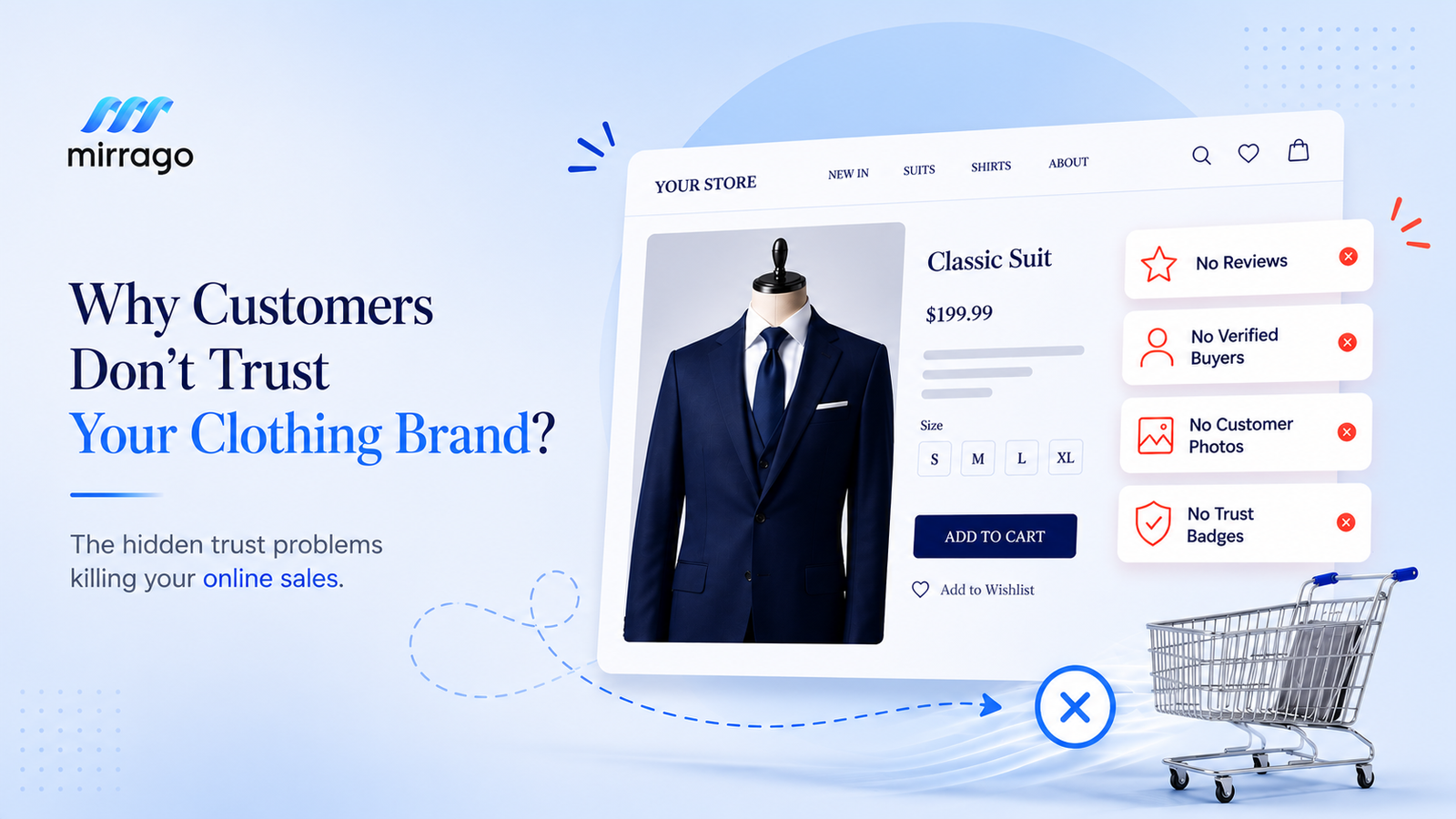
When a product page has no reviews, it's an obvious deterrent to the sceptical consumer, telling them that either nobody has purchased it or nobody has bought it and found it worthy of comment. Neither interpretation builds confidence.
The data on this is unambiguous. Products with five or more reviews are 270% more likely to be purchased than products with zero reviews (Northwestern Spiegel Research Centre via Capital One Shopping)
That gap between a product with no reviews and one with just a handful of genuine customer responses is one of the
most significant conversion opportunities available to any clothing brand.
The Impact of Missing Verified Buyer Ratings
Reviews without verification create a second layer of doubt. Shoppers who are aware of fake reviews and research show that awareness is growing rapidly look for signals that the feedback they are reading is genuine. Verified buyer badges, third-party review platform integration, and authentic aggregate ratings all serve this function. Without them, even real reviews carry less persuasive weight than they should.
Why Faceless Brands Make Shoppers Hesitate
There is a meaningful difference between a brand and a storefront. A storefront sells products. In essence, a brand has a story, a team, values, and a human presence that can connect with the consumers. In fashion e-commerce, where purchase decisions are deeply personal, that distinction is often the difference between a completed sale and an abandoned cart
Shoppers want to know who they are buying from. Not in theory but actually. If the company does not have the answers to simple queries on their website, a customer's natural response is to find a store where they will, as it is their instinct.
86% of consumers say authenticity is a key factor when deciding which brands to support (WiserNotify)
Why Shoppers Ignore Generic About Pages
The About page is one of the most visited pages on any e-commerce website and one of the most routinely attacked pages. Most fashion brands use obfuscatory marketing terms such as "passion," quality and values, but do not tell the shopper anything particular or human about who they are.
A generic About page does not build trust. It raises questions. Shoppers who land on an About page and leave without learning anything real about the brand often ask themselves:
• Who actually founded this brand and why?
• Is there a real team behind these products?
• Will someone be accountable if my order goes wrong?
• Do they have values that I care about?
However, if shoppers aren't providing answers to those questions, they aren't moving away from products; they're moving away from the brand.
Hidden or Missing Contact Information
One essential trust signal any e-commerce brand can offer is contact information. The important point is to communicate with the customer with an email address, a telephone number, or even just a contact form, so that if something goes wrong, a person is at their disposal.
If this information is hidden in a footer, with numerous clicks and/or, more poorly, if there's no information, it is a sign that it might not want to be located. That’s a big red flag for new shoppers trying to make their first purchase. This is the unspoken question they are asking themselves: If this doesn't work, can I be helped? If something is not known, many people opt to "just not know."
No Brand Story or Human Voice Behind the Products
In e-commerce, fashion is among the most personal product categories. Purchasing clothing is not solely a transaction of items but one of identity, style, and values. When a brand communicates only in corporate language, uses generic stock imagery, and gives no indication of the people behind its products, it misses the emotional connection that turns a one-time buyer into a loyal customer.
86% of consumers say authenticity is a key factor when deciding which brands to support. A faceless brand, one with no story, no human voice, and no visible team, cannot meet that standard, no matter how good its products are.
Why Missing Social Proof Kills Purchase Confidence
For an e-commerce brand, social proof is the most influential and effective way to gain customer trust. It's like when someone says a product is really good and it works because it's people who have no vested interest in lying about it. Without social proof, or with minimal social proof, the brand is asking the customers to believe it because of fiction, not actual humans. Most will not.
A product is 270% more likely to sell when it has 5+ reviews vs zero reviews (Northwestern Spiegel Research Centre)
No User-Generated Content From Real Customers
The type of social proof that a clothing brand can get is the most trusted one, which is user-generated content, that is, photos, videos, and reviews made by actual customers. Displaying UGC on product pages can boost conversion rates by as much as 166%, and helps reduce cart abandonment by 2.5% (WiserNotify)
But many brands either don't gather UGC or don't use it as much on the front page, or trust that all of the content is produced by them, which is already less trusted by users. The outcome is a product page that appears professional but not really scripted in a way that would convert a 'cold' visitor. This is what the information indicates:
60% of consumers say UGC is more authentic and trustworthy than brand-created content
65% of consumers say seeing customer photos and videos actively builds trust during the buying process
Brands that display real customer photos see 15% fewer returns due to better expectation setting
Websites featuring UGC see 29% higher web conversion rates than those without
Inactive or Inconsistent Social Media Presence
People often head to a brand's social media pages to check its authenticity and ensure it is running a business. When you have a blog that doesn't update for months or a post that doesn't get many likes or comments, you will immediately question the importance of the page. If a brand is inactive, without social media, can it be trusted when it comes to on-time orders?
87% of consumers say social media influences their buying decisions, and fashion falls within one of the categories most impacted by social discovery. A company with a low or mediocre social presence is not visible to a larger percentage of its target market and won't be trusted by many of the ones who do know about them.
Heavily Moderated Comments That Feel Fake
Brands that delete negative comments or moderate feedback so heavily that only perfect scores remain are making a mistake that increasingly savvy shoppers can spot immediately. If all of their comments are five stars and there's no feedback or criticism from anywhere, it comes across as manufactured social proof.
Real social proof contains real feedback, which, in turn, may be flawed. A brand with a positive rating of 4.3 and some reviews that include details with a few minor problems looks more reliable than a brand that has a suspect 5-star rating and no substantive content. People understand that anything with a perfect rating is a red flag. They have faith in brands that engage in frankness regarding everything.
Why Checkout Trust Signals Are Often Missing
It's always an easier sell when you can get the shopper to the checkout, as by this point, they're performing the bulk of the work. They've thought about it, they've narrowed it down to a product, they have picked a size, and they have decided to make the purchase. The check-out phase ought to be the simplest phase of the entire procedure. For many clothing brands, it is where trust collapses at the final moment, right when the sale seemed certain.
The checkout is the place exactly where the shopper gives in the most delicate info: financial information, residence address, and payment type. Even a prospective buyer that's incentivised to buy it won't continue on without assurance that the process will be safe and that the transaction will be handled the right way.
18% of cart abandonment happens because shoppers did not trust the site with their payment information. (Baymard Institute, 2024)
No Payment Security Badges or SSL Signals
One of the simplest yet most effective trust signals an e-commerce brand can display is a payment security badge, yet most brands either skip them entirely or bury them in the footer, where checkout-stage shoppers never look.
The checkout trust signals that brands most commonly miss include the following:
No SSL certificate padlock visible in the browser bar during checkout
No payment provider logos (Visa, Mastercard, PayPal) are displayed near the checkout button
No security seals from recognised third parties are placed at the point of card entry
No money-back guarantee or buyer protection statement is visible before payment
A payment security badge placed next to the checkout button at the exact moment a shopper is deciding whether to enter their card details is a direct conversion lever. Its absence is a direct conversion barrier.
Unclear or Hard to Find Refund and Return Policies
Return policy clarity is a trust signal as much as it is a logistical detail. A shopper who cannot quickly find and understand a brand’s return policy before completing a purchase is being asked to commit to a transaction without knowing what protection they have if something goes wrong. Most will not take that risk.
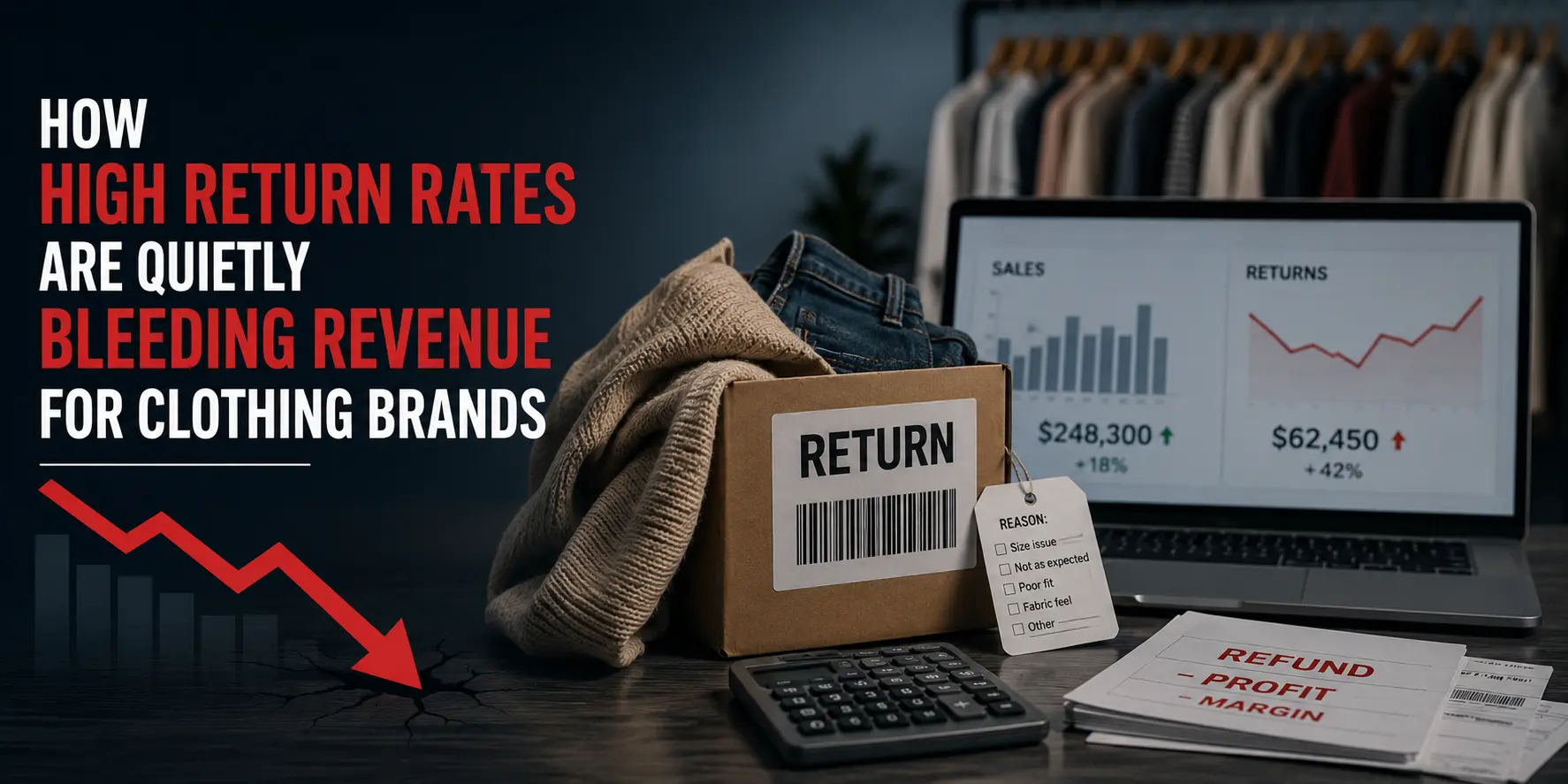
As we explored in our article on why online returns are becoming a big problem for fashion businesses, return policy clarity affects not just post-purchase satisfaction but pre-purchase confidence. A clear, easy-to-find policy reduces the perceived risk of buying, and reduced perceived risk directly increases conversion.
No Third Party Trust Seals or Verification
Brands can't create as much trust as third-party trust seals from well-known sources such as Trustpilot, Google Reviews, or industry verification organisations. They are intended to highlight that an independent organisation has verified something about the brand's legitimacy, customer satisfaction, and security standards.
79% of consumers trust online reviews as much as personal recommendations from friends and family. Third-party verified reviews are not a nice-to-have. They are the closest thing to a personal recommendation that a new customer can receive from a brand they have never bought from before.
How Weak Trust Connects to Every Other Sales Problem
Weak trust and lack of social proof do not exist in isolation. They compound every other conversion problem a clothing brand faces, and they are often the underlying cause of problems that appear, on the surface, to be about something else entirely.
Trust Failure on Product Pages Triggers Cart Abandonment
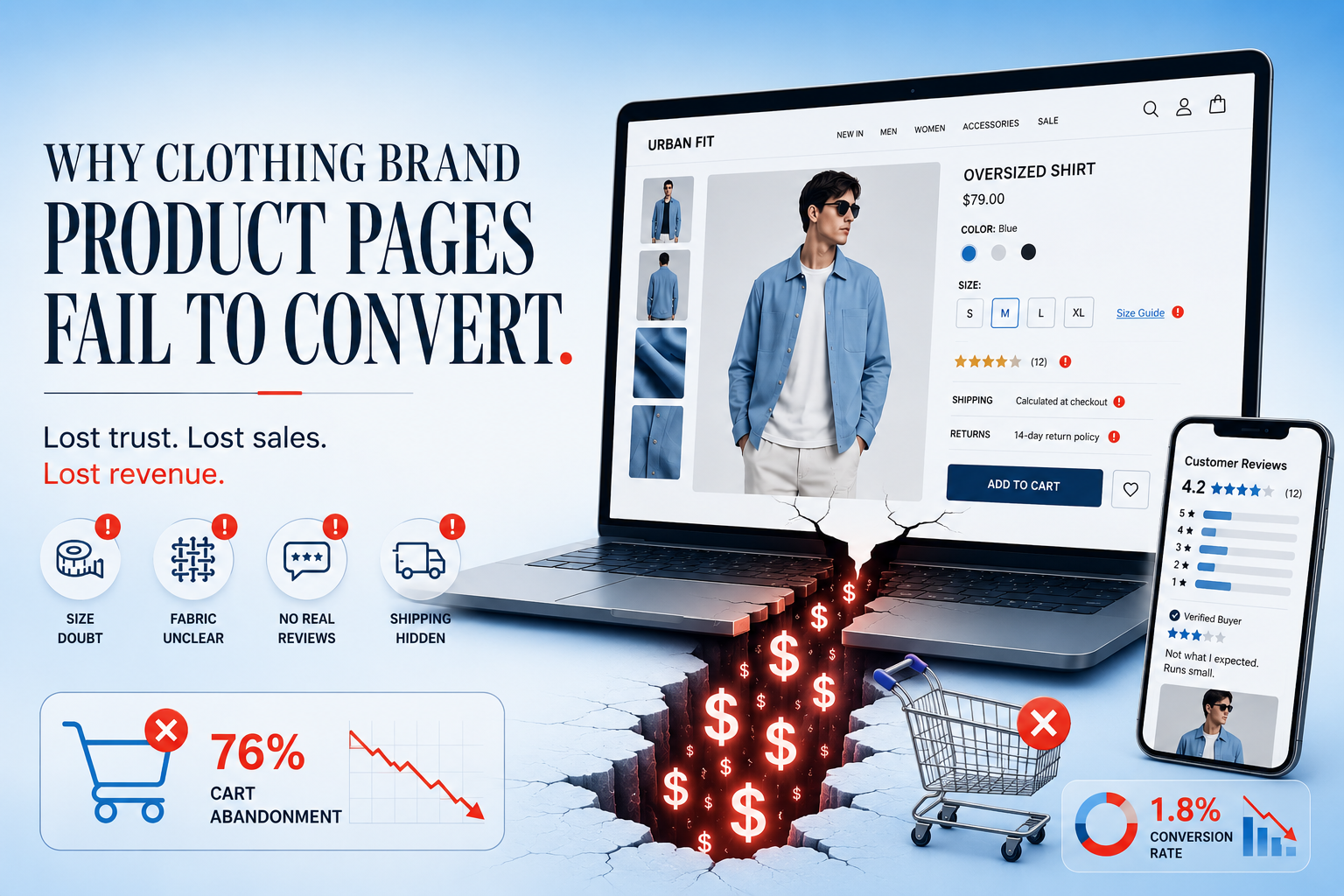
If a brand isn't trusted, the customers have already started counting the reasons not to purchase a product. Every friction point they encounter, whether it be an unclear size chart, an unexpected shipping fee, or a slow loading page, is a reason to leave. When there is no trust as the basis, there is no anchor at the product page. All blemishes appear bigger.
This is why weak trust cannot be solved by fixing individual product page elements in isolation. A brand that improves its size chart but still has no reviews will continue to lose shoppers. Trust is the foundation. Without it, everything else is built on sand. This is one of five structural problems we cover in our full guide: Why Clothing Brands Are Losing Online Sales in the Digital Era
Sizing Anxiety Gets Worse When the Brand Feels Untrustworthy
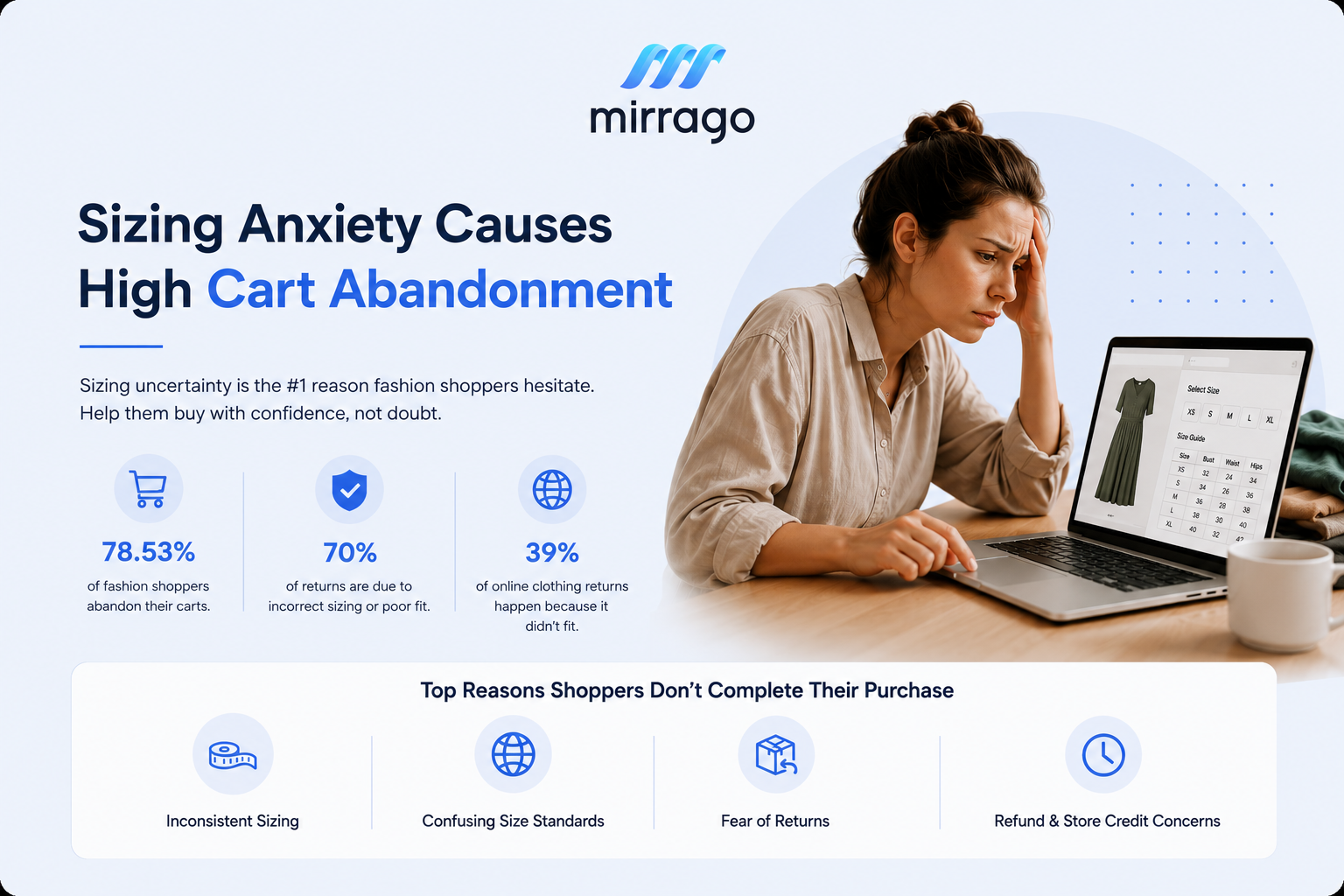
As we covered in our cluster article on why sizing anxiety causes high cart abandonment in apparel stores, the decision to purchase a garment in a specific size is already a high-anxiety moment for many shoppers. That anxiety is manageable when a shopper trusts the brand, when they believe the size guidance is accurate, the return process is fair, and the product will arrive as described.
When trust is absent, sizing anxiety becomes overwhelming. A shopper who is uncertain about their size and also uncertain about whether the brand is legitimate, whether returns will be honoured, and whether the product will match the photography is a shopper who will almost certainly abandon. Weak trust does not just fail to help with sizing anxiety. It actively makes it worse.
Missing Social Proof Compounds Every Other Conversion Problem
Social proof is the most efficient tool a clothing brand has for resolving shopper uncertainty across every dimension of the purchase decision:
A review from a customer with a similar body type resolves sizing anxiety directly
A verified buyer badge resolves payment security concerns at checkout
A UGC photo in natural lighting resolves texture and colour doubts
A testimonial mentioning fast delivery and easy returns resolves shipping and policy concerns
When social proof is missing, the brand has to overcome every one of these concerns through its own content alone, the least trusted content type available. The result is a product page that works harder, costs more to optimise, and still converts at a lower rate than a page with strong, authentic social proof in the right places.
Conclusion
Trust is one of the most important factors in online clothing sales. Even if your products are high quality, shoppers are unlikely to buy if they cannot find reviews, trust your brand, or feel confident during checkout.
Building trust does not require a bigger advertising budget. It comes from displaying authentic customer reviews, maintaining an active brand presence, providing clear policies, and creating a safe shopping experience. These signals help turn first-time visitors into paying customers.
Many trust issues exist because shoppers struggle to visualise themselves in your products. Mirrago helps solve this with AI-powered virtual try-on technology, allowing customers to see how clothing looks on their own body before purchasing. The result is greater confidence, stronger trust, and more completed sales.
Explore How Mirrago Builds Trust and Drives Conversions for Clothing Brands
Mirrago.com