Every fashion brand has been there. A customer places an order, the package is shipped, and a few days later, it's back in the warehouse. The size didn't fit, the style looked different in person, or the item wasn't what the customer expected.
For many brands, the immediate response is to introduce a return fee. The thinking is simple: if returns become more expensive, customers will return fewer items.
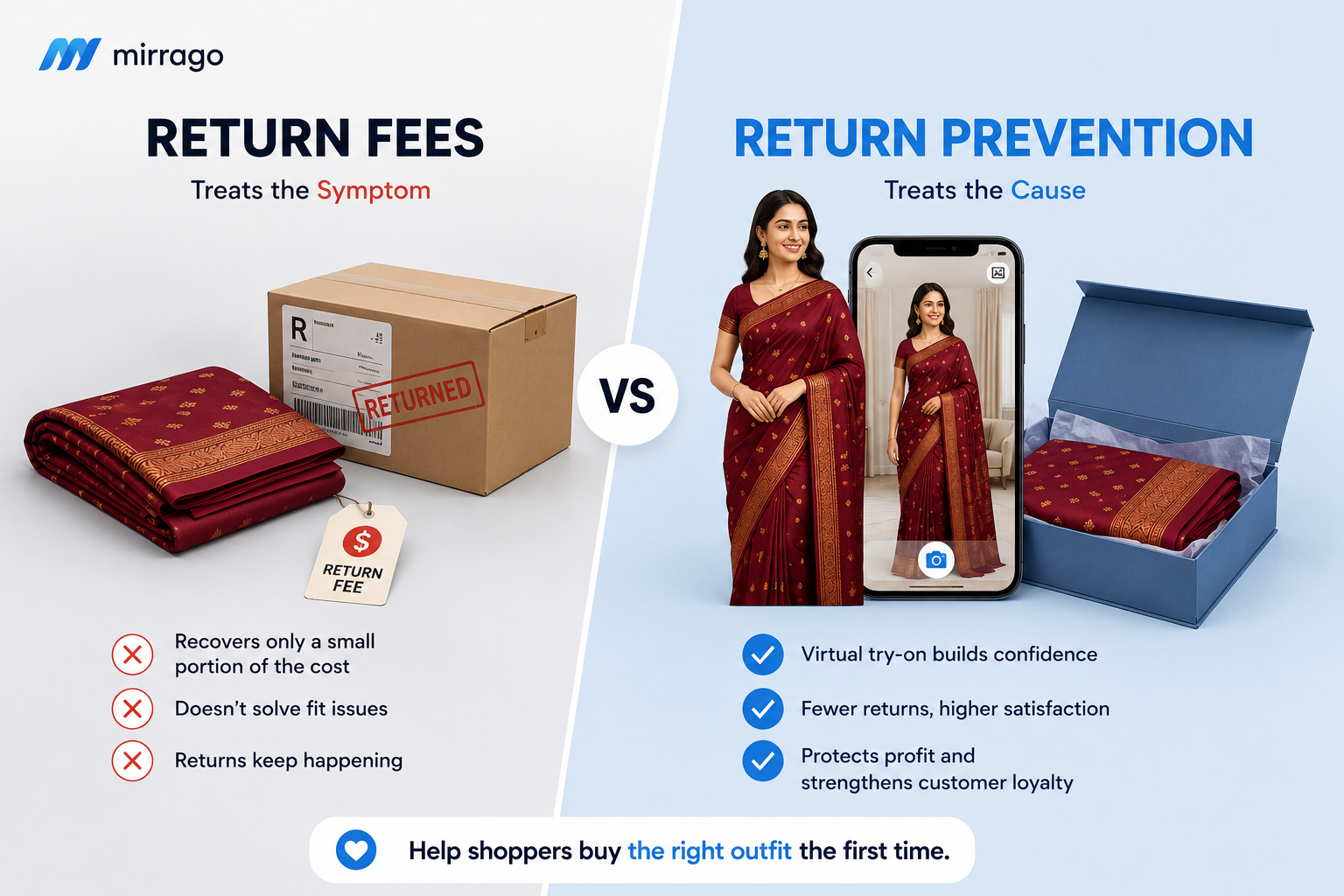
In reality, a return fee doesn't fix the reason the product came back. It just shifts the cost from the business to the customer, and it often costs the brand something bigger in return: the customer's loyalty.
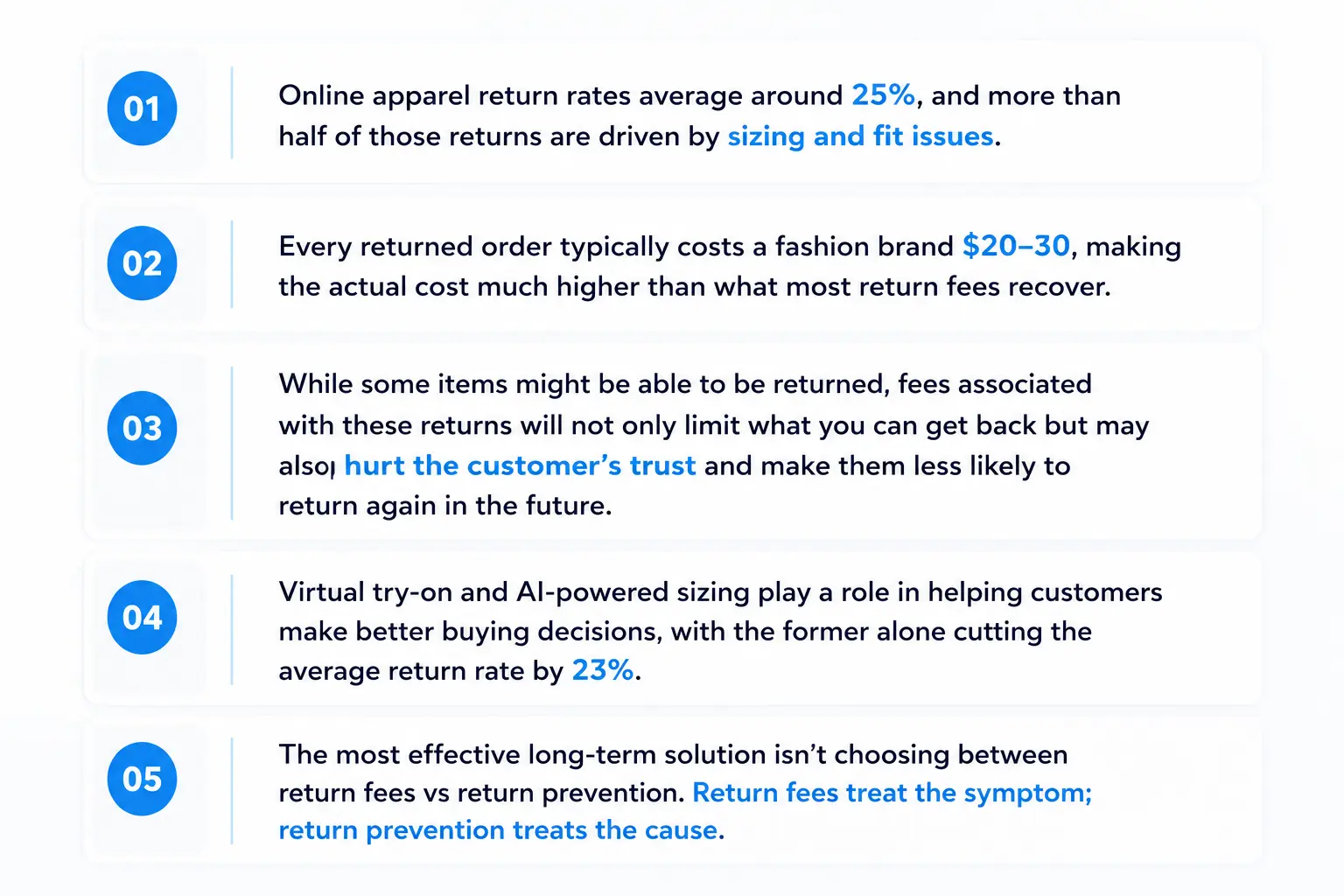
One of the major challenges in fashion e-commerce is returns. According to industry statistics, the typical rate of returns on apparel products is approximately 25%, with certain categories seeing returns in the 50% range. It is not only an operational problem but a core challenge that impacts profitability, inventory management, and customer satisfaction.
When you compare return fees vs return prevention using real numbers instead of assumptions, the answer becomes clear. This isn't just a customer policy question; it's a math-based business decision.
Key Takeaways
The Return Problem Every Fashion Brand Faces
Online shopping has always carried more return risk than in-store shopping, simply because customers cannot touch, feel, or try on what they are buying. But fashion carries that risk more than almost any other category.
Overall, e-commerce return rates sit around 19–20% across all products
Apparel return rates run much higher, close to 25% on average
Footwear and women's fashion often land between 27% and 31%.
Some fashion subcategories, like dresses and swimwear, can reach 40–50%
And the reason is almost always the same one: fit. Industry data consistently shows that size and fit issues cause more than half of all apparel returns, typically ranging from 53% to 67%, depending on the category. It isn't because customers changed their minds about the clothes they ordered. They are bringing clothes back because they are unable, based on a picture on a screen, to know how the clothes will look on their body.
The True Cost of Online Fashion Returns
This is where the idea of simply charging a return fee starts to break down. A return isn't just a refund; it's a series of expenses that add up quickly, and most return fees recover only a small fraction of the actual cost.
A single apparel return typically costs a brand somewhere between $20 and $30, once you account for the following:
Return shipping and reverse logistics
Manual inspection and processing labor
Restocking, repackaging, or re-photographing the item
Markdown or write-off if the item can no longer be sold as new
The Hidden Cost of Unsellable Returns
That last point is the one brands underestimate the most. Less than half of all returned fashion items are resold at full price, and a meaningful share can't be resold as new at all. So even when a brand collects a small return fee from the customer, it is usually covering a fraction of what the return actually costs to process.
Why Charging Return Fees Doesn't Fix the Problem
Return fees feel like a fair trade on paper. The customer caused the cost, so the customer should share it. But customer behavior data tells a more complicated story.
72% of shoppers say they feel more loyal to brands that offer free returns
Nearly half say they feel less loyal to brands that charge for returns
Most shoppers actively check a brand's return policy before they buy, and an unfavorable one can be a reason to walk away entirely
The Other Side of the Argument
To be fair, the research isn't entirely one-sided. Some studies show that a well-designed return fee, one that is clearly communicated and paired with an easy exchange option, can reduce "bracketing" (ordering multiple sizes to test at home) without hurting how often people come back to shop. So the honest takeaway isn't "fees are always bad." It's that fees only work when the reason for the return has already been addressed elsewhere. On their own, they treat the symptom of the fit problem, not the cause.
The Prevention Math: What Virtual Try-On Actually Saves
This is the side of the equation most brands haven't run the numbers on yet, because until recently, this technology wasn't good enough to trust.
That has changed. Recent industry analysis found that brands implementing virtual try-on technology saw an average 23% reduction in apparel return rates, with some categories dropping by as much as 40%. Layering in AI-based size recommendations adds another 15-20% reduction in fit-related returns on top of that.
The reason is simple: virtual try-on solves the actual problem, uncertainty, before the order is even placed. A customer who can see roughly how a garment will sit on their own body is far less likely to order three sizes "just in case," and far more likely to be happy with the one item that arrives.
Real Brands Already Doing This
Brands like Zara and ASOS are already leaning into this shift, embedding try-on tools directly at checkout. ASOS has reported measurable reductions in its return rate as part of this effort, proof that this isn't a theory. It's already playing out at scale.
Difference Between Return Fees and Return Prevention
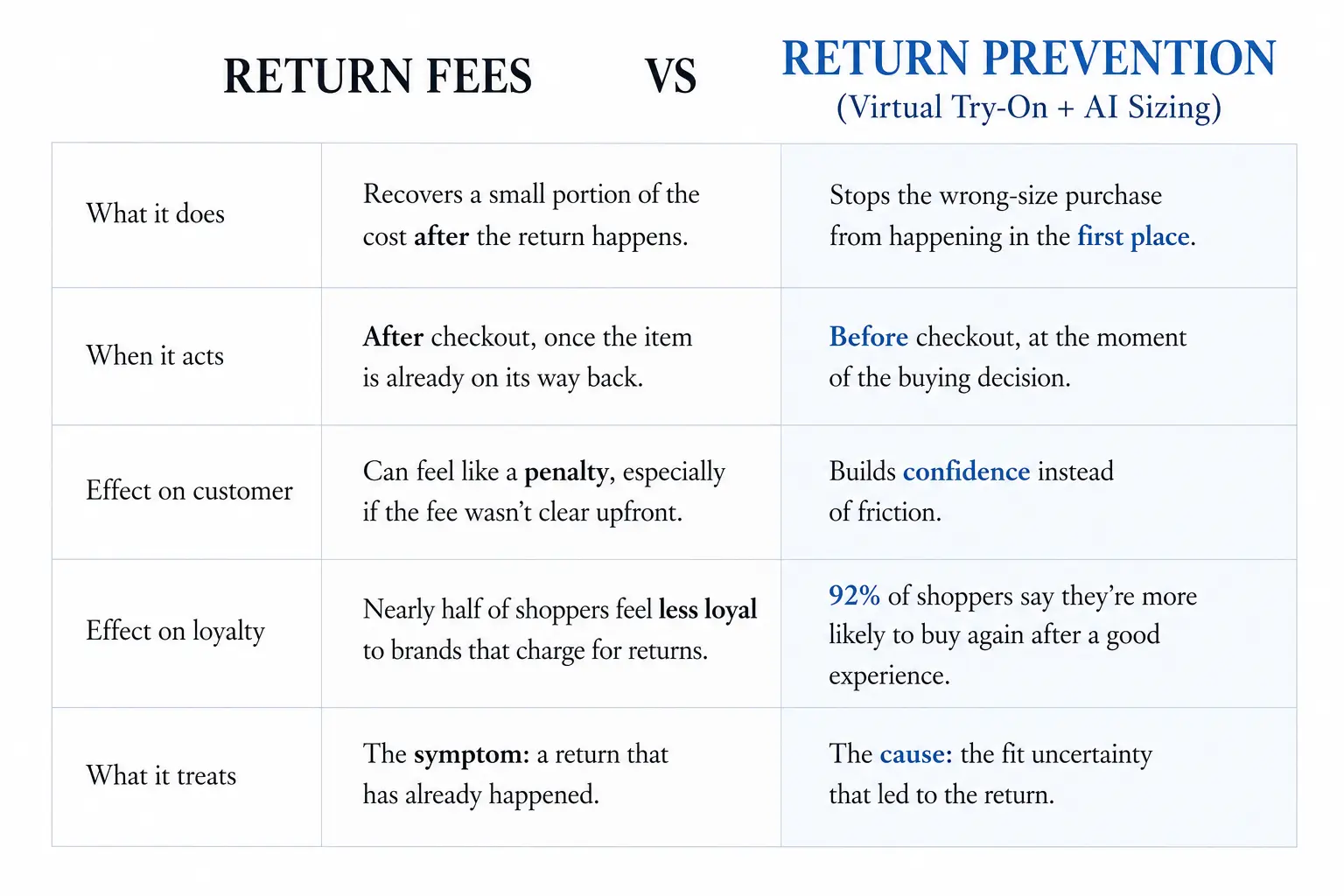
That last row is the heart of the whole comparison. Return fees manage the damage after checkout. Prevention removes the damage before checkout ever happens. Same underlying problem, opposite point of intervention. And the data makes it clear which one customers actually respond to: most shoppers don't remember whether a return was free. They remember whether the item fit the first time.
Conclusion
Return fees aren't inherently wrong, and no brand should feel guilty for trying to recover some cost from a return. But if a fee is the only strategy in place, it is solving the cheaper half of the problem while ignoring the expensive half: the lost trust, the lost repeat customer, the lost lifetime value.
The brands protecting both their margin and their loyalty in 2026 are the ones investing in accuracy before the purchase, not just cost recovery after it. Tools like virtual try-on don't just cut returns. They change the entire relationship a customer has with buying clothes online, turning a guessing game into a confident decision.
How Mirrago's Virtual Try-On Stops Returns Before They Start