Why Do Shoppers Hesitate Before Buying?
The online fashion e-commerce is characterized by high traffic, but the rate of cart abandonment is also very high. The fear of committing to a purchase is one of the main drivers of online shopping hesitation psychology. It reflects the mental process where customers delay or avoid completing a purchase due to uncertainty, doubt, or overthinking. The psychology of online fashion hesitation often reduces the business of shop owners and business brands.
Within the fashion industry, the hesitation is even greater, since the clothing is associated with identity, body image, and even confidence. In the absence of physical try-on and realistic visualization, customers doubt the size, the fit, and the overall appearance. Such uncertainty decreases confidence and has a direct effect on the conversion rates.
Knowledge of the psychology of online shopping unwillingness assists brands in eliminating doubt, reducing abandonment, and enhancing performance.
Why fashion decisions are emotional, not logical
Fashion buying behavior differs from other product categories because it is deeply connected to personal identity and self-image. Through clothing choices, employment of emotional assessment rather than technical comparison is more significant, unlike electronic or grocery purchases.
What motivates people to buy fashion:
Personal identity and self-image
Body confidence and appearance concerns
Social perception and first impressions
Individual style and self-expression
Emotional satisfaction rather than functional need
Before purchasing, shoppers typically evaluate the following:
Will this look good on me?
Will I feel confident wearing this?
Does this match my personality?
Will others like how I look?
Because clothing directly impacts identity and confidence, the perceived risk is higher. In online environments, the inability to physically try on products increases emotional uncertainty, which directly contributes to hesitation and delayed purchase decisions.
Fear of regret and wrong purchases creates
A common issue in online shopping hesitation psychology is the worry of selecting an incorrect or unsuitable purchase. which is known as anticipated regret. Customers have expectations of the worst possible results before they can check out, and this slows down the decision-making process and leads to cart dumping.
Common concerns include:
Size might not fit correctly
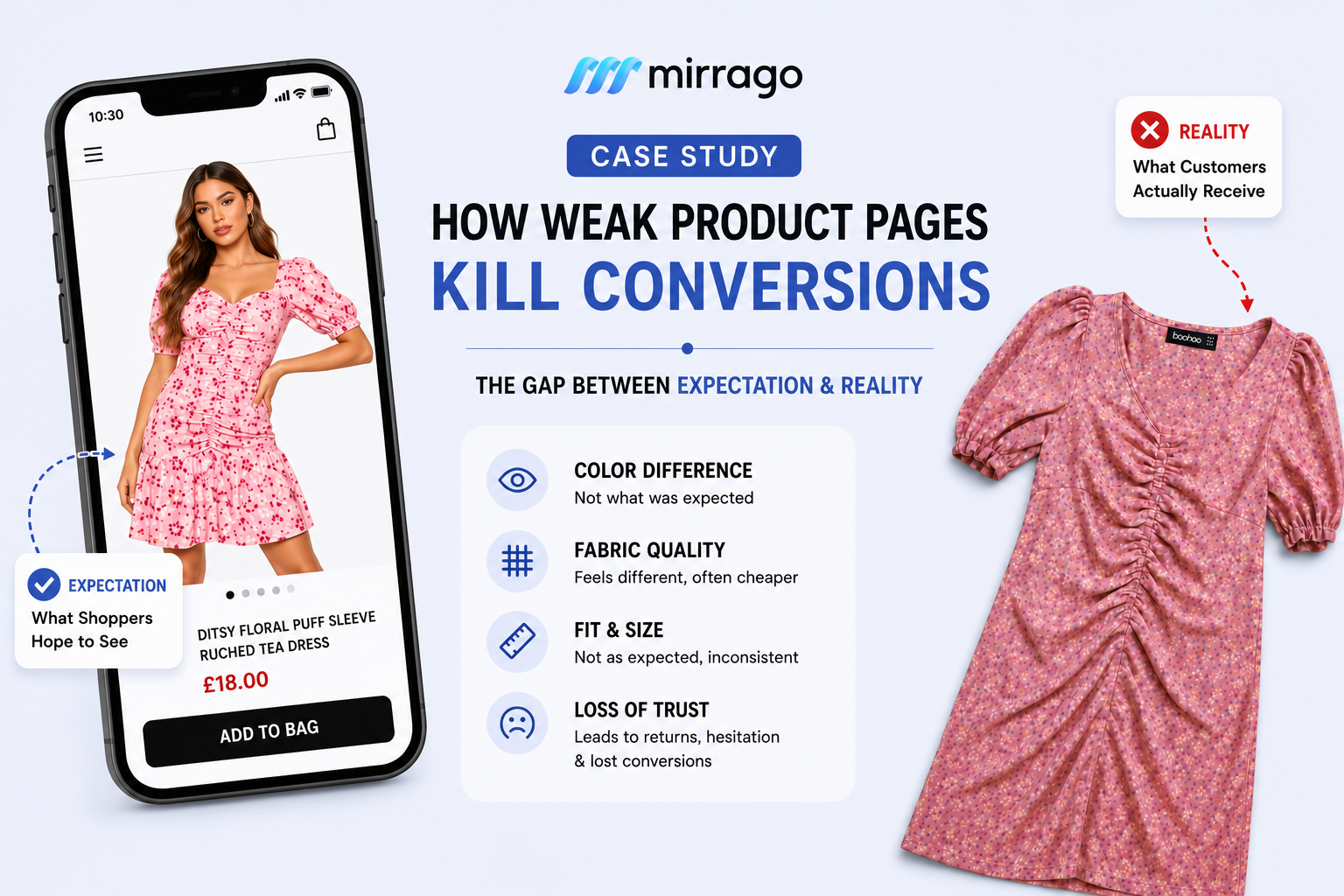
Color may differ from expectation
Style may not suit body type
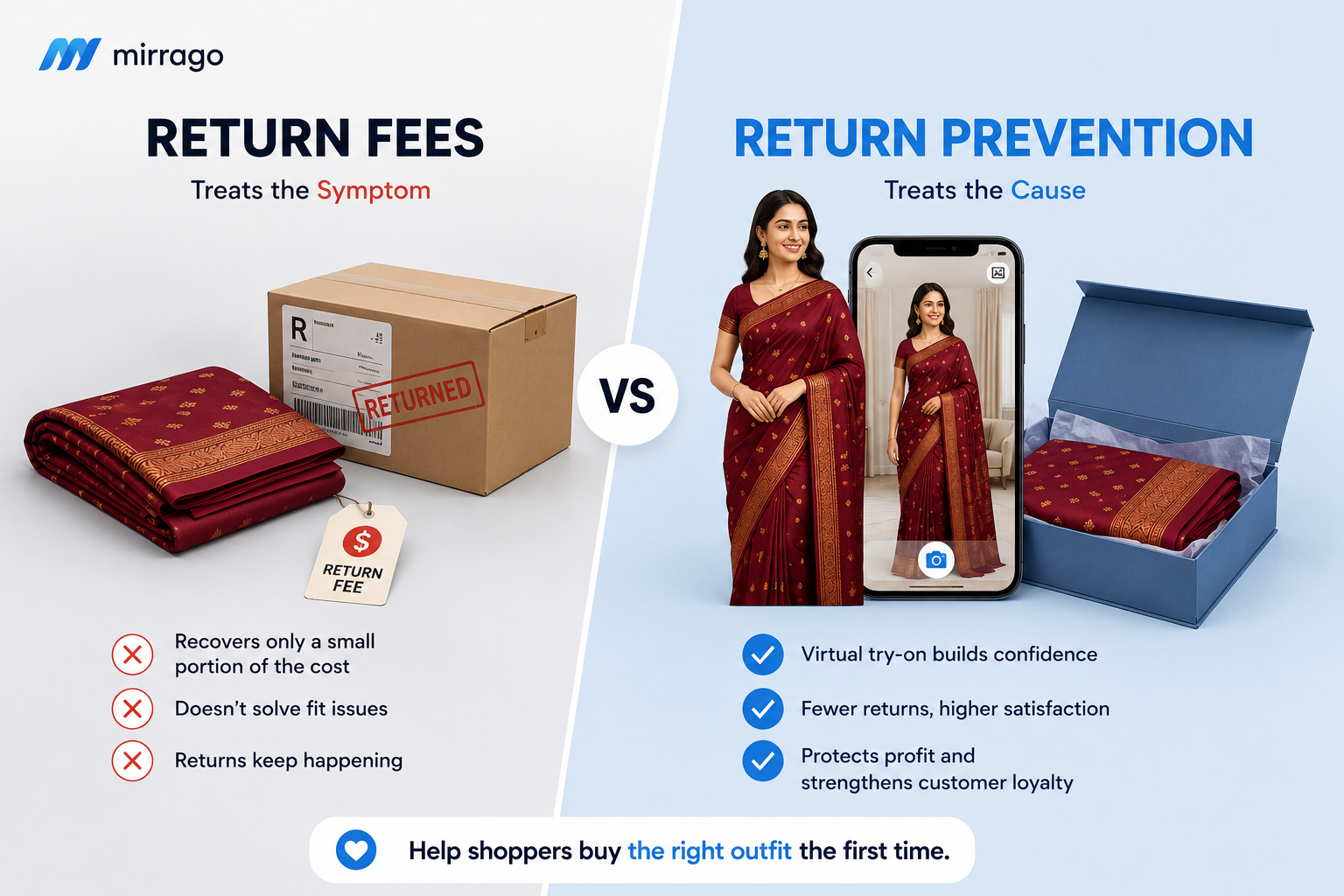
Returning the item could be difficult or costly
Money might be wasted on the wrong choice
Market Insight: Research indicates that around 70% of online fashion carts are abandoned as shoppers hesitate over fit, style, or potential regret.
Typical behaviors caused by this fear: psychology of online fashion hesitation
Leaving items in the cart
Saving products for later
Checking the same items multiple times
Abandoning checkout entirely
How Mirrago helps to Reduce the Psychology of Online Fashion Hesitation:
AI-powered visualization shows garments on the shopper’s body
Accurate sizing and measurements reduce uncertainty
Real customer reviews and authentic images build trust
Shoppers gain confidence, lowering hesitation and improving conversion
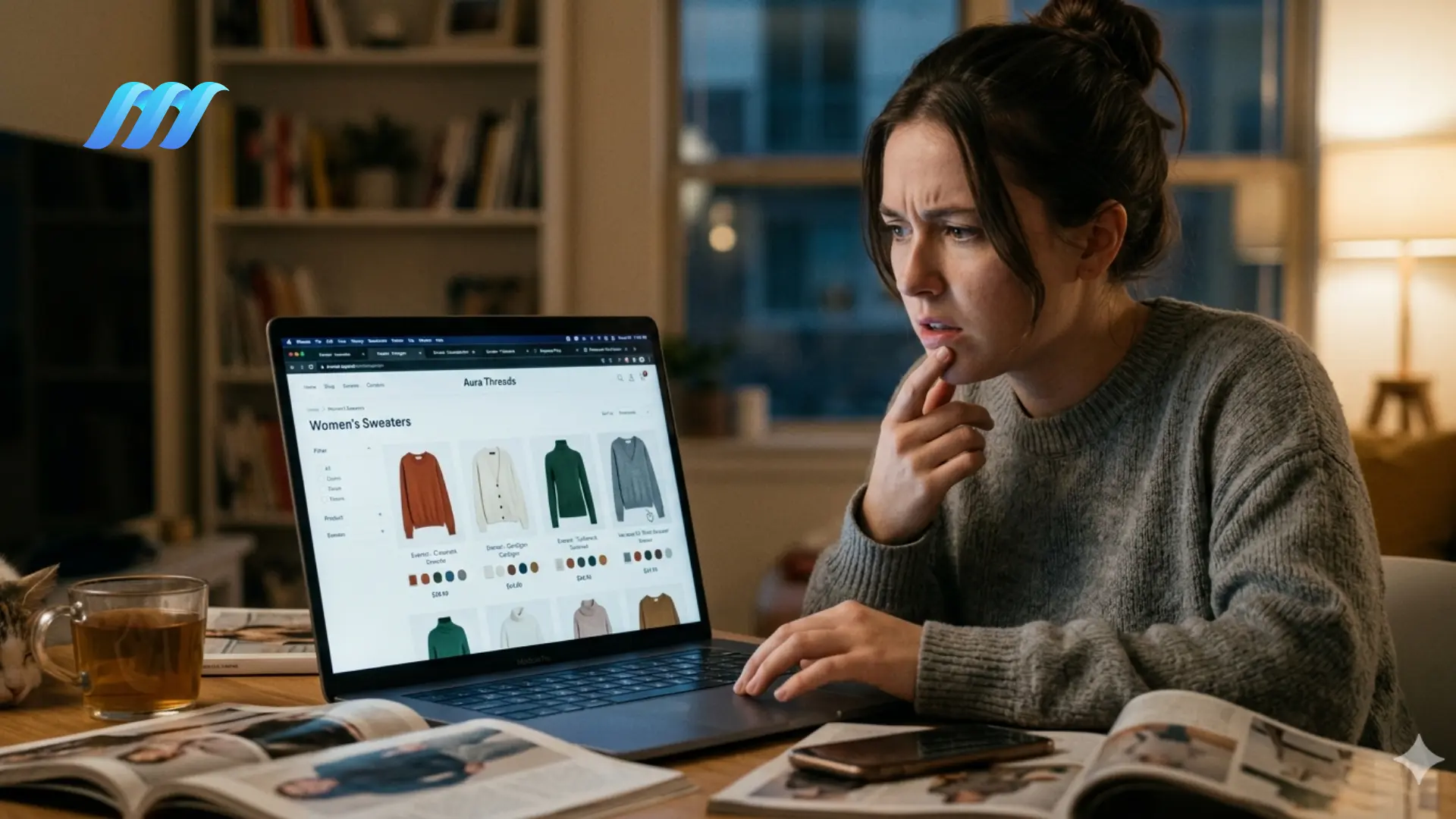
Choice overload causes shoppers to hesitate
Online fashion platforms now offer an array of options, including
Multiple colors
Various styles
Different fits
Numerous sizes
Similar alternatives
While shoppers love options, an overload can make decision-making difficult. This intellectual burden usually causes decision paralysis, in which customers find it very difficult to make a confident decision.
When faced with excessive options, shoppers tend to:
Compare products repeatedly
Overanalyze minor differences
Open multiple tabs for the same items
Delay or postpone purchasing decisions.
Instead of feeling empowered, shoppers experience mental fatigue, reducing purchase confidence and increasing hesitation. This phenomenon, known as choice overload, is a common barrier in online fashion shopping and a key factor in cart abandonment.
psychology of online fashion hesitation: Lack of trust in product visualization
One of the most important reasons that makes online shopping hesitant is that one cannot see how the clothing fits or looks on the shopper. Traditional online retailers rely on static images, professional models, staged lighting, and generic size charts, often misrepresenting fit, color, and style. Almost every third fashion return is associated with the unanticipated fit or appearance.
Mirrago addresses it by using AI-based virtual try-on, precise sizing, and interactive preview, which instills confidence with shoppers, minimizes indecision and returns, and enhances conversion rates.
Social proof and confidence
Online fashion shoppers ease hesitation by looking at:
Customer reviews
Star ratings
Real buyer photos
Influencer recommendations
Social proof boosts credibility, but not all shoppers feel personally confident because of it. Even those things that are highly rated, the shoppers may be left doubting: Will it fit me? There is confidence in clarity: how a product would look and fit on you. The AI virtual try-on service of Mirrago helps to overcome this gap and provide consumers with confidence, minimize buying anxiety, and increase purchasing confidence.
How AI reduces hesitation through simulation
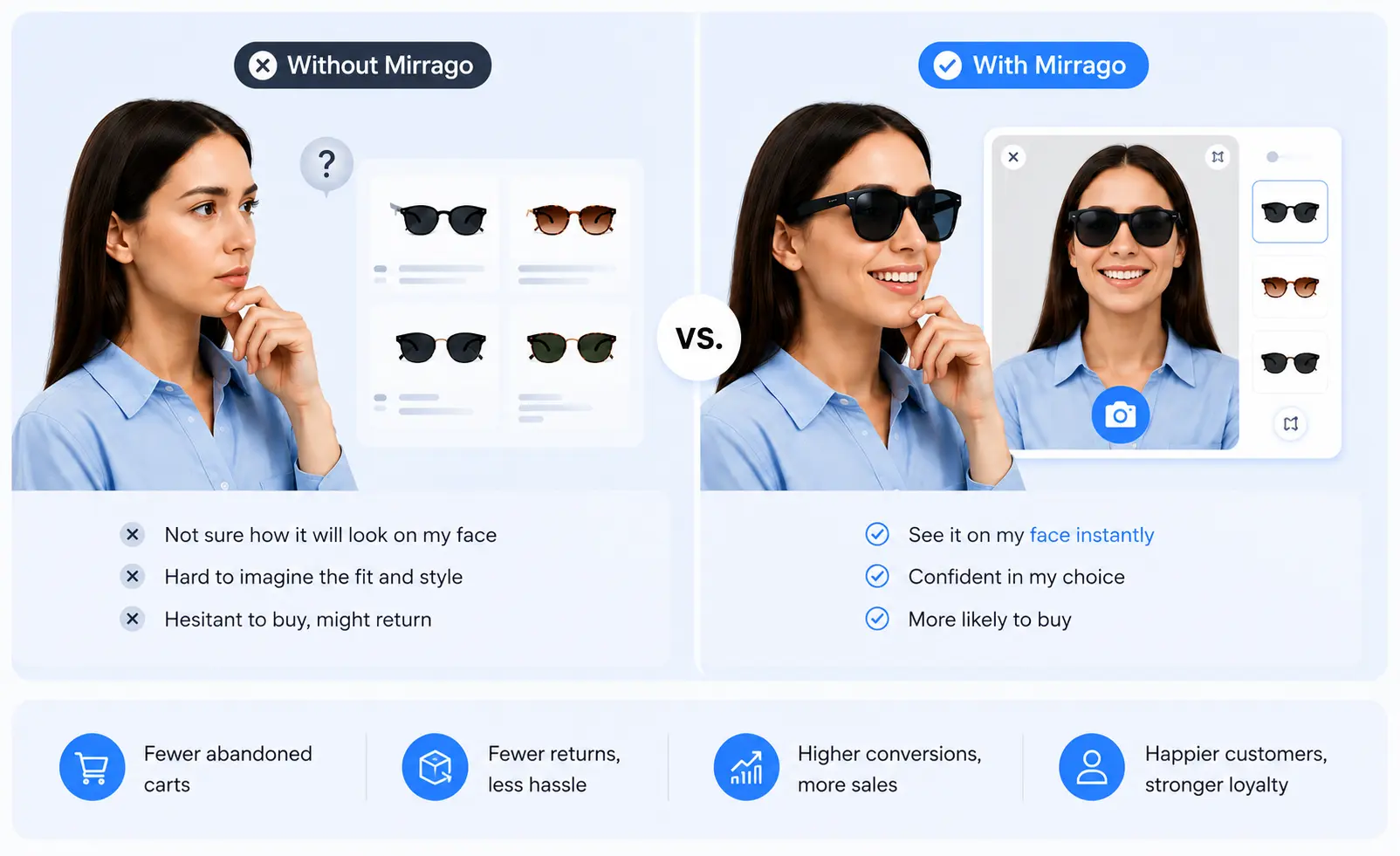
One effective approach to easing online shopping doubts is through AI-driven product simulation. Customers are also likely to be indecisive over the suitability, size, or design. The virtual try-on technology created by Mirrago helps users to view how clothes appear and fit on their own body in real-time. This limits skepticism, creates confidence, and minimizes the chances of making the wrong purchases. AI simulation can improve the decision-making process of the shoppers, making it faster and more informed by substituting guesswork with a clear visualization, minimizing returns, and improving conversion rates of fashion eCommerce brands significantly.
AI-powered virtual try-on tools allow shoppers to:
See clothing on their own body.
Preview realistic fit and proportions
Compare colors instantly
Visualize different sizes
Interact dynamically with products
Conclusion: psychology of online fashion hesitation
Online shopping hesitation psychology in fashion leads to abandoned carts, delayed decisions, and lost sales. Shoppers are indecisive because they do not know the size, fit, style, or confidence in them. The devices, such as the AI virtual try-on of Mirrago, correct sizing, and interactive display, contribute to lowering uncertainty, developing clarity, and gaining purchase confidence. Alleviating fear and anxiety at the source can help reduce returns, increase conversions, and build customer trust.
Ready to boost shopper confidence and increase sales? Download the Mirrago app today on the App Store or Google Play and let your customers shop with certainty!
FAQs of The Psychology of Online Fashion Hesitation
1. What is the psychology of online fashion hesitation?
Online shopping hesitation psychology refers to the mental and emotional process that causes customers to delay or abandon purchases. In fashion eCommerce, hesitation usually comes from uncertainty about size, fit, appearance, and overall confidence in the buying decision.
2. Why do shoppers hesitate before buying clothes online?
Shoppers hesitate because clothing is personal. They worry about the wrong size, poor fit, color differences, and return hassles. Since they cannot physically try items, uncertainty increases, leading to delayed decisions and cart abandonment.
3. How does fear of regret affect online fashion purchases?
Fear of regret (anticipated regret) makes customers imagine negative outcomes before buying. They think about wasted money, poor fit, or complicated returns. This perceived risk often causes them to postpone or cancel purchases.
4. How do visualization tools reduce purchase doubt?
AI-powered visualization tools, such as virtual try-on technology, allow shoppers to see how clothing may look on them. This reduces uncertainty about fit and style, builds confidence, and increases purchase completion rates.
5. Why is confidence important in online fashion shopping?
In fashion eCommerce, confidence directly impacts conversions. When shoppers feel certain about their choice, they buy faster, return less, and trust the brand more.