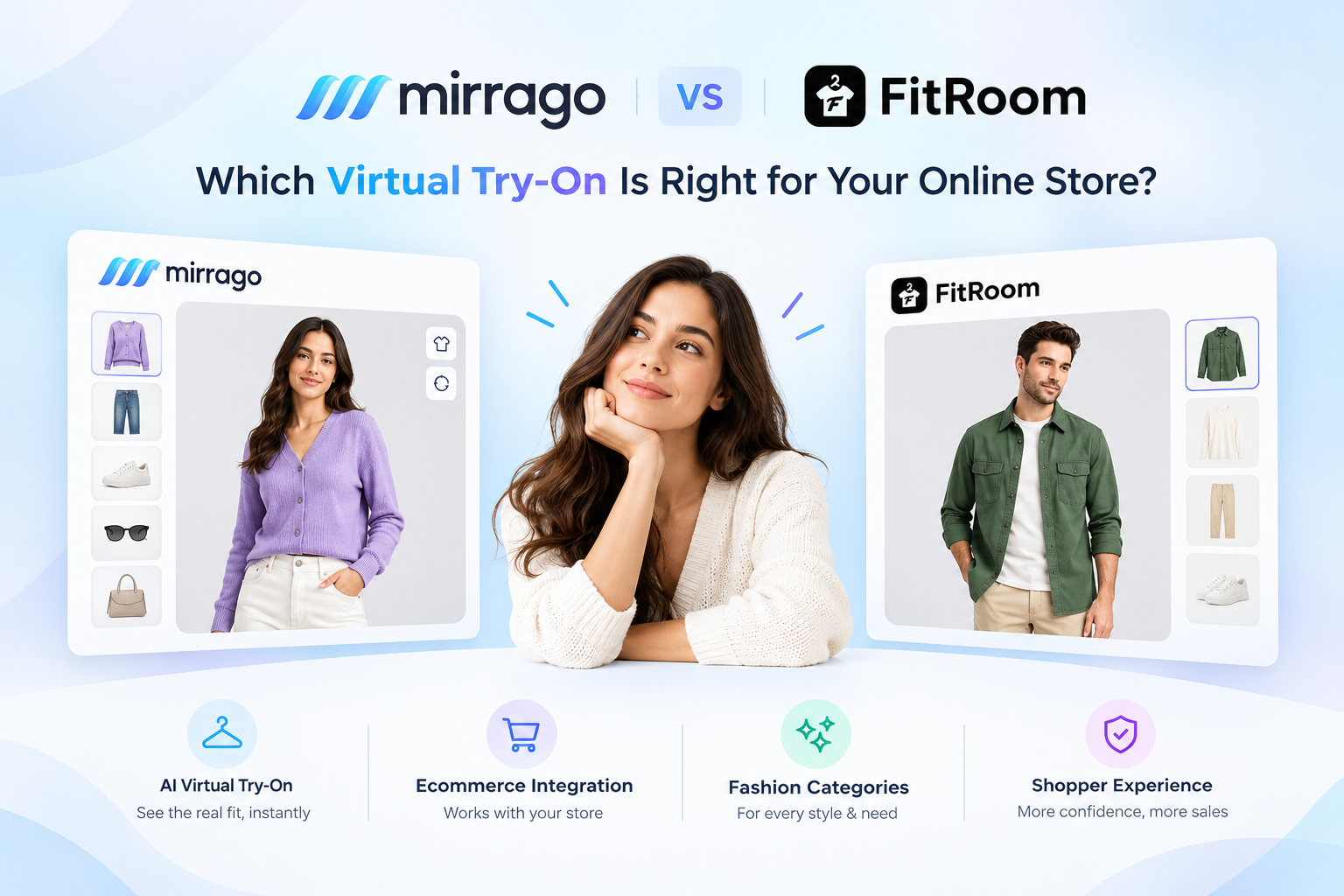
Mirrago and FitRoom are both AI virtual try-on platforms, but Mirrago is more focused on the e-commerce fashion experience, while FitRoom is particularly useful for AI clothing visualization and image generation workflows. For fashion stores looking to integrate virtual try-on into the customer journey, Mirrago is the stronger fit.
The Virtual Try-On Choice Is Getting Harder
Online fashion has one major limitation: shoppers can see the clothes, but they can't physically try them on. That uncertainty makes people hesitate right before checkout, and a lot of that hesitation ends in an abandoned cart instead of a sale.
AI virtual try-on is going to change that, however. In addition, users can now visualize clothes on themselves while on the site, making shopping more convenient; a product photo or size chart can't do that all by itself.
However, with an increasing number of platforms available in the space, it is not always easy to choose the best platform for an e-commerce store. Mirrago and FitRoom are two names worth comparing, and they approach virtual try-on with genuinely different priorities.
In this guide, we'll compare Mirrago vs. FitRoom on the things that matter most to an e-commerce business: the try-on experience, integration options, fashion category coverage, and how each one fits into the overall shopping journey.
Mirrago vs FitRoom at a Glance
Feature | Mirrago | FitRoom |
AI virtual try-on | Yes | Yes |
Real-body rendering | Yes | Yes |
Full outfit visualization | Yes | Yes (mix and match) |
Yes | No | |
Yes | Yes | |
Fashion categories beyond apparel | Apparel, footwear, eyewear, jewellery, watches, accessories | Primarily apparel |
Built for e-commerce checkout flow | Yes | Content and photography-focused |
Free tier | Yes | Yes |
At first glance, both platforms solve a similar problem: helping people visualize fashion digitally. The bigger difference is how that technology fits into the actual shopping experience, and that's where the two start to pull apart.
What Is Mirrago?
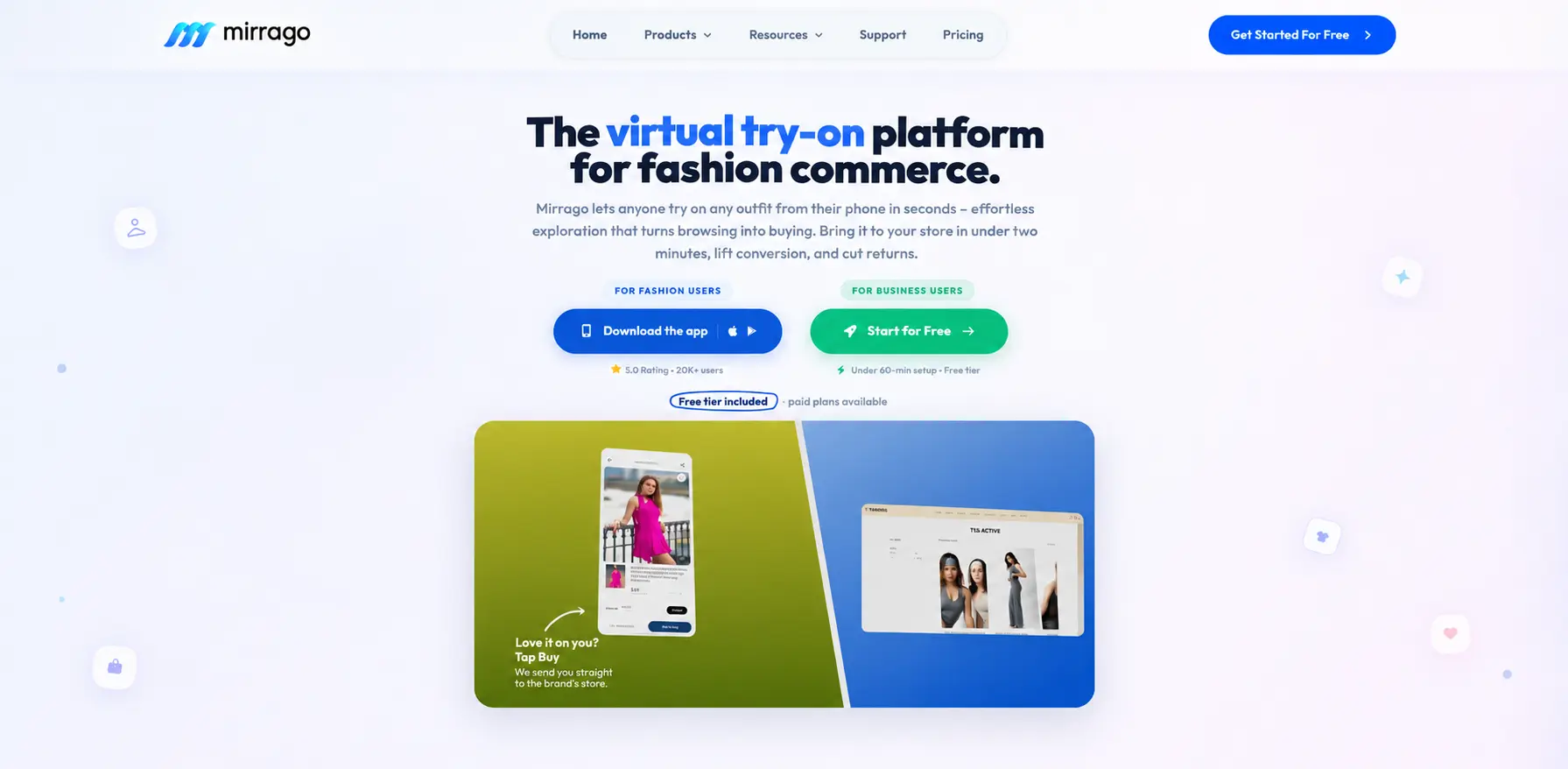
Mirrago is an AI-powered virtual try-on platform built around helping shoppers visualize fashion on themselves, right inside the buying process.
See yourself in the outfit.
Instead of just looking at a model wearing the clothing, shoppers upload their own photo and see the item rendered on their actual body shape, skin tone, and posture, with fabric drape and texture preserved.
Explore complete looks.
Virtual try-on becomes more useful once shoppers can combine tops, bottoms, outerwear, and accessories into one complete outfit rather than viewing isolated product shots one at a time.
Go beyond clothing.
Mirrago supports a wider fashion experience across categories, including apparel, footwear, eyewear, jewellery, watches, and accessories, along with specialized verticals like sportswear, workwear, and luxury goods.
Built for e-commerce.
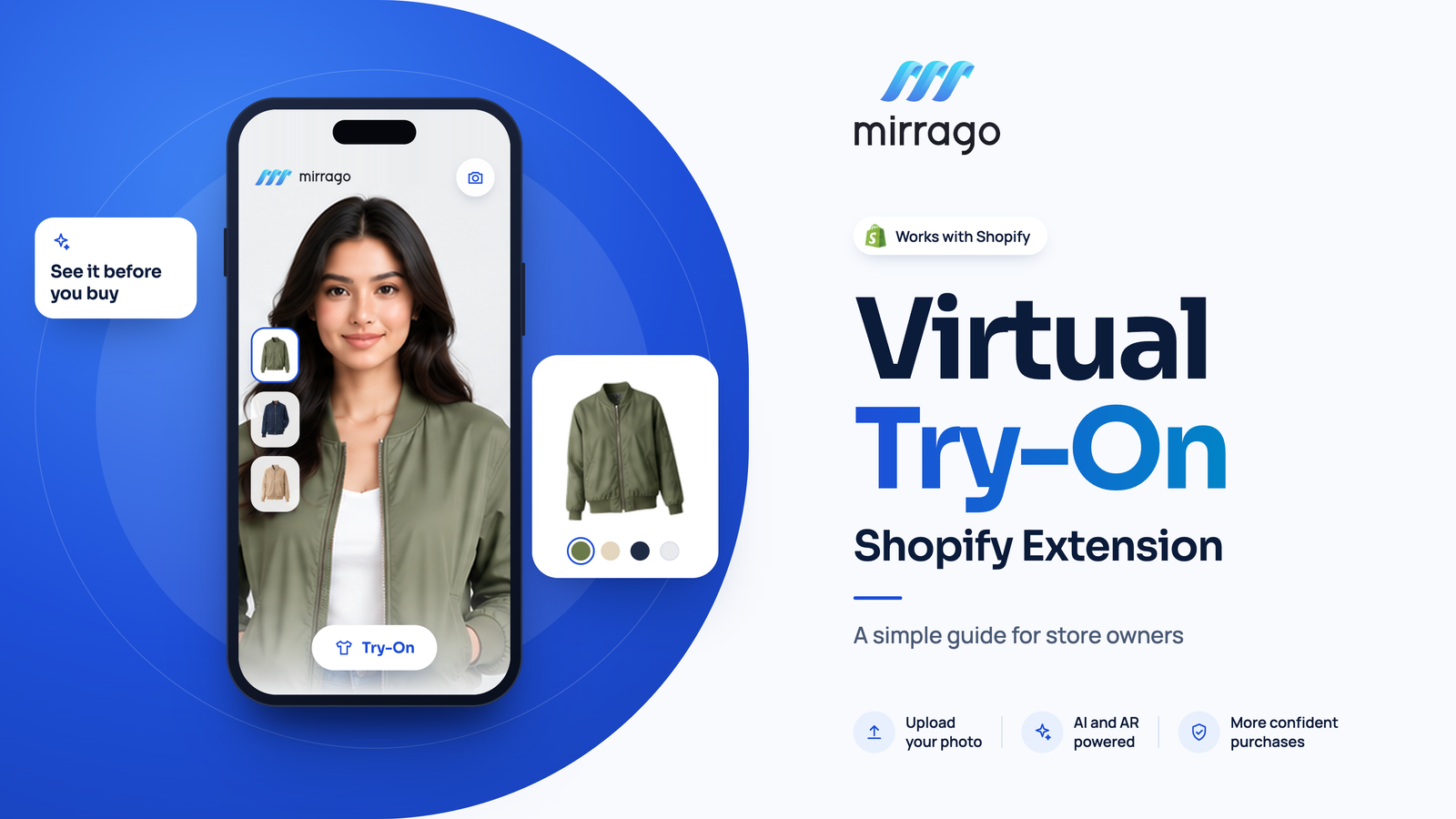
Mirrago offers a WordPress and WooCommerce plugin along with a REST API, with an integration process that the platform positions as achievable in under an hour for most stores.
This makes Mirrago less about simply generating an AI fashion image and more about helping online shoppers make a purchase decision with greater confidence, directly on the store they're already browsing.
What Is FitRoom?
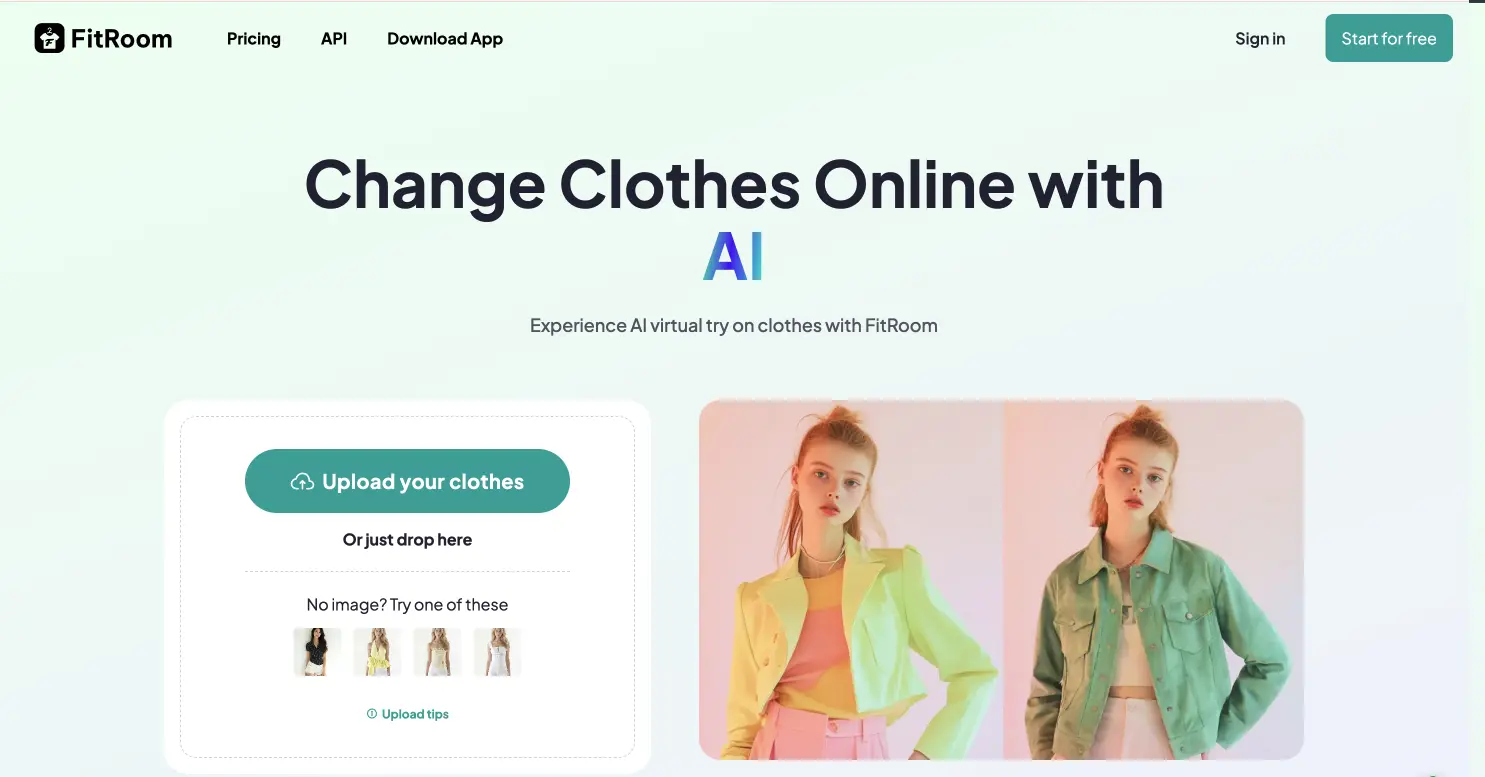
FitRoom is an AI-powered clothing visualization tool. It enables users to upload a portrait and an outfit photo and produces a composite image of the person wearing the outfit, usually in about 10-15 seconds. It supports mix-and-match combinations, renders fabric texture in reasonable detail, and works across different body types, including women, men, kids, and elderly models. Brands also use it to cut down on traditional product photography costs.
FitRoom can be genuinely useful for businesses that want AI-generated clothing visuals for catalogs, social content, or styling boards. However, for an e-commerce business, creating a realistic outfit photo is just half the job. The bigger question is whether that try-on moment can become a natural part of the customer's journey from browsing to trying to deciding to buy, rather than a standalone image tool sitting outside the storefront.
Mirrago vs FitRoom: What Really Matters for an Online Store
1. From AI Image to Shopping Experience
This is the clearest distinction between the two. FitRoom helps users visualize clothing through AI-generated images, which is valuable for content and catalog work. Mirrago focuses on making virtual try-on part of the fashion shopping experience itself, from product page to decision.
For an online store, that distinction matters. Customers don't visit a fashion website just to create images. They visit because they want to find something they like and feel confident enough to buy it, and the tool that gets them from "maybe" to "add to cart" fastest is the one that earns its place on the site.
2. Virtual Try-On That Fits Into Ecommerce
On the integration side, Mirrago offers a WordPress and WooCommerce plugin plus a REST API, built specifically around e-commerce implementation. FitRoom offers an API for custom integration and try-on generation workflows, which works well for teams building their own image pipeline.
Both platforms can support technical integration, but store owners should look beyond whether an API exists. The important question is how naturally the virtual try-on experience fits into the existing product pages and checkout journey, without requiring a custom build just to get a working feature live.
3. More Than Just Clothes
A fashion purchase isn't always about one shirt. Shoppers often think in terms of a complete look: a top paired with bottoms, shoes, glasses, jewellery, and accessories that work together.
Mirrago category coverage apparel, footwear, eyewear, jewellery, watches, and accessories extends virtual try-on across that full picture. FitRoom is primarily built around clothing. For brands that sell more than apparel, having a try-on experience that spans multiple fashion categories opens up more opportunities for customers to explore a complete look instead of one product at a time.
4. Realism Should Build Purchase Confidence
Rather than claiming one platform is simply "more realistic" than the other without controlled testing to back it up, it's worth asking what realism actually needs to accomplish for a shopper. A useful virtual try-on should help someone understand how an outfit might look on them, how the proportions appear, how the colors work together, and whether the complete look feels right.
The best virtual try-on isn't necessarily the one that produces the most polished AI image. It's the one that helps the shopper make a better decision, and that's a slightly different bar to clear than image quality alone.
Looking for a Mirrago Alternative? Start With Your Goal
Searching for a Mirrago alternative makes sense if your primary goal is different from what Mirrago is built to solve.
Consider another tool if you mainly want:
AI fashion content generation for social media or marketing
Model-image creation for catalogs
Basic clothing image generation outside of a live storefront
Mirrago may be the better fit if you want:
Virtual try-on built into an e-commerce store
Shopper-focused visualization rather than content generation
WooCommerce integration
Fashion discovery across a wider range of categories
The same logic applies in reverse for anyone comparing FitRoom alternatives: if the goal is a storefront try-on feature rather than an image tool, it's worth weighing options built specifically for that job.
Which Virtual Try-On Should Your Online Store Choose?
Choose FitRoom if your main priority is AI clothing visualization, fashion image generation, content creation, or building a custom API-driven workflow around outfit images.
Choose Mirrago if your priority is helping shoppers visualize themselves in your products, improving purchase confidence, adding virtual try-on directly to a WooCommerce or WordPress store, or supporting multiple fashion categories within one try-on experience.
For fashion brands that want virtual try-on to become part of how customers shop, not simply another AI image-generation feature bolted onto the side, Mirrago is the stronger fit.
The Best Virtual Try-On Is the One That Helps Customers Buy With Confidence
Mirrago and FitRoom both show how AI is changing the way people visualize fashion online, and the right choice really does depend on what your business wants virtual try-on to accomplish.
If you're primarily looking for AI-powered clothing visualization and image creation, FitRoom is worth considering. If you're looking for a fashion-focused virtual try-on experience built around e-commerce shopping, Mirrago offers the more natural fit.
Whether it's visualizing dresses on oneself or searching for full looks, and then bringing the “try” as close as possible to the point of sale, Mirrago is all about one thing: empowering customers before they go out to purchase something. This trust translates to sales conversions in the fashion eCommerce industry.
Ready to make your online store more interactive? Explore Mirrago and bring AI virtual try-on into your fashion shopping experience.