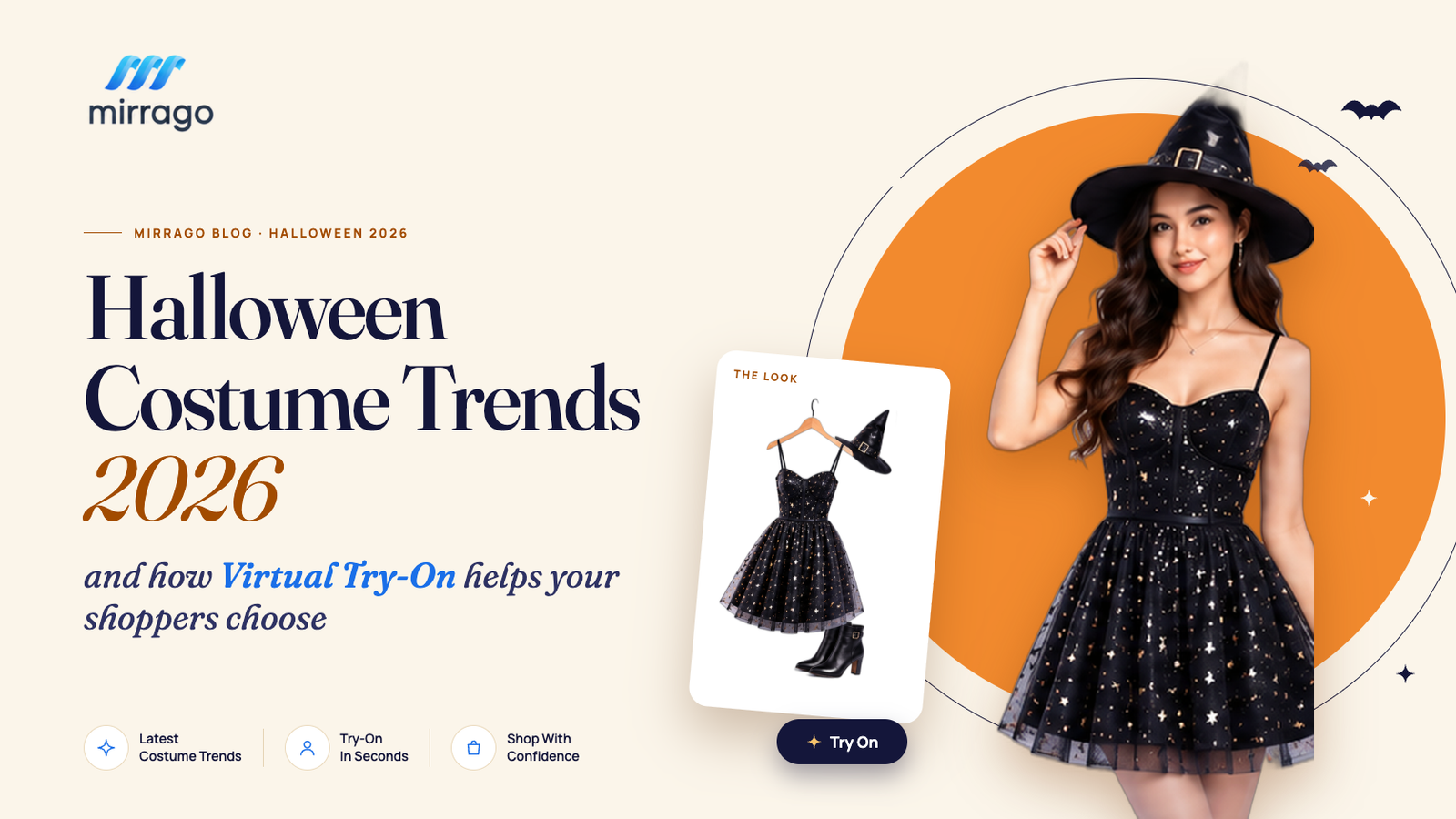
Halloween Costume Trends 2026 and How Virtual Try-On Helps Your Shoppers Choose
Halloween, celebrated every October 31, is all about costumes, spooky decorations, parties, and trick-or-treating. With roots in ancient Celtic traditions, it has become a popular celebration and a major shopping season for costumes, accessories, and party wear.
For fashion retailers, Halloween brings a great opportunity, but choosing an outfit online can be tricky. Shoppers often struggle to imagine how a costume will look on them. That’s where Halloween virtual try-on can help.
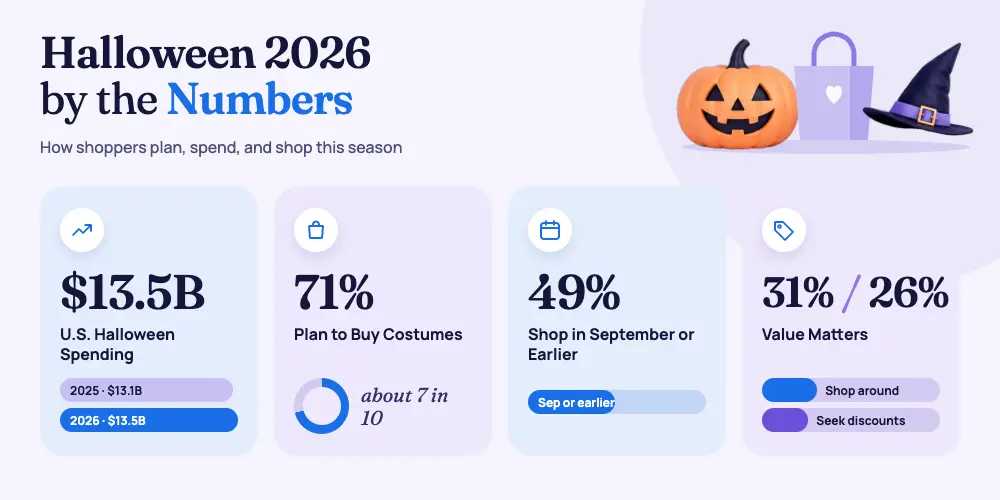
In 2026, U.S. Halloween spending is expected to reach $13.5 billion, according to the National Retail Federation (NRF). In this guide, we’ll explore the latest Halloween costume trends, easy outfit ideas, and how virtual try-on can help shoppers choose their favorite looks with more confidence.
Halloween 2026 by the Numbers
Before the trends, here is how shoppers are behaving this season:
Spending remains high. NRF projects $13.5 billion in U.S. Halloween spending in 2026, up from $13.1 billion in 2025. Halloween spending has increased substantially since 2019, although these figures are not adjusted for inflation.
Costumes remain popular. NRF reports that 71% of consumers plan to purchase Halloween costumes in 2026. Check the original survey for the exact adult participation and spending figures before including them.
Shoppers start early. Approximately half of the respondents say they will start shopping for Halloween in September or sooner.
Value matters. NRF reports that shoppers are thinking about affordability as the season approaches. Thirty-one percent say they'll shop around if prices are higher than expected, while 26 percent look for stores that offer discounts or coupons.
Shoppers plan, compare their options, and look for ways to avoid buying a costume that doesn’t meet their expectations. These priorities shape the Halloween costume trends retailers should pay attention to.
Halloween Costume Trends 2026: What Should Retailers Know?
Halloween fashion is a fusion of classic and current ideas from pop culture, fantasy, social media, and life. Instead of one trend, retailers can structure the collections around themes that will resonate with various shoppers.
The idea is not to have ALL the costumes. To assist customers in identifying a style that fits their plans, budget, and style.
Halloween Outfits for Women
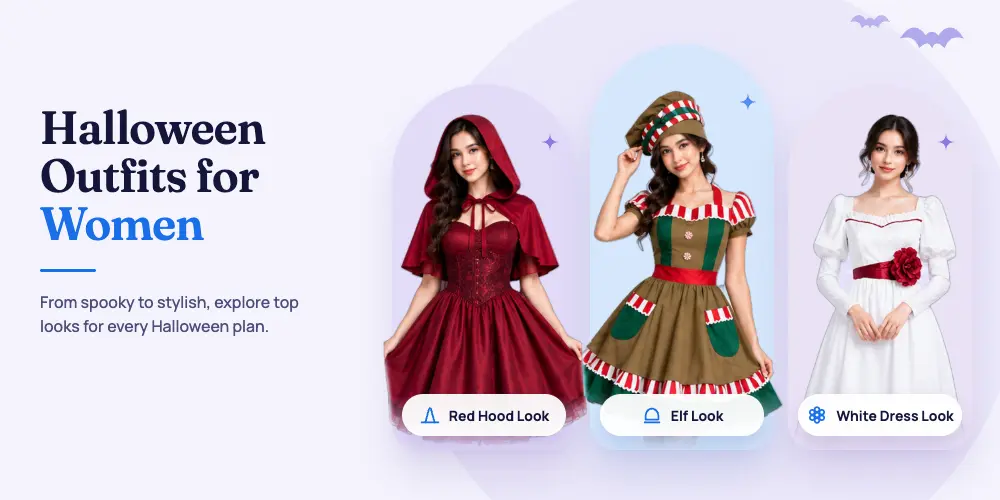
Cowgirl attire has been one of the most popular costumes for girls, as stated by one retail guide, due to the fact that it can be created out of regular attire. They continue to show up in collections from retailers:
Witch-inspired outfits with black dresses and boots
Cowgirl looks with denim and cowboy hats
Cat-inspired costumes with black clothing and cat ears
Fairytale-inspired dresses and accessories
Party-glam outfits featuring sequins and statement boots
Store tip: Make sure to showcase full outfit ensembles instead of standalone items. For example, if a shopper is looking for a witch costume, should they need to wade through unrelated categories like Halloween candy to find matching boots, jewelry, and a cape?
Halloween Outfits for Couples
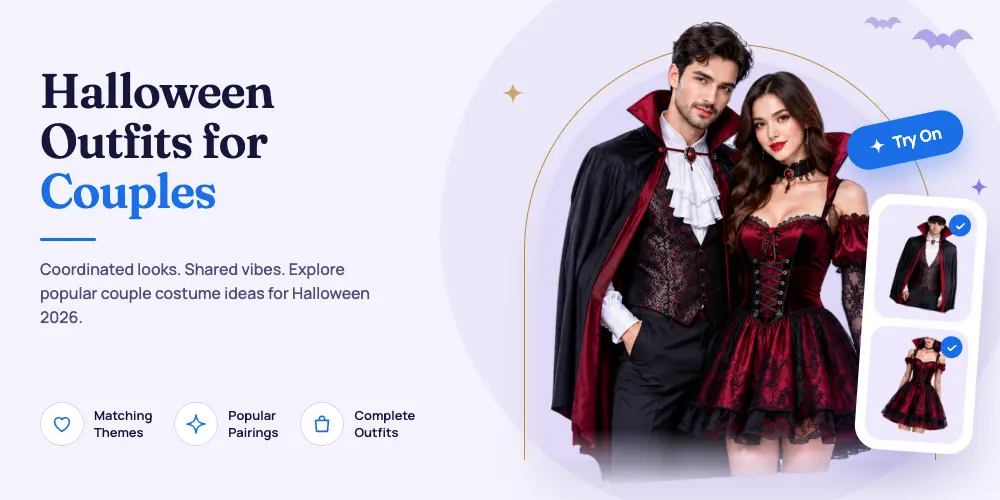
Couples Halloween Costumes provide a justification for buying coordinated dresses. It is also easy for customers to select a theme if it is easily recognizable.
Ideas include:
Vampire couple costumes
Cowboy and cowgirl outfits
The face of a demon. Face of an angel or a demon.
Styles inspired by the Day of the Dead.
Space explorers and aliens in the market outfit.
Retailers can develop their own couples' section based on matching colors, matching accessories, and matching products at comparable prices.
For the store: Make outfit matches or outfits. If you have a virtual try-on tool that allows individual shoppers to preview their own look, let them pick out their look on their own before picking the final combination.
Easy Halloween Costume Ideas
An elaborate costume isn't all that some people want. There are some individuals who like how simple it is to create an outfitted Halloween outfit by just combining some pieces they already have in their closets and therefore can afford.
Some basic combinations include:
A black dress, witch hat, and boots
Jeans, checked shirt, cowboy hat
An all-black outfit with cat ears.
Simple, white outfit with some angelic pieces of accessory
A statement party dress with themed jewelry.
The following are simple Halloween costume ideas for those who have little time at their disposal or a tight budget.
Store Tip: Develop an “Easy Halloween Looks” collection of versatile clothing and a few standout accessories. Be sure to indicate clearly what is included and what should be added to each look.
Why Halloween Shoppers Hesitate Before Buying
Shoppers in this category run into the same three walls:
A flat photo shows one styling. It doesn't tell her how the outfit looks on her, or with the boots and hat she is also considering.
The window is short. A shopper who isn't sure will often skip the purchase rather than risk a wrong one a few days before a party.
Returns worry stores too. Modern Retail reported that some shoppers wear Halloween goods once and send them back, and specialty retailers such as Spirit Halloween have set return cut-off dates in response.
That last point deserves honesty. Try-on won't stop wear-and-return behavior. What it can reduce is the "this isn't what I imagined" return.
The root problem is imagination. In 2022, the CEO of JAKKS Pacific said that picturing how a costume will look on you is a big part of Halloween shopping. Try-on takes the guesswork out of that step.
How Halloween Virtual Try-On Helps Shoppers Choose Faster
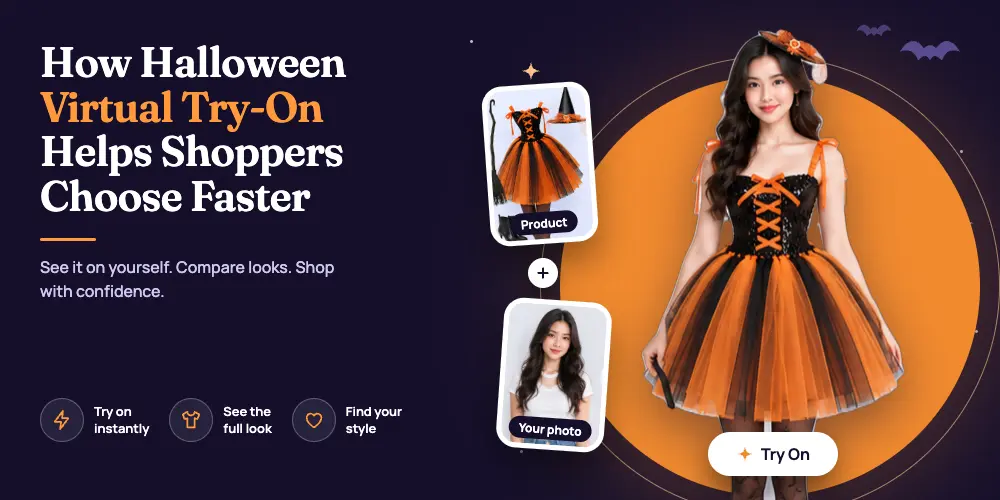
With Halloween virtual try-on, a shopper uploads a photo and sees the outfit on herself. The four most important factors for costume and party wear are
Compare Several Looks in Seconds
Mirrago processes each of the tries in less than 20 seconds. A shopper will have the option to try out the cowgirl look, the witch look, and the party glam look, all in one go, rather than trying to imagine which of the three different browser tabs is which look.
Build the Whole Look With Accessories
Most costumes are combinations. Mirrago allows outfit composition, which means that any top, bottom, outerwear, and accessories can be seen on one person. You can also use it for eyewear, jewelry, footwear, watches, and bags, which will add the finishing touches.
See It on Themselves, Not a Model
Outfits are applied to the shopper's photo with proportions, skin tone, and posture preserved. It's a lot easier to get a realistic idea of this guy in this dress than of a model in the same dress.
Share the Result
Shoppers like a friend's opinion before they buy. Snap's 2022 costume try-on was built around trying, sharing, and buying. A shareable preview also gives your store free reach when shoppers post it or send it to a group chat.
What Virtual Try-On Can Mean for Your Ecommerce Store
A well-implemented virtual try-on experience may help retailers improve product discovery and reduce uncertainty. The commercial impact, however, depends on the products, customer experience, implementation, and how results are measured.
Potential benefit | What retailers should measure |
Better product engagement | Product-page interactions and try-on usage |
More confident purchasing | Add-to-cart rate and checkout completion |
Potential conversion improvement | Conversion rate for comparable visitor groups |
Fewer expectation-related returns | Return rate and recorded return reasons |
More outfit discovery | Views and purchases of complementary products |
Published vendor reports sometimes claim substantial conversion improvements or fewer returns. Those figures should not be treated as guaranteed outcomes for your store. Results vary by retailer and study design.
For a stronger evaluation, test virtual try-on against a comparable group of shoppers and measure the difference over an appropriate period.
Brands Already Using Try-On for Seasonal Peaks
Snap and Disguise (2022): costume try-on lenses that let people try, share, and buy inside the app. These used licensed characters, which you should not copy.
NYX and Maybelline (2022): virtual try-on for curated Halloween makeup looks on their own sites.
Breuninger (2026 case study): try-on in its app, tested through Black Week and the holiday season.
These brands sit in different categories, but the lesson is the same. Shoppers like seeing the look before they commit. Copy the idea, not the licensed characters.
How to Optimize Your Halloween Collections for Search
Choosing the right Halloween costume trends is only one part of a successful seasonal strategy. Shoppers also need to find your products through search engines, category pages, and product recommendations.
Start with collections that match clear shopping needs.
Build Targeted Collection Pages
Consider creating separate collections for:
Halloween outfits for women
Couples Halloween costumes
Easy Halloween costume ideas
Halloween accessories and party wear
Use descriptive page titles and headings that explain what shoppers will find. Avoid creating multiple thin pages that target nearly identical keywords without offering distinct value.
Optimize Product Descriptions
Write clear, original descriptions that explain the style, material, available sizes, included accessories, and intended use.
Use relevant phrases naturally, including “Halloween costume ideas,” “Halloween outfits for women,” and “couples Halloween costumes.” Do not insert every keyword into every product description.
Add Useful Internal Links
Link your Halloween collection pages to related products, outfit bundles, accessories, and relevant guides. Add links where they genuinely help shoppers discover their next step.
You can also link to your virtual try-on guide or product page to explain how shoppers can preview supported clothing items.
Make Virtual Try-On Easy to Find
If your store offers virtual try-on, place the feature near the main product image or add-to-cart area where appropriate. Explain what it does, how to use it, and which products support it.
A visible, understandable feature is more useful than one hidden deep within a product description.
Your Halloween Virtual Try-On Launch Checklist
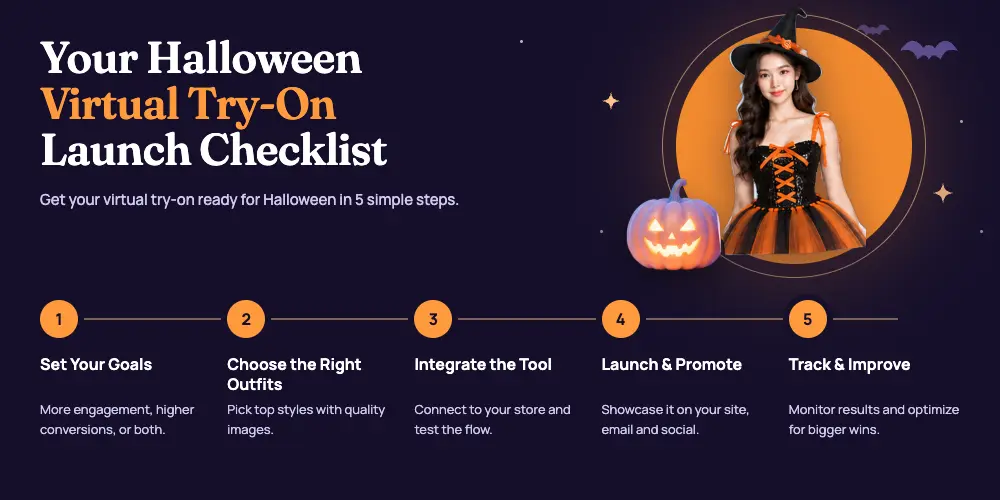
You don't need a big rollout. Start with these six practical steps.
Pick your hero products. Start with 5 to 10 best sellers in party wear and accessories.
Make the button obvious. Put "Try it on" next to the add-to-cart button on product pages.
Tell people. Announce it in email, social posts, and a site banner. Our guide to promoting try-on to existing customers has ideas.
Measure. For two to four weeks, track conversion and returns on your try-on products against a comparable group. The next section explains how to do it fairly.
Reuse it. Keep the same setup for Black Friday, Christmas, and party season.
Imagine a boutique with 40 party dresses. It adds try-on to its eight best sellers, mentions it in one newsletter, and compares results over four weeks. If those dresses convert better, it expands. If not, it has lost very little.
Want a second pair of eyes on your plan? You can book a 30-minute demo.
How to Read Your Results Fairly
Comparing shoppers who use virtual try-on with those who do not may be misleading, because the two groups may already have different purchasing intentions. Even without this comparison, try-on users might still have been more prone to purchase, so this comparison does not ensure that there was an increase in purchases as a result of try-on.
To get a more accurate assessment:
If possible, have a controlled test.
If possible, run a controlled test by offering virtual try-on to one group of shoppers and comparing their results with a similar group that does not receive the feature.
Take a measurement of the entire path.
Monitor try-on engagement, add-to-cart rate, purchase conversion, and AOV.
Monitor returns carefully.
Make comparisons on the basis of the return rate of similar products and take return time into consideration.
Maintain a balance in the comparison.
Keep the similar products, similar dates, similar traffic sources, similar prices, and similar promotions.
Allow enough time.
Repeat the analysis, as seasonal demand may rapidly shift, and don't reach a conclusion in this analysis based on a few days' worth of data.
What Virtual Try-On Cannot Do
Virtual try-on can improve visual product discovery, but it has limitations.
It cannot guarantee an exact fit. Keep size guides and garment measurements available.
It may not represent every detail. Props, wigs, makeup, complex accessories, and some fabric characteristics may not render accurately.
It cannot eliminate all returns. Customers may still change their minds or return items for reasons unrelated to appearance.
It depends on product data and image quality. Poor source images or unsupported product types can weaken the experience.
It requires clear privacy information. Explain how shopper photos are processed, retained, and protected, and ensure your provider's actual practices support your claims.
Setting realistic expectations helps customers understand what the tool can and cannot tell them.
How Mirrago Supports Fashion Ecommerce
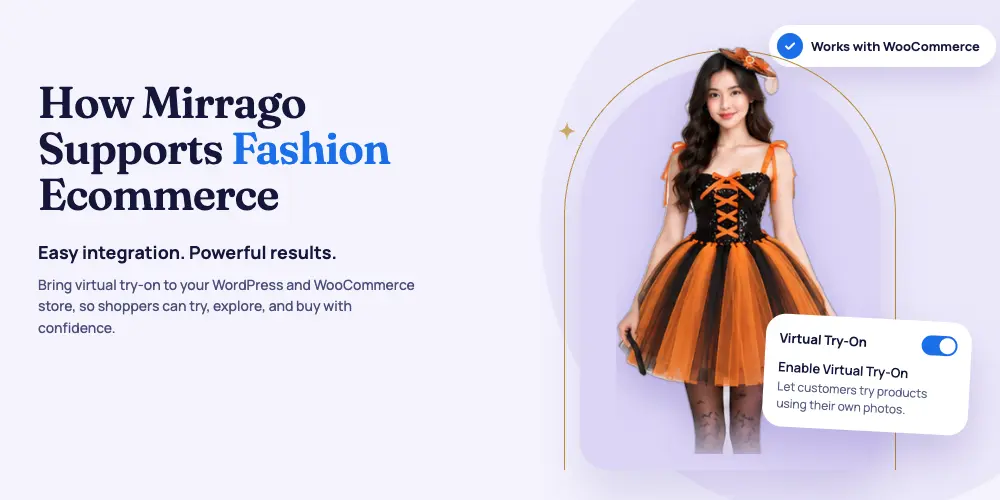
Mirrago has a WordPress and WooCommerce plugin, a Shopify guide, and a platform-specific custom API. There's a free tier so that you can test before you pay, and setup takes less than 60 minutes. Refer to the pricing page for information on plans.
It's also a good idea to conduct a privacy review. Examine the existing privacy policy and technical documentation to see how pictures of customers are processed, how long they will be kept, and whether images are used as part of the model training.
Interested in figuring out if virtual try-on is right for you? Review Mirrago's choices and start small with appropriate products and increase as needed.
Conclusion
Halloween costume trends create an opportunity for fashion retailers to help shoppers discover looks that match their style, budget, and celebrations. But a strong seasonal collection needs more than attractive product photos. Customers also need useful information and a clear understanding of how an outfit might look on them.
Halloween virtual try-on can add another layer to that experience by making supported clothing products easier to explore and compare. Combined with useful collection pages, accurate product descriptions, and careful performance measurement, it can become a practical part of a seasonal ecommerce strategy.
Start with your most suitable products, test the experience with real shoppers, and let your results guide the next step. Explore Mirrago to see whether virtual try-on is a good
Frequently Asked Questions
Does virtual try-on work for Halloween costumes and party wear?
Yes, virtual try-on can help shoppers preview Halloween costumes and party outfits before buying. It works best with clothing and compatible accessories, while complex props, wigs, and makeup may not appear accurately. Use clear product photos alongside try-on to help shoppers make informed decisions.
Which Halloween outfits should my store promote first?
Start with your best-selling Halloween products and group them into popular categories, such as women's costumes, couples' outfits, and ready-to-wear costume bundles. Adding virtual try-on to these products first can help you test shopper interest before expanding to your full catalog.
How long does it take to integrate virtual try-on into an ecommerce store?
Mirrago lists setup times of under 60 minutes. However, the actual integration time depends on your ecommerce platform, product catalog size, and configuration requirements. Check the setup process with the provider to understand what is included and whether additional work is needed.
Can virtual try-on help reduce product returns?
Virtual try-on may help shoppers make more informed purchasing decisions by showing how an outfit could look before they buy. However, its impact on returns varies by product category, implementation, and customer expectations. Track your store's return rate and customer feedback to measure its actual impact, and maintain a clear return policy.
Is customer photo data safe when using virtual try-on?
Customer photo privacy depends on how the provider collects, processes, stores, and deletes images. Mirrago states that customer photos are automatically deleted after each session and are not used for AI training. Before integrating any virtual try-on tool, review the provider's privacy policy and confirm that its practices align with your store's privacy commitments and applicable data protection laws.
SOURCES LINKS
NRF: 2026 Halloween spending expected to rise 3.82% (Talk Business)
Spirit Halloween reveals top costume trends for 2026 (NJBIZ)
Couples Halloween Costume Ideas for 2026 (Born in Stockholm)
Shoppers wearing and returning Halloween goods (Modern Retail)
Snapchat and Disguise Launch Halloween AR Shopping Experience (License Global)
Try-On and Shop Halloween Costumes on Snapchat (Snap newsroom)
Top Beauty Brands Launch Modiface Virtual Try-On For Halloween Looks
How Breuninger boosted sales with its "be your own model" AI (Google Cloud)