Why Sizing Anxiety Causes High Cart Abandonment in Apparel Stores
A shopper finds the perfect outfit, adds it to their cart, and heads to checkout. Then one question changes everything: What if it doesn’t fit? That moment of sizing anxiety is one of the biggest reasons behind cart abandonment in fashion e-commerce.
Once you get traffic to a product page, it will take time and marketing to convert that traffic into sales. Getting them to put something into their carts is an even tougher sell. But the biggest moment is before they buy, when customers have to take the risk that they are choosing the right size. While people can buy books and phone accessories online without needing to "try before they buy," the same is not true when shopping for clothing online.
If sizing is in doubt, so is the confidence. If they are choosing the wrong brand, size, cut, stretch of the fabric, and returns policy, they start to question. Unsure what to expect, many opt not to risk it and leave the checkout page without making a purchase.
This article explores why sizing anxiety causes high cart abandonment in apparel stores. We’ll examine the key factors that make shoppers hesitate before completing a purchase, including inconsistent sizing, return concerns, missing fabric and fit information, and the lack of customer validation that builds confidence. Understanding these challenges can help fashion brands reduce checkout drop-offs, improve conversions, and create a more reliable shopping experience.
Why do shoppers struggle to choose the right size online?
It's easy to select a size in a physical store. You select one and enter a fitting room, and you not only answer the question, but you also know the answer within a minute.
Online shopping takes that out of the equation. The customer is left with just a size chart, product pictures, and experiences with the brand to make that decision. This confusion can induce "sizing anxiety" for some shoppers, which may cause hesitation, ultimately leading to increased cart abandonment in fashion online retail.
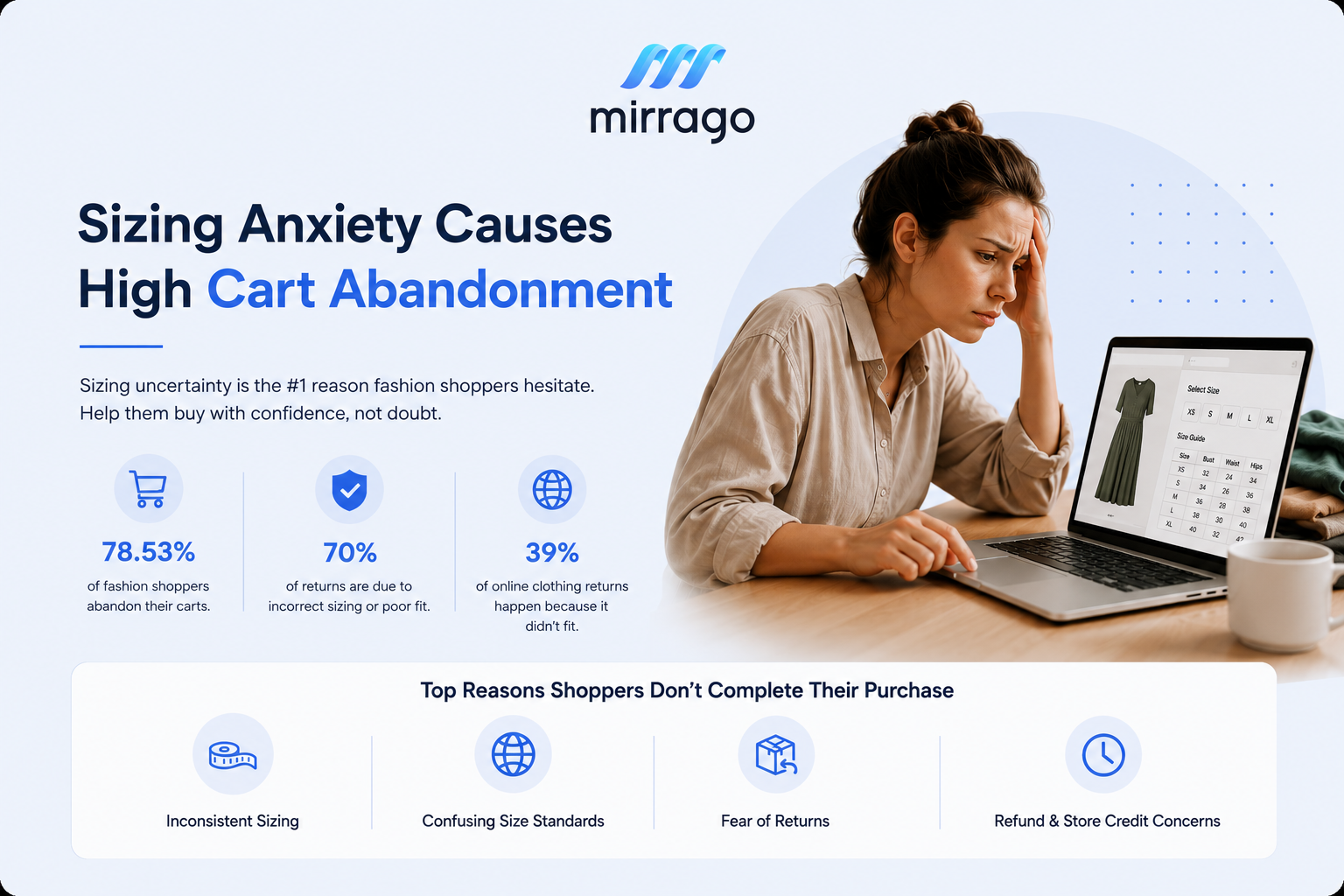
78.53% of fashion and apparel shoppers abandon their carts, and sizing variance is consistently identified as the top reason.
When a Medium Is Not Really a Medium
One of the biggest challenges in fashion e-commerce is that sizing is not standardized. A “medium” can vary widely between brands, and the same size may fit differently across countries due to vanity sizing, regional conventions, and brand-specific cuts. This lack of consistency creates confusion for shoppers and increases sizing anxiety, making it harder for them to confidently choose the right size online.
Shoppers know this from experience. They have ordered their usual size before and had it arrive completely wrong. That memory does not disappear when they are browsing a new brand. Instead, it creates a layer of caution that makes the decision feel riskier than it should be.
The problem is not that shoppers do not know their size. The problem is that they cannot trust the label. Every brand uses its own sizing logic, and every purchase at an unfamiliar store carries the risk of getting it wrong.
Confusion Around International Size Standards
The size conundrum is complicated even further for fashion brands on a global scale. A UK size 12 is equivalent to a US size 8 and an EU size 40, and an Asian size medium can sometimes be considerably smaller than an Asian size medium! If there is no size conversion help provided on a product page, then the international shoppers are left to guess.
This confusion doesn't just lead to abandoned carts; it results in incorrect purchases and higher return rates. 39% of all online clothing returns happen because the item didn't fit properly, making sizing the single leading cause of fashion returns. Apparel e-commerce return rates sit at 25% on average, making sizing clarity not just a customer experience issue but a direct business priority.
How Return Concerns Increase Cart Abandonment
Sizing anxiety and return anxiety are two sides of the same coin. When a shopper is not confident about size, they start thinking about what happens if it goes wrong. And if the return process looks complicated, the safest decision is simply not to buy at all.
70% of online fashion returns are caused by incorrect sizing or poor fit, making it the single biggest driver of return costs across the industry. (McKinsey)
The Fear of Complicated Exchanges and Returns
Return policies in fashion e-commerce vary enormously. Some brands offer free, no-questions-asked returns. Others charge return shipping, limit the return window, or only offer store credit rather than a refund. When a shopper cannot quickly find and understand the returns policy on a product page, they assume the worst.
That assumption is often enough to stop the purchase. A shopper who is already uncertain about sizing will not add the risk of a complicated return process on top. The combination of both unknowns, "Will it fit?” and “Can I easily send it back if it doesn’t?” is too much friction to push through.
Unclear return windows leave shoppers uncertain about their safety net
Hidden return shipping fees make the risk feel financially significant
Complex exchange processes discourage first-time buyers from taking a chance
Store credit policies frustrate shoppers who want a cash refund
How Refund Delays and Store Credit Policies Increase Purchase Anxiety
Even shoppers who are willing to make a return want to know how long it will take to get their money back. Refund delays of 10 to 14 business days are common in fashion e-commerce, and when those timelines are not clearly communicated upfront, shoppers hesitate. Tying up money in a purchase that might not work out, for an uncertain length of time, is a genuine barrier to buying.
Store credit policies add another layer of risk. A shopper who receives store credit instead of a refund is locked into spending with a brand whose product did not fit them correctly. That is not an attractive outcome, and knowing it is possible makes the original purchase feel more dangerous.
Why Fabric Information Matters More Than Most Brands Realize
Size denotes the dimensions. However, dimensions are not the only aspect of fit. The fit, feel, movement, and washability of a garment will rely fundamentally on the fabric. If there is a lack of this information for a product, the customer is making an incomplete purchase decision.
The fabric composition is listed on the vast majority of fashion product pages: 95% cotton, 5% elastane. That lets a customer know the fabric used in the making of the clothing item. It does not inform them of how it will feel in their hands, how much it will stretch when worn, or how it will last. It's about these questions.
When Shoppers Are Unsure How Fabric Will Change
Shrinkage is a significant worry, particularly with natural materials such as cotton or linen. If a customer buys a garment that is a perfect fit when they come to the store, but the brand doesn't make it clear what needs to be done to take care of the garment after they buy it, and how much shrinkage they can expect, then it might not fit them when they get home.
However, the effect on the cart abandonment rate exists before the purchase, not afterwards. If they have had shrinkage issues in the past, then they will take that into account when choosing their size. Some will oversize the fabric in a needless effort to provide the information they are seeking; others will not purchase the fabric.
Missing Details About Stretch and Fit Flexibility
Stretch information is critical for categories like activewear, jeans, bodycon dresses, and knitwear. A fabric with good four-way stretch forgives sizing uncertainty. A rigid woven fabric does not. When a product page does not communicate stretch properties, shoppers in these categories face a binary choice: guess and risk being wrong, or leave.
Fabric composition tells shoppers what a garment is made of. Fabric behaviour tells them whether it will fit comfortably on their body. Most product pages provide the first and skip the second entirely.
The Missing Product Information That Creates Sizing Doubts
Beyond fabric, there is a broader category of missing product information that amplifies sizing anxiety. Shoppers arrive at a product page with specific questions. When those questions go unanswered, doubt fills the gap, and doubt almost always resolves in favor of not buying.
48% of shoppers bracket their purchases, buying multiple sizes when sizing information is unclear (Statista via 3DLOOK)
Lack of Fit Guidance for Different Body Types
Standard size charts are designed around a single body type. They measure chest, waist, and hip in isolation, without accounting for the way different body shapes actually interact with different garment cuts. A shopper with a petite frame and broad shoulders, or a tall build with a short torso, cannot use a standard size chart reliably.
When product pages do not offer any guidance for body type variations, no notes about whether a cut suits a straight or curvy frame, and no indication of how a style runs for different heights, shoppers with non-standard proportions are effectively excluded from the purchase decision. They cannot get a confident answer, so they leave.
Missing Sizing Notes and Garment Measurements
There is a meaningful difference between body measurements and garment measurements. A size chart that tells a shopper their chest should be 36 inches for a medium does not tell them how wide the garment actually is across the chest. Garment measurements, the actual dimensions of the finished item, give shoppers the ability to compare directly against their own body, rather than relying on a size label that may or may not align with how they actually fit.
Simple notes like “runs small size up” or “model is 5’8” wearing a size M” provide context that a size chart cannot. Their absence leaves shoppers navigating sizing alone, without the information they need to commit.
Why Customers Need Social Proof Before Buying Apparel
If the information offered by the brand doesn't address sizing issues, the shopper will turn to the other customers. Many times, the deciding factor in buying a fashion is reviews, photos, and fit feedback from actual buyers. Without that social proof, or if it's difficult to locate, there's still no certainty, and thus no hesitation.
The Problem With Model-Only Product Photos
Professional product photography on a single studio model tells shoppers how a garment looks under ideal conditions. It won't tell him how it looks on a body like his. Small or large framed shoppers, athletic types, or tall people can't rely on a typical studio photograph to know for sure how a garment will fit them.
This is not a minor gap. Fashion is one of the most personal product categories in e-commerce. Buying confidence depends on identification, on being able to see yourself in the product. When product pages only show one body type in one idealized setting, they exclude every shopper who does not match that model.
Shoppers cannot assess how a garment drapes on different body shapes
Colour accuracy under studio lighting may differ from real-life appearance
Model poses are chosen to flatter the garment, not to show a natural fit
No indication of how the garment moves or sits during everyday activity
Lack of Real Customer Fit Feedback at Checkout
Customer reviews that mention fit, sizing, and fabric feel can be incredibly persuasive at the point of purchase. Comments such as “I’m 5'5", usually wear a size 12, and ordered a medium, and it fits perfectly with a little extra room” provide real-world context that helps shoppers compare the garment to their own body type and make a more confident buying decision.
But most clothing brand product pages either bury reviews at the bottom of long pages, display only star ratings without fit detail, or collect reviews without prompting customers to include body and sizing information. The result is social proof that exists but does not answer the questions that would actually convert the next shopper.
A five-star rating without a fit context is decoration. A review that says “ordered my usual size and it fit perfectly” from someone with a similar build is a sale.
How Sizing Uncertainty Leads to Checkout Drop-Offs
All of the problems above, unclear sizing, return anxiety, missing fabric detail, and absent social proof, converge at one moment: the checkout. This is where sizing anxiety causes high cart abandonment in apparel stores, most visibly and most expensively.
Buying Multiple Sizes Just to Be Safe
When shoppers cannot determine their correct size with confidence, many do not abandon the cart entirely. Instead, they bracket, adding multiple sizes to the cart and planning to return the ones that do not fit. According to Statista data cited by 3DLOOK, 48% of shoppers bracket their purchases when sizing is unclear.
For the brand, this looks like a conversion. But the economics are damaging. The average cost of processing a single return in fashion e-commerce is estimated at $25 to $30 per item, covering reverse logistics, inspection, restocking, and potential markdown. A shopper who orders three sizes and returns two has generated one sale and two returns, a net loss on the transaction after costs are accounted for.
This is the direct downstream consequence of sizing anxiety that brands do not see on their conversion dashboards. The abandoned cart is visible. The profitable-looking conversion that conceals two returns is not.
Sticker Shock and Abandoned Carts
Sizing anxiety also interacts with pricing transparency to create a second layer of checkout abandonment. A shopper who has already decided to order two sizes because they are unsure which will fit may reach checkout to find a shipping cost they were not expecting. The combination of financial uncertainty (doubled order cost) and logistics uncertainty (return process) is often enough to trigger a full abandonment.
47% of shoppers abandon carts due to extra costs appearing at checkout. In fashion, where sizing uncertainty is already pushing shoppers toward multi-size orders, unexpected shipping costs are a compounding problem. The shopper, who was already hesitant about fit, is now also surprised by the price, and the cart is abandoned.
Sizing anxiety does not just cause cart abandonment directly. It creates the conditions for the multi-size order, the heightened cost sensitivity, and the lower tolerance for any additional friction that make abandonment far more likely at every stage of checkout.
Sizing Anxiety in the Bigger Picture of Fashion E-commerce
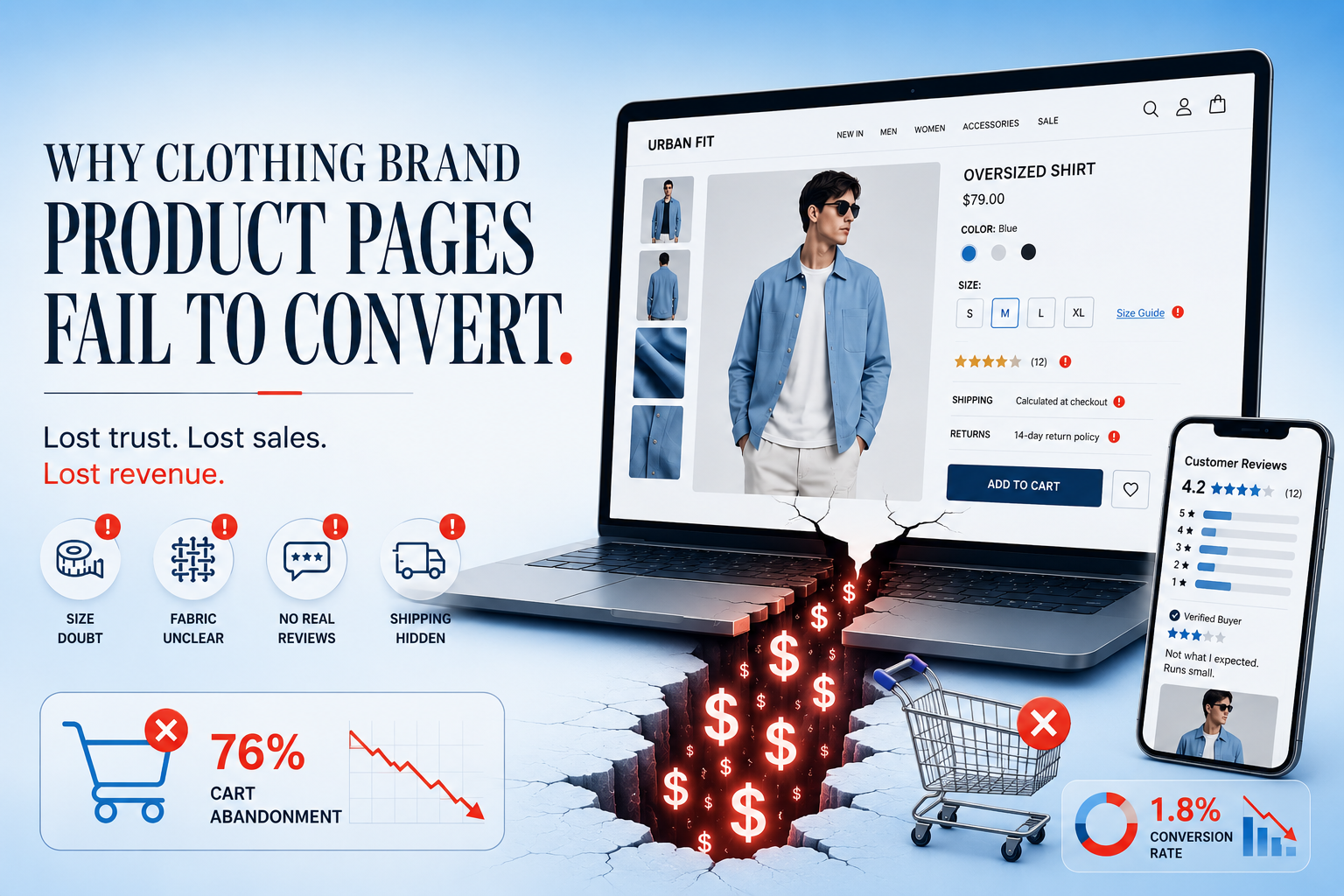
Sizing anxiety does not exist in isolation. It is connected to every other conversion challenge that clothing brands face online. The product page failures we covered in our cluster article on why clothing brand product pages fail to convert are often triggered at the sizing moment because sizing is the first decision a shopper has to make, and when it cannot be resolved, nothing else can move forward.
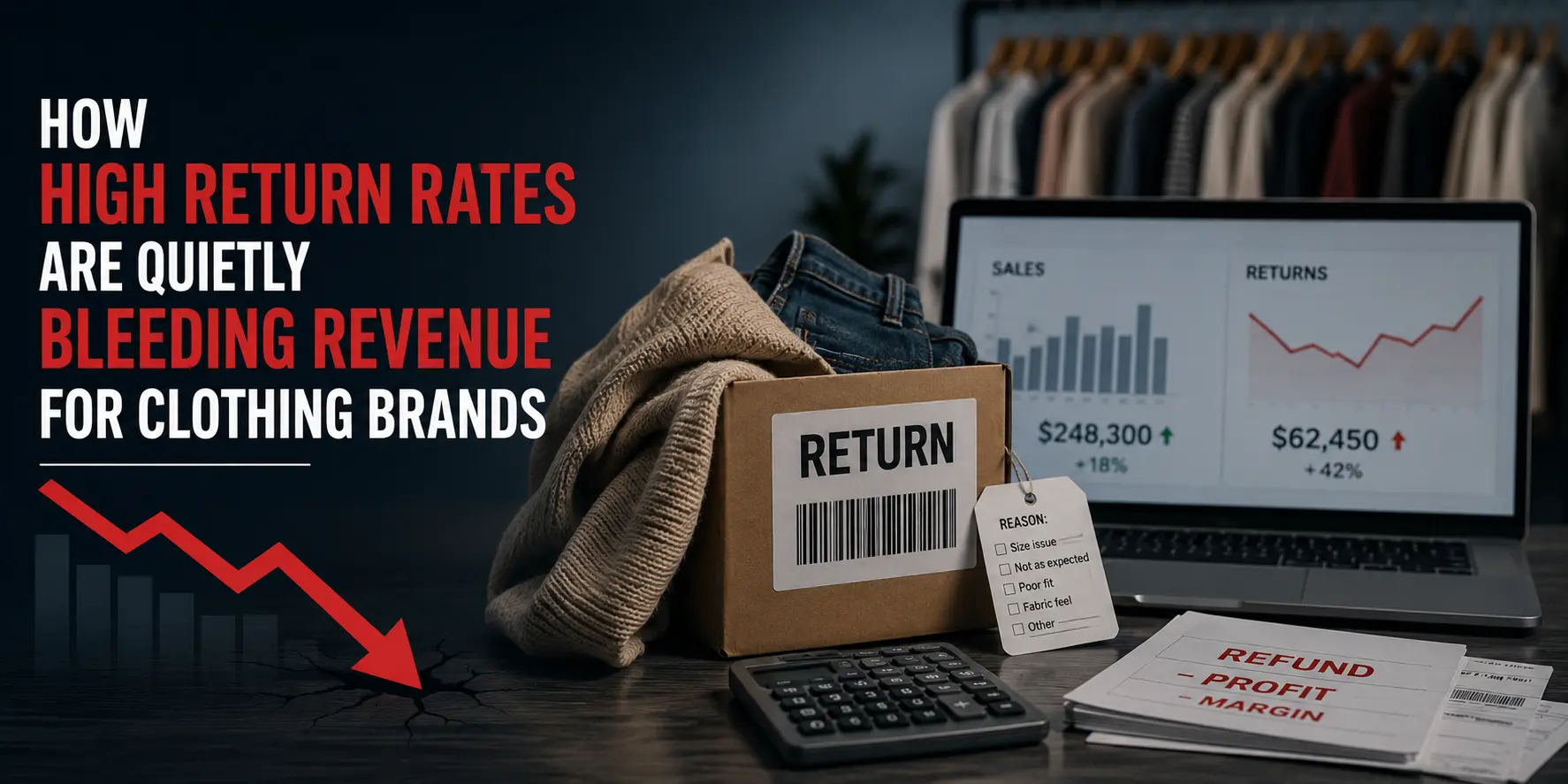
Similarly, the return rates covered in our article on why online returns are becoming a big problem for fashion businesses are directly downstream of sizing anxiety. Shoppers who cannot determine their size on the product page either abandon the cart or purchase speculatively. Both outcomes damage the business. The sizing problem at the product page level triggers both.
Understanding why sizing anxiety causes high cart abandonment in apparel stores is, therefore, not just a conversion optimization question. It is a business health question. The brands that solve it, that give shoppers the confidence to choose the right size on the first attempt, benefit across every metric: higher conversion, lower return rates, better margins, and stronger customer loyalty.
Still losing sales to sizing anxiety? Give shoppers the confidence to buy with AI-powered virtual try-ons from Mirrago.
Reduce Cart Abandonment Today