You add a jacket to your cart. You zoom in on the product photos. You imagine how it might look on you.
Then you close the tab.
Because imagining something isn't the same as seeing it.
That moment of doubt happens every day in fashion ecommerce. Customers like a product, but they are still unsure: Will it actually look good on me?
AI virtual try-on for fashion brands is changing that.
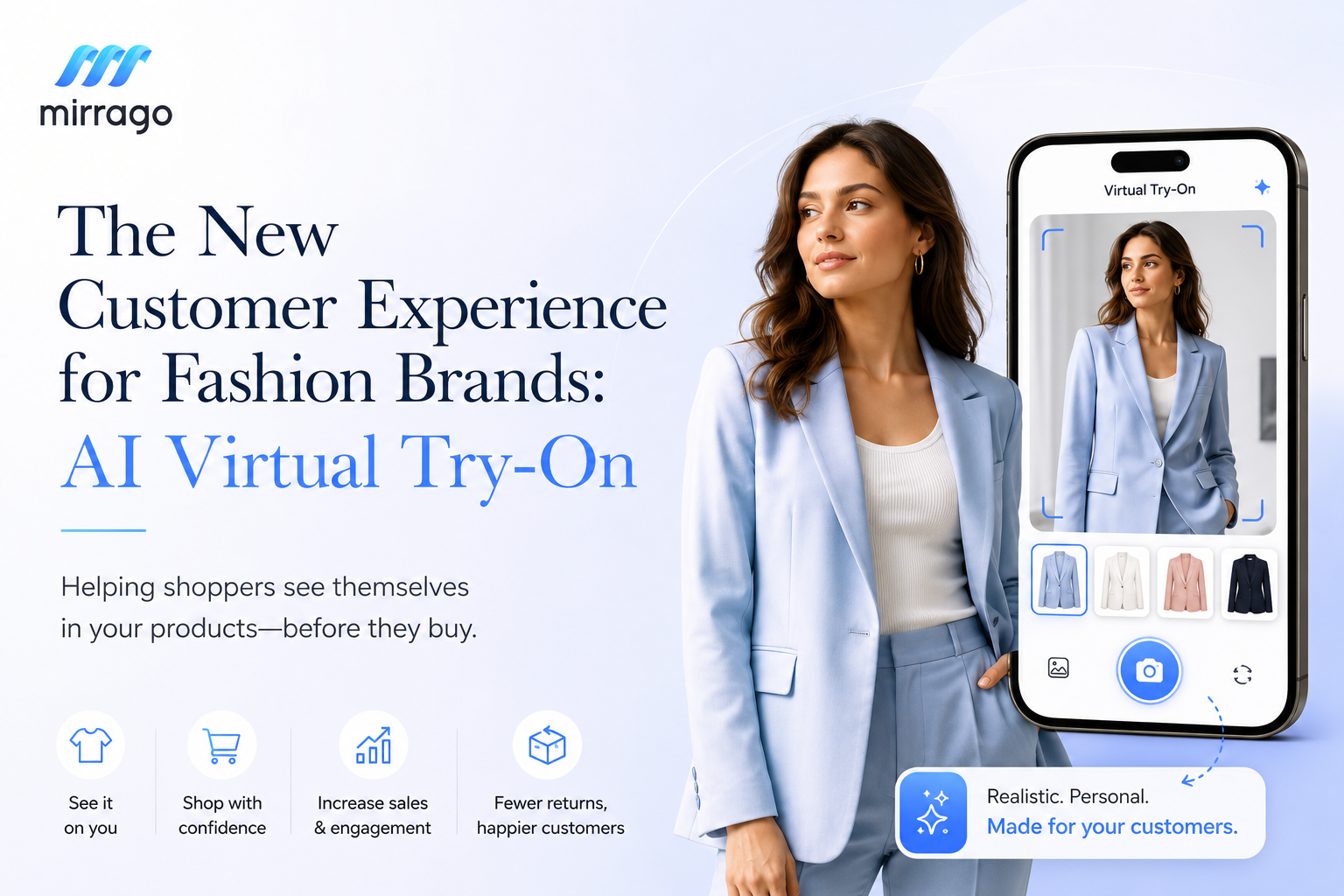
Instead of asking shoppers to imagine themselves in an outfit, AI lets them see a realistic preview using their own photo before they buy.
No fitting room. No guesswork. Just a more personal way to shop online.
So, what does this change actually look like for customers and fashion brands? Let's take a closer look.
Fashion Shopping Has a Problem AI Can Finally Solve
Online fashion stores have one major limitation that even great product photography cannot completely solve.
The person in the product photo isn't the person buying the clothes.
A product description can tell you what a jacket is made of. Reviews can tell you what other customers experienced. But neither can answer the question shoppers really want to know:
“Will this look good on me?”
That uncertainty can affect the entire shopping experience.
Customers may leave their carts because they aren't confident enough to buy.
Some order products simply to see how they look and later return them.
Others avoid experimenting with new styles and stick with what feels familiar.
Traditional product pages were designed to display products, not create a personalized shopping experience. AI virtual try-on for fashion brands helps close that gap by replacing imagination with a visual experience.
What If Customers Could Try Before They Buy, Without a Fitting Room?
Imagine being able to try on a product from your phone or laptop without visiting a store. That's what AI virtual try-on makes possible.
On a platform like Mirrago, the experience is simple:
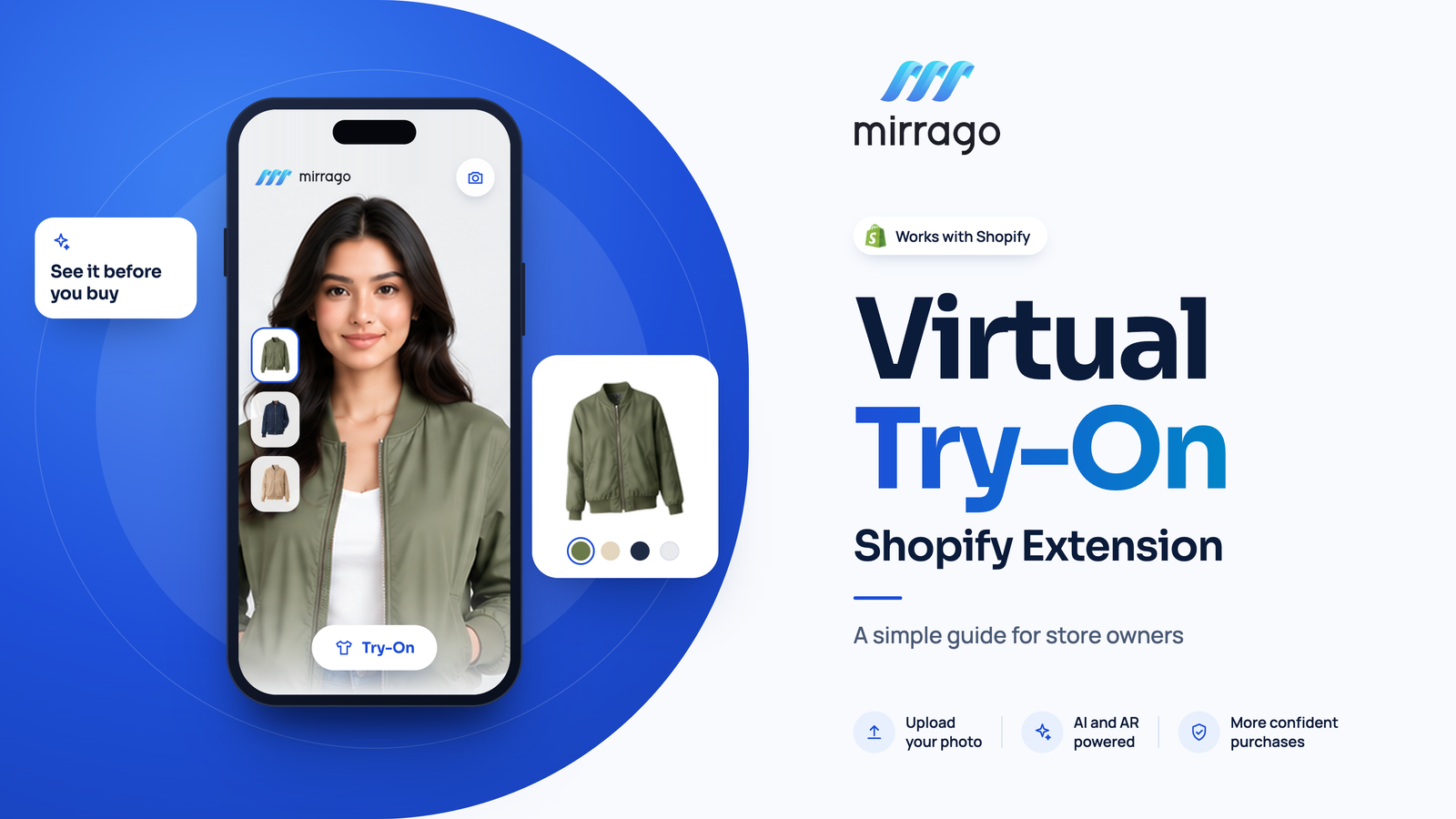
The shopper uploads a photo or uses one already saved to their profile.
They choose the product they want to try.
The AI generates a realistic image of the shopper wearing the selected item in seconds.
The result is personalized to the shopper instead of showing the clothing on a generic model.
The main advantage of good virtual try-on technology lies in the fact that it goes further than simply putting an image of clothing on a photo of a person. It actually takes into account the body shape of the customer as well as the image of the garment and its position on the person.
In addition, when using Mirrago, it becomes possible to make up complete outfits from available items, and, according to the text, this technology can also be useful in such categories as glasses, jewelry, and cosmetics. Moreover, for businesses, implementing such technology is not a problem, since it does not require changes to the entire catalog.
Mirrago can work with existing eCommerce setups through a WordPress plugin or custom API integration. Customer photos are also automatically deleted after each session, helping brands manage the experience with privacy in mind.
From “Will This Look Good on Me?” to “Let Me Try It.”
The biggest change starts with customer behavior.
Uncertainty makes shoppers hesitate. Curiosity makes them click.
When trying something on is quick and free, the experience feels less like a serious buying decision and more like exploring. A shopper who would normally ignore a bold color or unfamiliar style may decide to try it simply because there is nothing to lose.
That changes the way people interact with fashion products. With virtual try-on for fashion, brands can create an experience where customers are more likely to:
Spend more time exploring products
View more products during a visit
Experiment with styles they may not normally consider
Instead of simply asking, should I buy this? Shoppers can first ask: “What would I look like in this? That's a much more engaging question.
AI Is Turning the Product Page Into a Personal Fitting Room
Think about the difference between a traditional product page and an AI-powered one.
A traditional product page:
Shows the same product images to every visitor
Depends on the shopper to imagine how the product will look on them
Feels more like a digital catalog
An AI-powered product page:
Lets the shopper see themselves wearing the product
Helps visualize the product without relying entirely on imagination
Creates a more personal and interactive experience
The difference is simple: presentation shows the product, personalization helps the customer experience it. When shoppers see themselves instead of a model, the product becomes more relevant to them.
The product page is no longer just saying, "Here is what we're selling." It is helping answer, "Here is what this could look like on you."
The New Fashion Customer Journey: See It. Try It. Love It.
Virtual try-on isn't just a feature added at the end of the buying process. It can become part of the entire customer journey.
Discover:
A shopper finds a product through search, a collection page, social media, or another channel.
Try:
They choose the virtual try-on option and generate a personalized preview.
Visualize:
They see the product on themselves rather than only seeing it on a model.
Compare:
They can explore different colors, products, or complete outfit combinations.
Decide:
The customer has more visual information to support their decision.
Purchase:
Instead of feeling like a gamble, the purchase can feel more informed and confident.
This creates a simple journey: Discover → Try → Visualize → Compare → Decide → Purchase
When the try-on experience is fast, shoppers can repeat this process without losing momentum. That's what makes AI virtual try-on more than a simple product feature. It can become part of how customers shop.
Why Customers Trust What They Can See on Themselves
Fashion is personal. A style that looks great on one person may not feel right on another. That's why product descriptions and model photos can only tell part of the story.
Seeing yourself in the product provides a different kind of information. But virtual try-on doesn't need to replace everything else. It works best alongside the information shoppers already use.
Product details explain the material, design, and construction.
Reviews show what other customers experienced.
Virtual try-on provides a visual reference specific to the shopper.
Together, these elements can create a stronger and more complete shopping experience. The goal isn't to replace the customer's judgment. It's to give them better information before they make it.
Virtual Try-On Is Not Just About Conversions
It's easy to look at AI in fashion eCommerce and focus only on conversion rates. But the impact can go much further. Across the Mirrago platform, brand partners have seen improvements in areas such as:
Engagement: Shoppers interact more with product pages, with virtual try-ons used 2.5x more than on a standard product page.
Discovery: Customers can feel more comfortable exploring products they might otherwise skip.
Returns: Mirrago reports a 40% reduction in returns among brand partners, linked to clearer expectations before purchase.
Conversion: Mirrago reports a 28% lift, driven by greater customer confidence.
Brand perception: Personalized shopping experiences can make a fashion store feel more customer-focused and innovative.
The bigger idea is simple: A better shopping experience doesn't end when someone clicks “Buy.”When customers have a clearer idea of what to expect, the experience can continue to benefit the brand after the purchase as well.
What Happens When a Fashion Brand Lets Customers Experience the Product?
New Armani is a bespoke tailoring house based in Bangkok, known for made-to-measure suits and craftsmanship. For a business built around personal fitting and precision, selling through a screen creates a unique challenge.
Customers who are used to being fitted by a tailor now have to make decisions from product images and descriptions.
AI virtual try-on helps bridge that gap. Mirrago allows customers to view a jacket or full outfit on themselves before ordering it. They do not rely only on fabric samples and descriptions; instead, they have a visual reference of how the product might appear on them.
The added element of trust is one thing that can make the online experience feel more personal, especially for a brand that values craftsmanship.
This reflects a broader pattern across Mirrago's partner base. When brands let customers experience a product instead of simply viewing it, they can create opportunities for:
Less hesitation during the buying process
More exploration across the product catalog
Greater confidence when trying unfamiliar styles
The lesson is not simply that customers like AI. It's that customers respond to experiences that help them make fashion decisions more easily.
The Future of Fashion eCommerce Won't Be Just About Better Product Photos
Fashion brands have spent years investing in better photography, models, lighting, and styling, and that still matters. But there is a limit to what a product photo can do. A beautifully photographed product looks the same to every visitor.
AI-powered fashion technology can create a more personalized experience because it adapts the experience to the person viewing the product.
This represents a bigger shift: from better product images to better product experiences. The next generation of fashion ecommerce won't only compete on how beautifully a product is presented. It will also compete on how easily customers can imagine, explore, and experience that product for themselves.
What Will the Next Fashion Store Feel Like?
Imagine opening an online fashion store where:
A virtual fitting room lets you see yourself in the outfit you're browsing.
Style recommendations consider your preferences and what suits you.
An AI assistant helps you explore products like an in-store stylist.
Complete looks can be recommended and tried on together.
This kind of experience is already becoming possible. Virtual try-on, personalized recommendations, and AI styling, when combined, can provide a more connected shopping experience.
Some of these concepts are already being integrated into Mirrago business, such as virtual try-on for clothing, eyeglasses, jewelry, and shoes. There's more to it than just adding on more AI capabilities.
It's bringing them together into one seamless journey and connecting them in one place so that customers can discover, try, explore, and decide.
A virtual try-on can be a practical first step for fashion brands to create such an experience today.
Ready to Turn Your Product Page Into a Virtual Fitting Room?
For years, fashion shoppers have asked the same question: "How will this actually look on me?"
AI virtual try-on for fashion brands gives customers a more personal way to answer it. Rather than leaving them to picture the product on their own, brands can give shoppers the chance to try it themselves. That makes the product page feel more alive, more personal, and more engaging.
Fashion brands can add AI virtual try-on to their current product pages with the Mirrago WordPress plugin or custom API integration, without rebuilding their entire store.
Give your customers a better way to experience your products before they buy.
FAQ
What is AI virtual try-on for fashion brands?
It's technology that lets shoppers upload a photo and see themselves wearing a selected garment, rendered by AI with realistic fabric, fit, and posture, instead of relying only on model photos.
How accurate is virtual try-on technology?
Platforms like Mirrago render garments based on the customer's actual body shape and posture, so what shoppers see closely reflects how the piece will actually look on them.
Does virtual try-on reduce returns?
Yes. Mirrago's platform-wide data shows a 40% reduction in returns among brand partners, largely because customers have a clearer, more accurate expectation of how a product will look before they order.
Is AI virtual try-on only useful at checkout?
No. It supports the whole journey, from discovery and comparison through to the final decision, which is why brands see it lift engagement (2.5x on average with Mirrago) as much as conversions.