Black Friday Sales Challenge: How Virtual Try On Converts Visitors Into Buyers
Black Friday can bring a huge wave of shoppers to your store, but keeping them engaged and driving them to buy is the real challenge.
Shoppers click an ad, land on a product page, scroll through photos, and often leave without buying. In 2025, U.S. consumers spent a record $11.8 billion online on Black Friday, up 9.1% year over year. Mobile devices also accounted for most holiday online transactions.
Every store is running Black Friday sales. If everyone is offering 40% off, another discount alone may not be enough to make your store stand out. What happens after a shopper clicks on your product page is what can make the difference between another visit and a completed purchase.
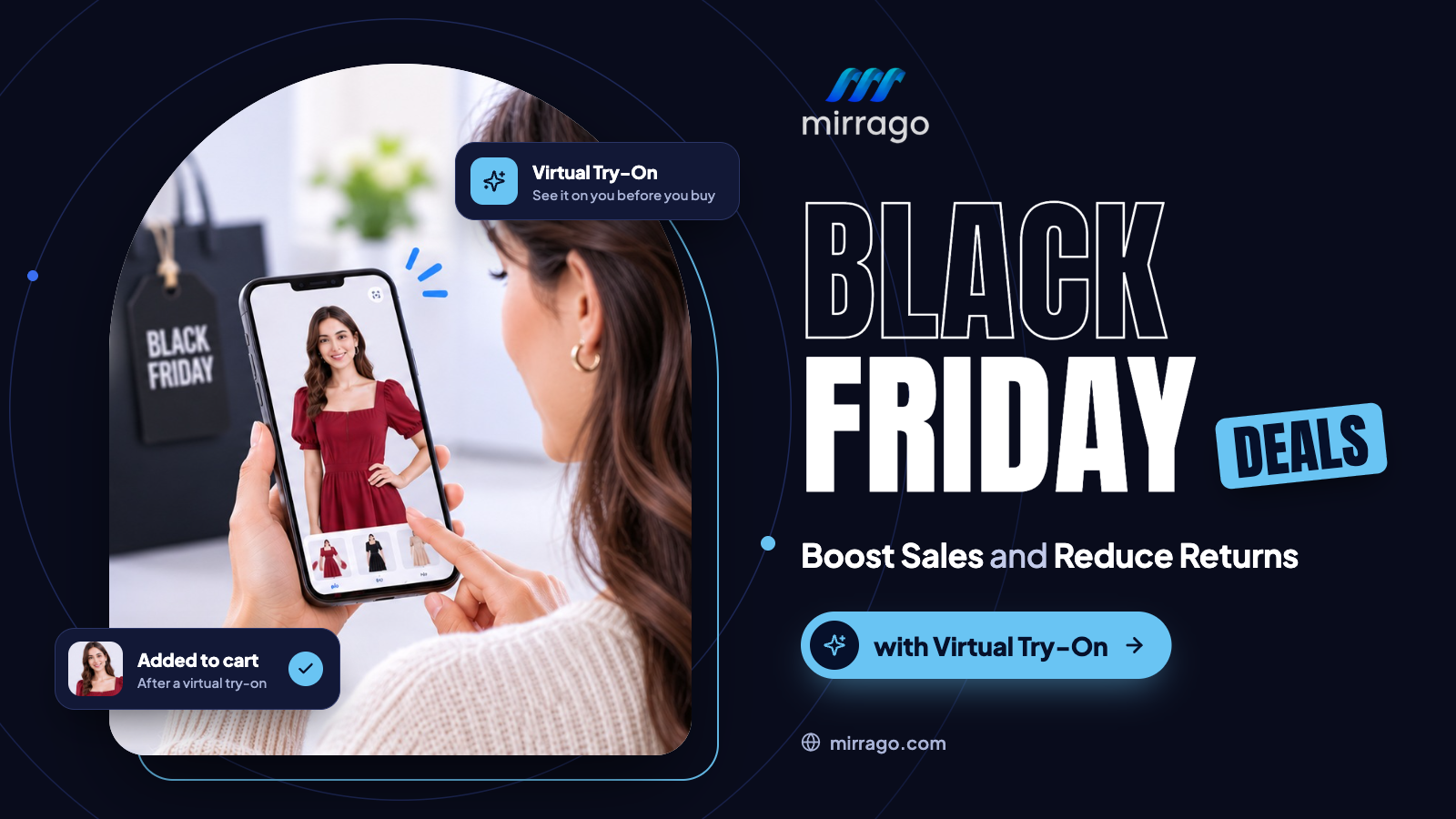
Give shoppers something more engaging to do. Encourage visitors to virtually try on your featured products, choose their favorite look, and share it. Instead of simply browsing through product photos, shoppers become part of the experience, and that extra interaction can help build confidence before they buy. Here is all the information you need to put in place before Nov. 27.
Why Black Friday visitors leave without buying
Remember the last time you had a shopping spree using your cell phone? You were likely on three to four tabs with similar discounts. You found a nice coat that you weren't sure if it would look good on you, so you set it aside for later. Later never came.
That's the pattern most fashion stores are up against on Black Friday:
Model pictures are photographs displaying an item on other people with ideal studio lighting. Consumers want to see how it fits on them.
When there's just a little bit of uncertainty, it's enough to push somebody to a different tab; when the doubt is plenty, they would probably not even come back to their shopping cart.
Even when a shopper completes a purchase, uncertainty can lead to a return later. The NRF found that 38% of adults had one of those impulse buys on Black Friday and regretted it, a finding that Tesco Mobile did, and another survey of 2,000 adults confirmed the NRF still forecasts a 17% return rate in 2025.
A bigger discount won’t always solve the problem. Engaging shoppers and giving them a reason to stay can make the real difference.
What is a Black Friday try on challenge?
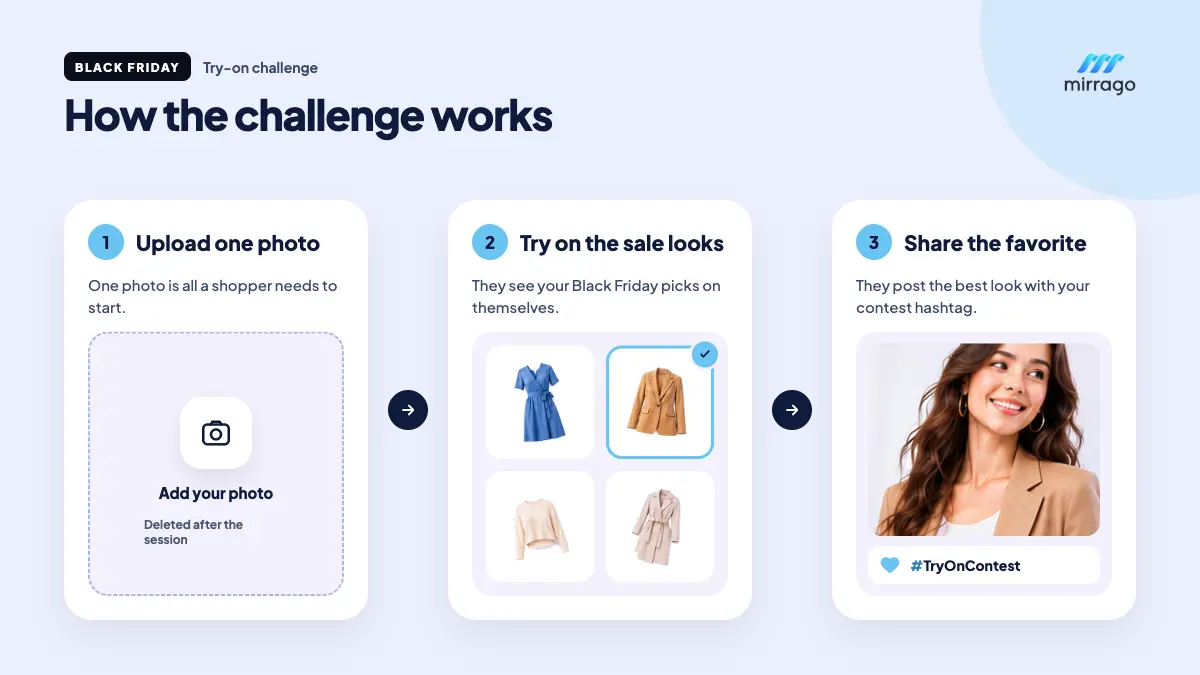
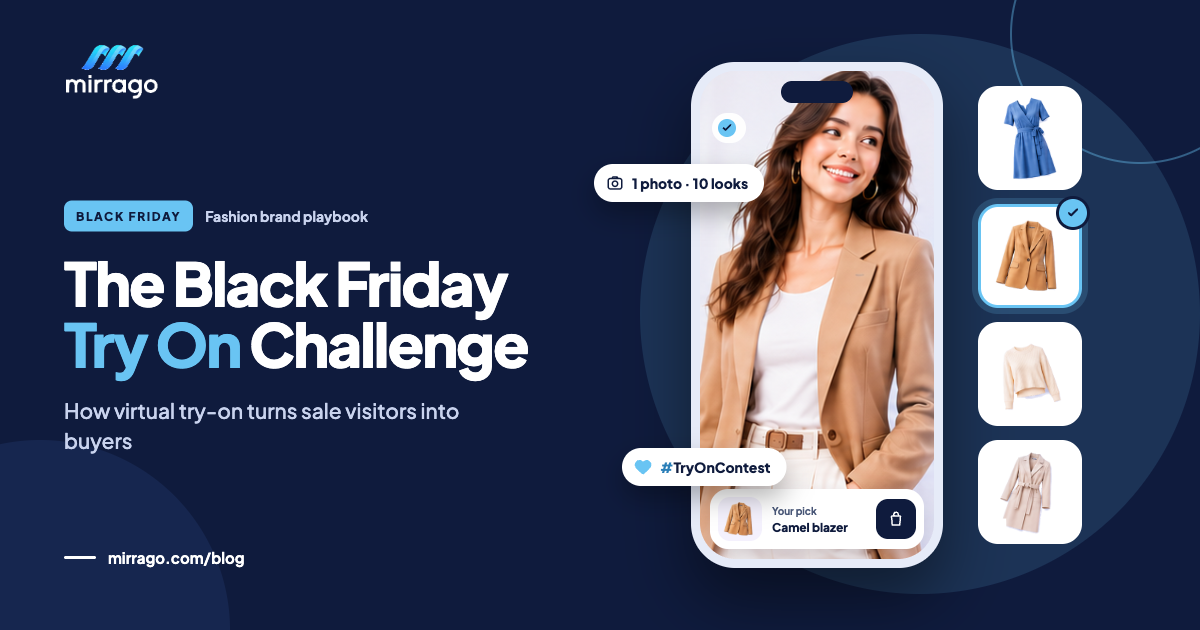
A Black Friday try on challenge is a short campaign that encourages shoppers to virtually try on your sale items, choose their favorite look, and share it for a chance to win a reward.
The invitation can be as simple as this:
“Try on 10 looks from our Black Friday collection with just one photo. Share your favorite look with #BrandTryOnContest by November 30 for a chance to win a $100 gift card.”
Now let's think of one shopper. Let's say her name is Maya. On Black Friday morning, she finds your banner on her screen, takes a picture, and tries on a wrap dress, a camel blazer, and a cream knit set. The blazer wins. She screenshots it, puts it in the post with your hashtag, and earns a 10% code to join. Then she moves back to the product page; "add to cart" is right beside the try on button, and she goes ahead and purchases the blazer and the trousers of the same look.
All this requires consumers to change nothing. People now screen themselves and text or send them to their friends with a simple "thoughts?" Now a challenge just makes that habit appear on your product pages, ready to be ticked off at checkout. But with it, you make your Black Friday a complete experience, one that a discount never could be, when shoppers have already envisioned themselves wearing your clothes.
Why the challenge turns visitors into buyers
It starts with confidence. Once someone has seen a dress on themselves, there's one less reason to wait. On Tsarmoire's store, for example, sessions that included a try-on averaged 11.3 pages viewed in the first 30 days, compared with 3.7 across the whole store (full numbers here).
Then there's social proof. A real customer wearing your blazer is far more convincing than another studio shot. Social media is also where more and more shoppers find what they buy. Adobe found that social media drove 3.6% of Cyber Monday 2025 online revenue, up 56.5% from the year before, while affiliates and partners, including influencers, drove 21.8%.
The deadline helps as well. A challenge that ends on Cyber Monday gives people a reason to act during your Black Friday sales instead of "sometime next month."
Carts tend to get bigger, too. Mirrago lets shoppers put a top, bottom, outerwear, and accessories together in one photo, and when someone has tried on the whole outfit, buying the whole outfit feels like the obvious next move.
And when it's over, you're left with a pile of user-generated content. With each creator's permission, those looks can go straight into your ads, emails, and product pages.
How to run your try on challenge, step by step
You don’t need a big team or weeks of planning. Just seven simple steps can get your Black Friday try on challenge ready.
Add virtual try on to your store: Mirrago works with Shopify and WooCommerce, and setup takes under an hour. Our Shopify extension guide shows each step. If you're still weighing up tools, read How to Choose a Virtual Try-On Tool first.
Choose 10 to 20 products: Go for best sellers, your headline sale items, and pieces that look good together. Check your try-on credits too. Each try-on result uses one credit, so 300 shoppers trying 10 looks each will use around 3,000.
Keep the rules short: Try on, save or screenshot your favorite, and post it with your hashtag before the deadline.
Give people a reason to enter: An extra discount code, early access to Cyber Monday deals, a gift card, or a shout-out on your page all work. Our favorite combo is a small code for everyone who enters, plus one bigger prize for the best look.
Tell everyone: Email your list, add a banner to your site, post on Instagram and TikTok, and loop in any influencers you already work with. Pin the challenge post to the top of your Instagram profile so it's the first thing new visitors see.
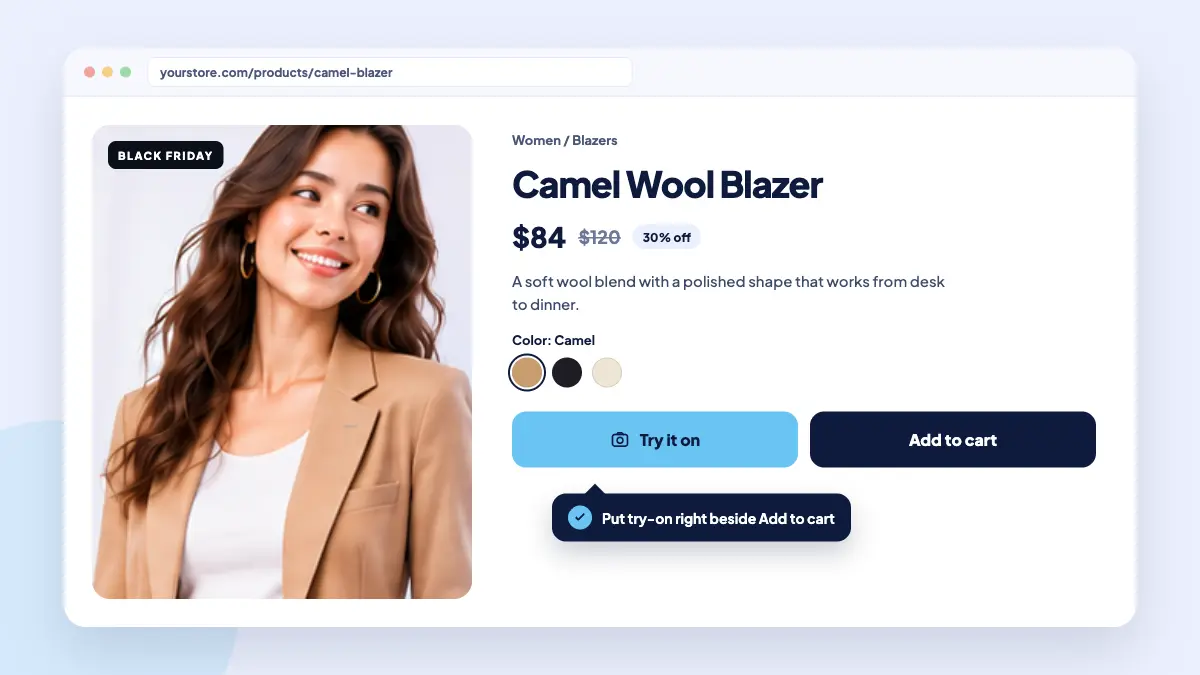
Make buying effortless: Keep "Add to cart" right beside the try-on button, and give participants a challenge code for checkout.
Celebrate the entries: Reshare great looks during the week to keep the energy up. Always ask before you repost someone's photo, and tag them when you do.
5 challenge ideas brands can borrow
If you're hunting for Black Friday marketing ideas for fashion brands that don't involve slashing prices even further, start with one of these. They all run on the same setup.
10 Outfits, 1 Photo: The classic. Shoppers try on 10 looks and share their favorite, and they end up exploring more of your sale along the way.
Your Holiday Party Look: Ask people to build the outfit they'd wear to an end-of-year party. It ties your sale to a moment they're already planning for.
Style 1 Piece 3 Ways: Pick a hero item, maybe a blazer or a slip dress, and challenge shoppers to style it three different ways. It's a lovely way to show off pieces that go together.
Winter Wardrobe Under $150: Shoppers put together a full outfit on a budget. It nudges them toward complete looks.
Vote for the Best Look: Share the top entries in Instagram Stories and let followers pick a winner with a poll sticker. People will keep checking back to see who's ahead.
Want more ideas for sale week? Our Top 10 Black Friday Sales Tips for Clothing Brands has plenty.
How to measure results
Decide what a win looks like before the challenge goes live. Otherwise, it's hard to tell a busy week from a profitable one. These five numbers tell the real story:
Try on use: how many shoppers tried something on, and how many of them added it to their cart.
Conversion rate: the challenge week side by side with the weeks before it.
Average order value: whether participants bought more pieces per order.
Returns: the return rate on challenge products, checked again in January when return windows close.
Reach: hashtag posts, social reach, and new email sign-ups.
Two simple ways to see what the challenge actually earned:
Use a challenge code. Give the challenge its own discount code, like TRYON10. Every order that uses it comes from the challenge, and your Shopify or WooCommerce dashboard shows how many times it was used.
Compare products. Check Black Friday sales on challenge products against similar products that weren't part of it. The difference shows what the challenge added, beyond what the discount would have done anyway.
Mistakes to avoid
Watch out for these:
Too many rules: Every extra step loses you entries. Three steps is plenty.
A reward nobody cares about: People might try things on for fun, but they share for a reason.
A try on button people can't find: If it's buried below the fold, most shoppers won't scroll for it. Keep it close to "Add to cart."
Starting on Black Friday itself: Launch two or three days early so entries are already rolling in when traffic peaks.
Forgetting mobile: Most Black Friday orders happen on phones, so run through the whole journey on your own phone before you go live.
Skipping the legal check: If participants receive something of value for promoting your products, make sure your campaign follows applicable advertising and disclosure rules. The FTC recommends that disclosures be clear, easy to notice, and placed with the endorsement rather than hidden among hashtags. Rules can also vary by country, so check the requirements that apply to your campaign.
Your challenge timeline
If you start this weekend, the next two weeks could look like this:
Date | What happens |
Nov 21 to 22 | Set up try on, pick challenge products, and write the rules. |
Nov 23 to 24 | Announce the challenge by email, banner, social media, and influencers |
Nov 25 to 30 | The challenge runs through Black Friday and Cyber Monday. |
Dec 1 to 3 | Announce winners, send rewards, and repost the best looks. |
January | Check return rates on challenge products. |
Turn your Black Friday traffic into buyers
Your discount will get people through the door. A try-on challenge gives them a reason to stay, play with your clothes, and leave with something they're excited to wear. And you'll finish the week knowing exactly which products people loved most.
There's still time to pull this off. Pick a handful of hero products, keep the rules simple, and go live a few days early so the challenge is already buzzing when Black Friday sales hit their peak.
Start free with Mirrago for Brands and launch your challenge before November 27. If you'd like a hand planning it, book a demo, and we'll talk it through with you.